
Vietnam Travel FAQs
Everything you need to know before your Vietnam trip — visa, cost, weather, currency, food, and packages. 55 answers, updated for 2025–2026.
No FAQs match your search. Try a different keyword, or ask us directly.
Visa & Entry
10 questionsYes — Indian passport holders require a visa to enter Vietnam. However, the process is fully online since Vietnam expanded its e-visa scheme in 2023 to cover all nationalities. Indian citizens can apply directly at evisa.gov.vn and receive a 90-day multiple-entry e-visa with no embassy visit, no interview, and no letter of approval required. The standard fee is approximately USD 25.
The Vietnam e-visa costs approximately USD 25 (around ₹2,100) for standard processing (3 working days). An urgent 1-working-day processing option is available for a higher fee. Payment is made online via card on the official evisa.gov.vn portal. There are no additional government fees. Apply directly on the official portal to avoid third-party service charges.
To apply for a Vietnam e-visa you need: (1) a valid passport with at least 6 months validity from your intended entry date and at least one blank page; (2) a recent passport-size digital photograph with a white background; (3) a scan of your passport bio-data page; (4) a credit or debit card for the USD 25 application fee; (5) a confirmed accommodation address in Vietnam. No embassy appointment, invitation letter, or sponsor is required for Indian citizens.
The standard Vietnam e-visa takes 3 working days to process. Urgent processing (1 working day) is available on the official portal for an additional fee. Always apply at least 5–7 days before your travel date to allow for any unexpected delays.
The Vietnam e-visa is valid for up to 90 days from the date of issuance and allows multiple entries. You must enter Vietnam within the validity period shown on your visa. The validity starts from the date of issue — not from the date of your first entry into Vietnam.
Vietnam e-visas cannot currently be extended online. If you need more time, you must exit the country and re-apply for a new e-visa, or visit a local immigration office in Vietnam to apply for an in-person extension. Our team can guide you on the best option for your specific situation.
Your registration code (also called application code) is in the confirmation email you received after submitting your Vietnam e-visa application on the official portal (evisa.gov.vn). It typically starts with letters followed by numbers — for example: EB2024XXXXXXXX. Check your spam folder if you cannot find the email.
"Not Found" usually means the registration code was entered incorrectly, the application was submitted very recently and hasn't been indexed yet, or there is a mismatch between the code and date of birth entered. Double-check your confirmation email and try again after 24 hours if you applied very recently.
If your application is rejected, the official portal will show a rejection reason. Common reasons include incorrect personal information, missing documents, or a name mismatch between the form and your passport. You can re-apply after correcting the issues. Contact our team — we assist Indian travelers with Vietnam visa applications and can help identify and fix the problem quickly.
Visa on Arrival (VOA) was effectively replaced by the e-visa system for most nationalities, including Indians. The VOA route previously required a pre-approval letter from a sponsor agency. Since Vietnam launched its expanded e-visa system covering all nationalities in 2023, the e-visa is simpler, cheaper, and fully self-service. We recommend using the official e-visa portal.
Currency & Money
8 questionsVietnam uses the Vietnamese Dong (VND ₫) as its official currency. Banknotes come in denominations from 1,000 to 500,000 VND. While US dollars are widely accepted at hotels and tour operators, paying in VND gives you better value at local markets, restaurants, street food stalls, and motorbike taxis.
Indian Rupees are not accepted in Vietnam and cannot be exchanged locally at Vietnamese banks or money changers. Convert your INR to USD before departing India (at a bank or forex outlet), then exchange USD to VND on arrival in Vietnam — or use a multi-currency card. Alternatively, withdraw VND directly from ATMs using your Indian debit card.
Yes — US dollars are accepted at many hotels, resorts, and tourist-facing businesses across Vietnam. However, for day-to-day spending you will need Vietnamese Dong. Paying in USD at street level often means a worse effective exchange rate. We recommend withdrawing VND from an ATM on arrival using a low-fee international debit card for the best practical rate.
The most cost-effective options in order are: (1) withdraw VND directly from ATMs in Vietnam using a low-fee card — Vietcombank and Techcombank have the widest ATM networks; (2) exchange at reputable gold shops or exchange counters in Hanoi's Old Quarter or Ho Chi Minh City's Ben Thanh area — rates are often better than banks; (3) use the airport exchange only for emergency cash, as rates there are the worst. Avoid exchanging at hotels.
After arriving in Vietnam is usually better. Airport exchange counters have poor rates, but city-based exchange shops and ATMs in Hanoi and Ho Chi Minh City offer rates close to the mid-market rate. If you prefer some cash on arrival for taxis and tips, exchange a small amount at the airport (enough for the first day) and then get the rest in the city.
Yes — ATMs are widely available in all major cities and tourist areas. Vietcombank, Vietinbank, and Agribank machines accept international Visa/Mastercard and are the most reliable. Most ATMs charge a withdrawal fee of 20,000–50,000 VND per transaction. Carry some backup cash as ATMs in rural areas and small islands (like parts of Phu Quoc) can run out of cash during peak season.
Yes — credit cards (Visa and Mastercard) are widely accepted in Vietnam at hotels, restaurants, malls, and tour operators in major cities. Smaller restaurants, street food stalls, markets, and most rural businesses are cash-only. Inform your bank before travel to avoid card blocks. Watch for card skimming at standalone ATMs in tourist areas — use machines inside bank branches where possible.
The exchange rate fluctuates, but as a rough guide: 1 INR ≈ 285–300 VND (as of 2025). This means ₹10,000 ≈ 2.9–3.0 million VND. Check our live Currency Converter for the current mid-market rate before you travel.
Weather & Best Time
9 questionsOctober to April covers the best weather across most of Vietnam. The sweet spot for a north-to-south trip is October–November (after the northern monsoon, before central floods ease) or March–April (warm and mostly dry everywhere). That said, Vietnam's three regions have different monsoon seasons, so some part of the country is always in good weather — the key is knowing which region to avoid in which month.
No — Vietnam's three regions have completely different rainy seasons. North Vietnam is wettest June to August. Central Vietnam (Da Nang, Hoi An, Hue) is wettest September to November. South Vietnam (Ho Chi Minh City, Phu Quoc) is wettest May to October. This means you can often find good weather somewhere even during the wettest months by choosing the right region.
October and November are outstanding for Ha Long Bay — clear blue skies reflect in the emerald bay and cruise weather is perfect. March to April is the second-best window with calm seas and comfortable temperatures. Avoid June to September when typhoon risk and monsoon rain can cancel or disrupt cruises.
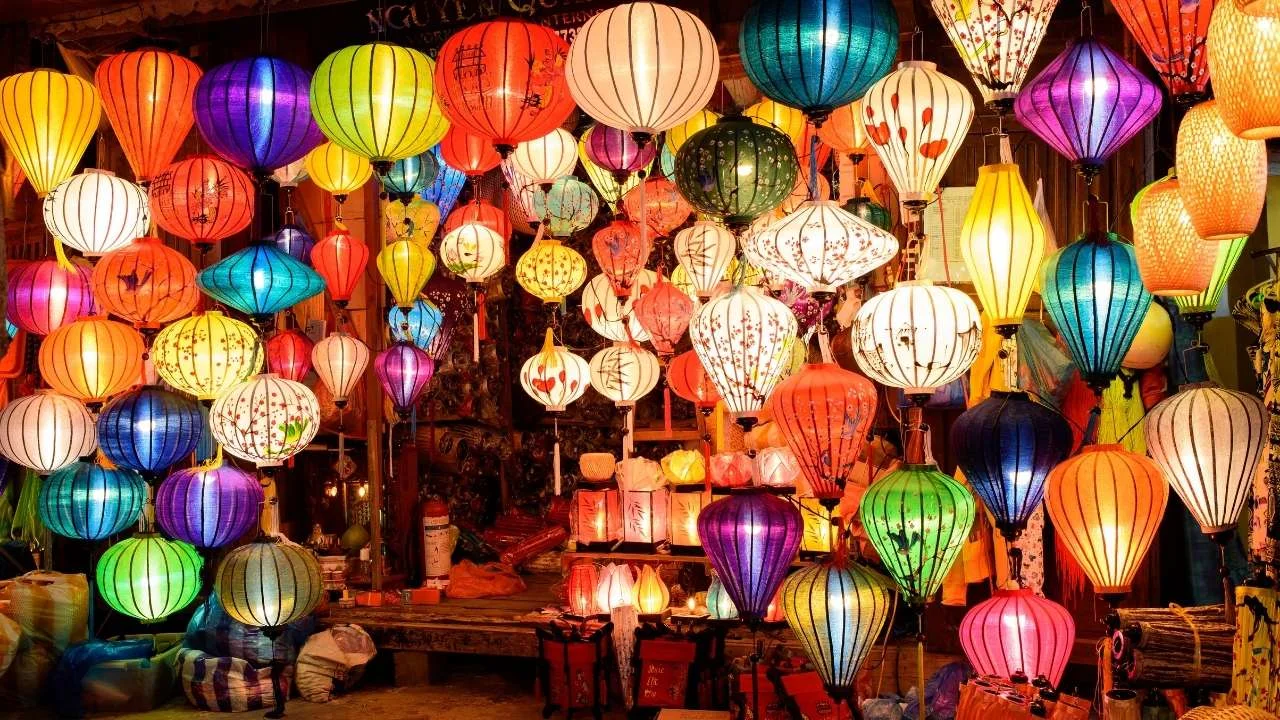
March to April is peak season for Hoi An — warm, sunny, and calm seas for Cham Island day trips. June to August is excellent for beach lovers. Avoid October to early November when serious typhoon-related flooding is possible in Hoi An's Ancient Town. The Hoi An Full Moon Lantern Festival (14th of each lunar month) is magical in any dry-season month.
December is excellent for South Vietnam — Phu Quoc is at its absolute best, Ho Chi Minh City is sunny and warm, and Christmas is celebrated enthusiastically. North Vietnam (Hanoi, Ha Long Bay) is cool (13–20°C) and largely dry — great for sightseeing, but pack layers. Central Vietnam (Hoi An, Da Nang) is transitioning out of its wet season; conditions improve significantly in the second half of December.
October is one of the best months for North Vietnam — cool, clear, and Ha Long Bay turns a brilliant emerald. Sapa's rice harvest is spectacular in October. However, it is the worst month for Central Vietnam (Hoi An, Da Nang, Hue) where October brings peak flooding risk. Plan your route accordingly — north-heavy itineraries shine in October.
Yes — Vietnam is exposed to western Pacific typhoons, particularly affecting the Central Coast (Da Nang, Hue, Hoi An) from September to November, and the north from July to September. Direct hits are uncommon but do occur. Always buy comprehensive travel insurance if visiting during typhoon season, and monitor weather forecasts before coastal activities. The south and Phu Quoc are much less typhoon-affected.
It depends on the region. North Vietnam's summer (June–August) is hot, humid, and very rainy — not ideal. Central Vietnam's summer (June–August) is actually excellent — hot, dry, and perfect for beaches. South Vietnam's summer is its wet season, with afternoon downpours but warm temperatures year-round. If you're planning a beach holiday in Da Nang or Hoi An, June and July are arguably the best months.
Pack light, breathable cotton or linen clothing for most of Vietnam year-round. Add a thin waterproof jacket and compact umbrella for the wet season or if visiting in shoulder months. Bring a warm layer or light jacket for North Vietnam in winter (November–February). Sunscreen SPF 50+ and a wide-brim hat are essential from March onwards. Comfortable, sturdy walking shoes are better than sandals for Hoi An's cobbled streets and Sapa's trails.
Packages & Planning
7 questionsFor a first-time visit, 7–10 days lets you comfortably cover Hanoi, Ha Long Bay, and either Hoi An/Da Nang or Ho Chi Minh City. For a complete north-to-south journey including Sapa and Phu Quoc, plan 12–14 days. A 5-day trip is possible for a focused destination like Phu Quoc or Hanoi + Ha Long Bay, but you'll feel rushed trying to see too much in that time.
Most Vietnam tour packages from Book Vietnam Holiday include: hotel accommodation, airport transfers, all sightseeing and day tours listed in the itinerary, a dedicated local guide, and some meals (breakfast is usually included; some packages include select dinners). International flights, travel insurance, visa fees, and personal expenses are typically not included but can be added. Every package is clearly itemized so you know exactly what you're getting.
Absolutely — all our Vietnam packages can be fully customized. You can adjust travel dates, swap destinations, upgrade hotels, add private experiences (cooking classes, private cruises, sunrise trekking), extend or shorten the trip, or combine Vietnam with Cambodia or Thailand. Contact us with your ideas and we'll build a bespoke itinerary within your budget.
International flights are optional in most of our Vietnam packages. We can source flights for you (particularly useful for group bookings or if you want one-stop booking), or you can book independently and we handle everything in Vietnam. If you have frequent flyer points or preferred airlines, booking your own flights often makes sense.
Yes — Vietnam is a wonderful honeymoon destination and we offer specially curated honeymoon packages featuring romantic private beach resorts in Phu Quoc, overwater bungalows, private cruise cabins on Ha Long Bay, candlelit dinners, and couples' spa experiences. We add complimentary honeymoon touches — rose petals, sparkling wine, private transfers — when you let us know it's a honeymoon trip.
The classic first-timer route is: Hanoi (2–3 nights) → Ha Long Bay overnight cruise (1–2 nights) → fly to Da Nang → Hoi An (2–3 nights) → fly to Ho Chi Minh City (2 nights). This covers the highlights of North, Central, and South Vietnam in 10 days and is available as our "Best of Vietnam" package. Phu Quoc can be added at the end as a 2–3 night beach finish.
For travel in peak season (November to February and March to April), we recommend booking 3–4 months in advance — popular Ha Long Bay cruises and boutique hotels in Hoi An sell out quickly. For the shoulder season (May to October), 4–6 weeks is usually sufficient. Last-minute bookings are possible but hotel and cruise choice will be limited.
Cost & Budget
8 questionsThe total cost of a Vietnam trip from India depends heavily on travel style. For a 7-day mid-range trip for 2 people including flights: budget travellers can manage ₹80,000–₹1.2 lakh per person (₹1.6–2.4 lakh total); mid-range trips typically cost ₹1.2–1.8 lakh per person (₹2.4–3.6 lakh total); luxury trips with 5-star hotels run ₹2.5–4 lakh+ per person. Use our Vietnam Trip Cost Calculator for a personalised estimate.
Not at all — Vietnam is one of the most affordable destinations in Asia. A budget traveller can have an excellent experience on $35–45 per day (excluding flights). Mid-range travellers typically spend $80–120 per day per person including a comfortable 3-star hotel, local restaurant meals, and guided tours. Even luxury travellers will find Vietnam offers outstanding value compared to equivalent stays in Europe or Australia.
Yes, Vietnam is generally comparable or slightly more affordable than Thailand, particularly for hotels, local food, and domestic transport. Street food costs are similar. However, some activities — like Ha Long Bay cruises — are genuinely premium experiences. The overall value proposition in Vietnam is excellent: the quality of what you get for the price is consistently high.
Daily in-country expenses (excluding international flights): Budget — $35–50 per person (dorm/budget guesthouse + street food + shared transport). Mid-range — $80–130 per person (3-star hotel + mix of restaurant meals + guided tours). Luxury — $200–400+ per person (5-star resort + fine dining + private guides and transfers). Use our Trip Cost Calculator to model your specific itinerary.
Street food and local restaurants cost $1–3 per meal. Mid-range sit-down restaurants with English menus run $5–12. Hotel restaurants and Western food typically cost $15–30. Budget travellers can eat exceptionally well for $10–15 per day; mid-range travellers usually spend $25–35 per day on food. The quality of Vietnamese food at every price point is remarkable — this is genuinely one of the world's great food cultures.
Carry enough VND cash for 2–3 days of spending at a time, then top up from city ATMs. In major cities, ₹2,000–4,000 worth of VND (80,000–160,000 VND) per day covers meals, transport, and small purchases. In rural areas and on small islands, carry more cash as ATMs may not be available. Most tour operators, hotels, and nicer restaurants accept cards, but markets and street food are always cash.
We strongly recommend it. Healthcare in Vietnam is affordable by Western standards but not free for tourists, and serious incidents can require expensive medical evacuations. Standard travel insurance costs around ₹500–700 per day; comprehensive plans with medical evacuation cover run ₹1,000–1,500 per day. Always ensure your policy covers adventure activities (trekking, motorbike rental, water sports) if you plan to do any.
Shoulder seasons — April to May and September to October — offer the best balance of reasonable weather and lower prices. Peak season (November to February) sees the highest flights and hotel prices. Avoid Tet (Lunar New Year, usually late January or early February) unless you want to experience the festival itself — domestic prices spike and many businesses close. The wettest months (July–August in the north; October in Central Vietnam) have the lowest prices.
Food & Dining
6 questionsYes — vegetarian food is widely available across Vietnam, and it's one of the easier Asian destinations for vegetarians. Buddhist culture means many local restaurants serve vegetarian menus, particularly on the 1st and 15th of each lunar month. Major cities have dedicated vegan cafés, Indian restaurants, and plenty of adaptable dishes. Tell your guide or hotel in advance and they'll ensure all meals work for you.
Yes — Indian food is available in Vietnam's major tourist cities. Hanoi's Old Quarter, Da Nang, Hoi An, and Ho Chi Minh City all have Indian restaurants serving dal, paneer, roti, and biryani, with some specifically catering to Jain and pure vegetarian diets. Outside major tourist areas, options are limited — pack some ready-to-eat Indian snacks for rural or remote legs of your trip.
Yes — street food in Vietnam is generally safe if you follow basic common sense: choose busy stalls with high turnover (popular = fresh), eat food that is cooked to order in front of you, and avoid pre-cooked dishes sitting in the open for hours. Pho, Banh Mi, and Banh Xeo stalls that locals queue at are almost always reliable. Carry antacid tablets for your first few days as your stomach adjusts to new flavours and microorganisms.
Vietnam's culinary stars are: Pho (noodle soup with beef or chicken broth, rice noodles, and fresh herbs — the national dish); Banh Mi (a French-influenced baguette sandwich with Vietnamese fillings); Bun Bo Hue (a spicier, richer noodle soup from Hue); Cao Lau (Hoi An's unique pork and noodle dish); Banh Xeo (a crispy sizzling pancake); and Vietnamese iced coffee (cà phê sữa đá). Every region has its own speciality.
Vietnamese food is generally milder than Thai or Indian cuisine — spice is added at the table, not cooked in. The exception is Hue cuisine (Central Vietnam), which is notably spicier and more complex. Chili and chili paste are served as condiments that you can add as much or as little as you like. If you're spice-sensitive, you can easily eat well across Vietnam without any discomfort.
Strictly Jain food (no root vegetables) is challenging in Vietnam but not impossible. Indian restaurants in Hanoi, Da Nang, and Ho Chi Minh City can often accommodate Jain requirements with advance notice. Fruit, plain rice, and simple steamed vegetables are always available. Let us know if you have Jain dietary requirements when booking your tour — we'll brief your guide and hotels to ensure suitable meals throughout your trip.
Travel & Experiences
7 questionsThe essential Vietnam highlights are: Hanoi (capital city, Old Quarter, Hoan Kiem Lake, street food); Ha Long Bay (iconic limestone karst seascape, overnight cruise); Sapa (mountain rice terraces, trekking, hill tribes); Hue (Imperial Citadel, royal tombs, Hoi An day trip); Hoi An (lantern-lit Ancient Town, Cham Island, tailors); Da Nang (My Khe Beach, Golden Bridge, Ba Na Hills); Nha Trang (beach, islands); Ho Chi Minh City (War Museum, Cu Chi Tunnels, Reunification Palace); Phu Quoc (white-sand island paradise).
Absolutely — Ha Long Bay is one of Southeast Asia's most spectacular landscapes and a genuine bucket-list experience. Overnight cruises let you explore hidden caves, kayak through lagoons, watch the sun rise over 1,900 limestone karsts, and experience the bay at its most magical (dawn and dusk). Choose a reputable cruise with good reviews. Even if you've seen the pictures, seeing it in person is consistently described by travelers as more impressive than expected.
Phu Quoc is Vietnam's finest beach destination — white-sand beaches, crystal-clear water, luxury resorts, and a growing range of water sports and island activities. Best visited November to April. For beach holidays closer to cultural sites, Da Nang and Hoi An offer My Khe Beach (one of the world's most beautiful urban beaches) combined with UNESCO heritage. Nha Trang is popular for snorkelling and island-hopping.
Yes — Vietnam is considered very safe for tourists, including solo travelers, women, and families. Violent crime against tourists is rare. The main concerns are petty theft (bag snatching from motorbikes in busy city areas) and traffic — exercise caution crossing roads in Hanoi and Ho Chi Minh City, where motorbike traffic is dense. Follow sensible travel precautions and Vietnam is an easy, welcoming destination for first-time international travelers.
Vietnam has excellent transport options: domestic flights connect major cities in 1–2 hours (Vietnam Airlines, VietJet, Bamboo Airways); the Reunification Express train runs Hanoi to Ho Chi Minh City with scenic overnight sleeper options; organized tours include private air-conditioned transport. Within cities, Grab (ride-hailing app) is reliable and cheap. For most Indian tourists on a 7–10 day trip, a combination of domestic flights and organized transfers is the most comfortable option.
Vietnam is excellent for solo travel — it's well-organized, with a strong backpacker trail and plenty of fellow travelers to meet. Hostels, guesthouses, and small hotels are easy to find in every destination. Organized tours and cruises (like Ha Long Bay) automatically become social experiences. Solo female travelers generally report feeling safe in Vietnam, though standard urban precautions apply (avoid empty streets late at night, use Grab rather than street taxis).
Yes — multi-country itineraries combining Vietnam with Cambodia and/or Thailand are popular and practical. Common combinations: Vietnam + Cambodia (add Siem Reap/Angkor Wat via Phnom Penh, easily done in 12–14 days total); Vietnam + Thailand (fly between countries, add Bangkok or Chiang Mai). We offer multi-country packages and can design a custom itinerary combining whichever countries interest you.
Still Have Questions? Talk to a Specialist.
Our Vietnam travel experts help Indian travelers plan every detail — visa, itinerary, flights, hotels, and budget. Get a free personalised quote in 24 hours.