
Vietnam Weather by Month
Know before you go — compare temperatures, rainfall and travel conditions for every month across North, Central and South Vietnam.

Monthly Weather Conditions
Select a month and region to see temperatures, rainfall, and travel tips.
Year at a Glance
Click any month to jump to its full weather details above.
North VietnamHanoi · Ha Long Bay · Sapa · Ninh Binh
Central VietnamDa Nang · Hoi An · Hue · My Son
South VietnamHo Chi Minh City · Phu Quoc · Mekong Delta
Best Time to Visit Vietnam
A quick-reference guide — find the ideal window for your priorities.
For All Regions Combined
October – April
The widest window of good weather across the whole country. North Vietnam is cool and clear, Central Vietnam has excellent beach and sightseeing conditions (Mar–Apr), and South Vietnam is firmly in its dry season.
For Beaches (Central Coast)
March – August
Da Nang, Hoi An and Nha Trang have their finest beach weather from March to August — sunny skies, warm seas, and calm conditions. June–July is peak beach season with reliably hot sunny days.
For Ha Long Bay
October – April
October and November are outstanding — clear blue skies reflect in the emerald bay. March–April is the second-best window. Avoid June–September when typhoon risk and monsoon rain can cancel cruises.
For Phu Quoc
November – April
Phu Quoc is essentially off-limits from June to October when rough seas make beach and snorkelling conditions poor. Peak season is December–February: calm, crystal-clear water and wall-to-wall sunshine.
For Sapa Rice Terraces
September – October
The rice terraces turn brilliant gold during harvest season. September has the lushest green; October is peak golden harvest. Trekking conditions improve as the monsoon eases. Book early — this is a bucket-list moment.
For Hoi An Lantern Festival
March – August (14th of each lunar month)
The Hoi An Full Moon Lantern Festival is held every month but is best experienced in dry-season months (March–August) when rain won't dampen the candlelit paper lanterns floating on the Thu Bon River.
Understanding Vietnam's Three Climates
Vietnam stretches over 1,600 km — the climate varies dramatically from north to south.
North Vietnam
Hanoi · Ha Long Bay · Sapa · Ninh Binh
North Vietnam has four distinct seasons. Winter (Nov–Feb) is cool and misty — ideal for Hanoi's street life and Ha Long Bay cruises with atmospheric fog. Spring (Mar–Apr) is pleasantly warm. Summer (May–Sep) brings heavy monsoon rain and high humidity. Autumn (Oct–Nov) is the sweet spot: clear skies, comfortable temperatures, and Ha Long Bay at its most photogenic.

Central Vietnam
Da Nang · Hoi An · Hue · My Son
Central Vietnam's seasons are almost the reverse of the north. The best beach weather runs March to August, with hot sunny days and calm seas. The flip side is October to December — the region's monsoon — when typhoons can cause serious flooding in Hoi An and Hue. January and February are transitional: cool and sometimes rainy but manageable. March to April is peak season.
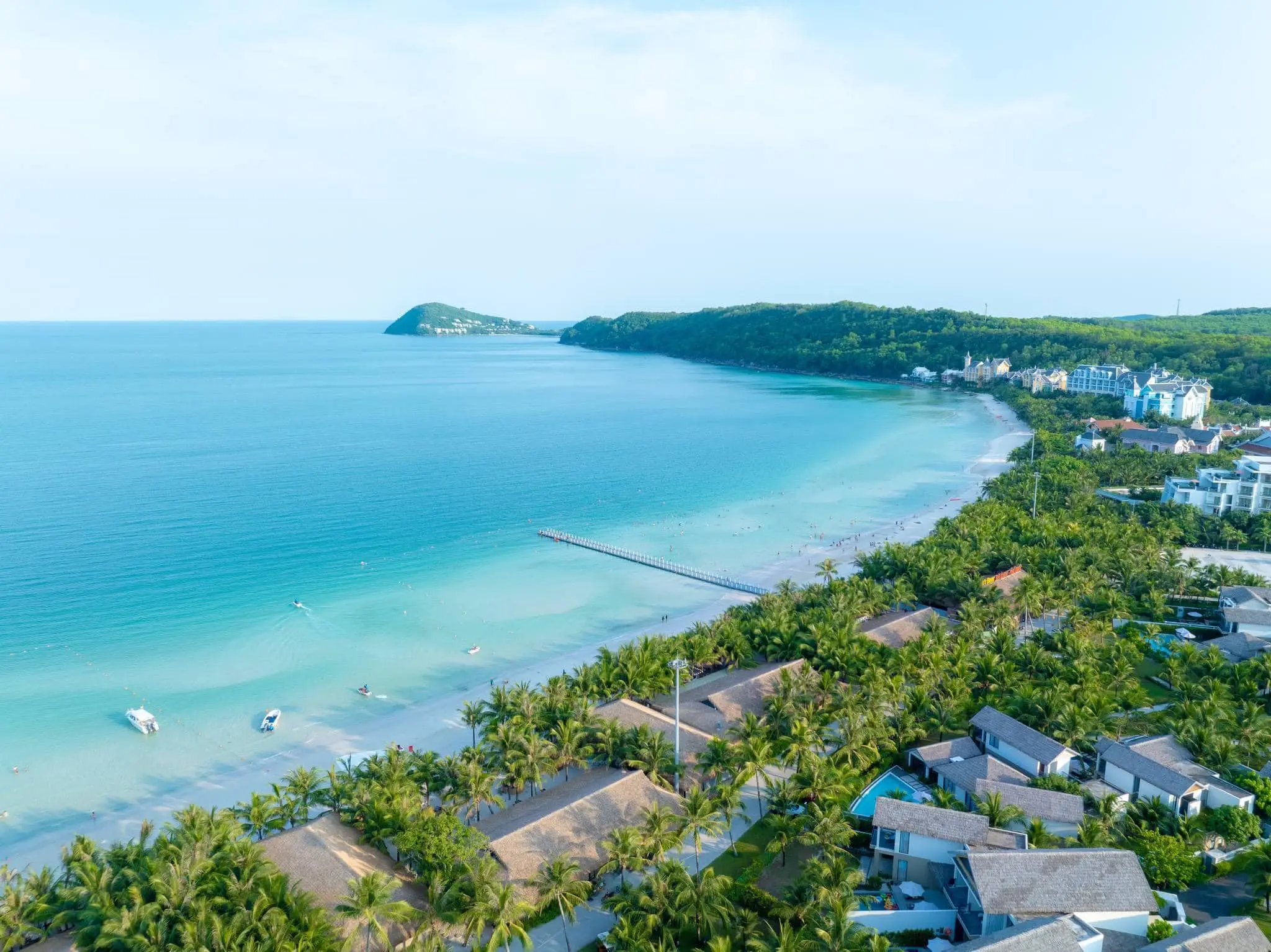
South Vietnam
Ho Chi Minh City · Phu Quoc · Mekong Delta
South Vietnam has just two seasons: a dry season (November to April) with warm sunny days and almost no rain, and a wet season (May to October) with afternoon downpours and high humidity. For most visitors — especially beach-seekers heading to Phu Quoc — the dry season is ideal. Ho Chi Minh City is rewarding year-round; even in the wet season most rain falls in short afternoon bursts, leaving mornings and evenings free for sightseeing.
Frequently Asked Questions
Everything you need to know about Vietnam's weather and the best time to visit.
October to April covers the best weather across most of Vietnam. The sweet spot for a north-to-south trip is October–November (after the northern monsoon, before central floods ease fully) or March–April (warm, mostly dry everywhere). That said, Vietnam is a year-round destination — the three regions have different monsoon seasons, so some part of the country is always in good weather.
No — Vietnam's three regions have completely different rainy seasons. North Vietnam is wettest June to August. Central Vietnam is wettest September to November (the opposite of the north). South Vietnam is wettest May to October. This means you can often find good weather somewhere even during the wettest months.
October is one of the best months for North Vietnam — cool, clear, and Ha Long Bay turns brilliant emerald. However, it's the worst month for Central Vietnam (Hoi An, Da Nang, Hue) where October brings peak flooding risk. South Vietnam is transitioning out of its wet season by late October. Plan your route accordingly — north-heavy itineraries shine in October; avoid Central during this month.
October and November offer the best combination of clear skies, calm seas, and comfortable temperatures. March to April is the second-best window. Avoid June to August when monsoon rain and occasional typhoons can affect cruise schedules. January and February see photogenic winter mist but it can feel cold on deck.
March to April is peak season — warm, sunny, and the sea is perfect for day trips to Cham Island. June to August is excellent for beach lovers. Avoid October to early November when serious flooding is possible. The Hoi An Lantern Festival falls on the 14th of every lunar month and is magical in any season.
Yes — Vietnam is exposed to western Pacific typhoons, particularly the Central Coast (Da Nang, Hue, Hoi An) from September to November, and the north from July to September. Direct hits are uncommon but not rare. Always buy comprehensive travel insurance if visiting during typhoon season, and check weather forecasts in the days before coastal activities. The south and Phu Quoc are much less affected.
December is excellent for South Vietnam — Phu Quoc is at its best, Ho Chi Minh City is sunny and warm, and Christmas is celebrated with surprising enthusiasm. North Vietnam (Hanoi, Ha Long Bay) is cool (13–20°C) and largely dry — a great time for sightseeing but pack layers. Central Vietnam is transitioning out of its wet season; conditions improve through the month.
North Vietnam's summer (June–August) is hot and humid with heavy rain — not the ideal time for the north. Central Vietnam's summer (June–August) is actually excellent — hot and dry with calm seas and ideal beach conditions. South Vietnam's summer is its wet season, with afternoon downpours but warm temperatures year-round. Central Vietnam destinations like Da Nang and Hoi An shine brightest in June and July.
Pack light, breathable clothing for most of Vietnam year-round. Add a thin waterproof jacket for the wet season or a warm layer for North Vietnam in winter (Nov–Feb). Sunscreen and a hat are essential from March onwards. Comfortable walking shoes beat sandals for cobbled Hoi An streets. A compact umbrella is worth its weight regardless of season.
Ready to Book Your Vietnam Trip?
Our Vietnam specialists help you choose the right season and craft an itinerary around the best weather windows — from Ha Long Bay cruises to Hoi An beach days.