Search by keyword, location, holiday type, duration, and sort preference.
Destination Guide · Central Vietnam · UNESCO Heritage
My Son Sanctuary Travel Guide
Vietnam's ancient Hindu temple complex — the spiritual heart of the Cham civilization, an Asia parallel to Angkor Wat.
Last updated: 2026-05-09
Best timeFeb–Aug
CurrencyVND (₹1 ≈ 295 VND)
LanguageVietnamese
Time zoneGMT+7 (+1.5 hrs IST)
From Hoi An45 minutes by car
UNESCOWorld Heritage 1999
Overview of My Son Sanctuary
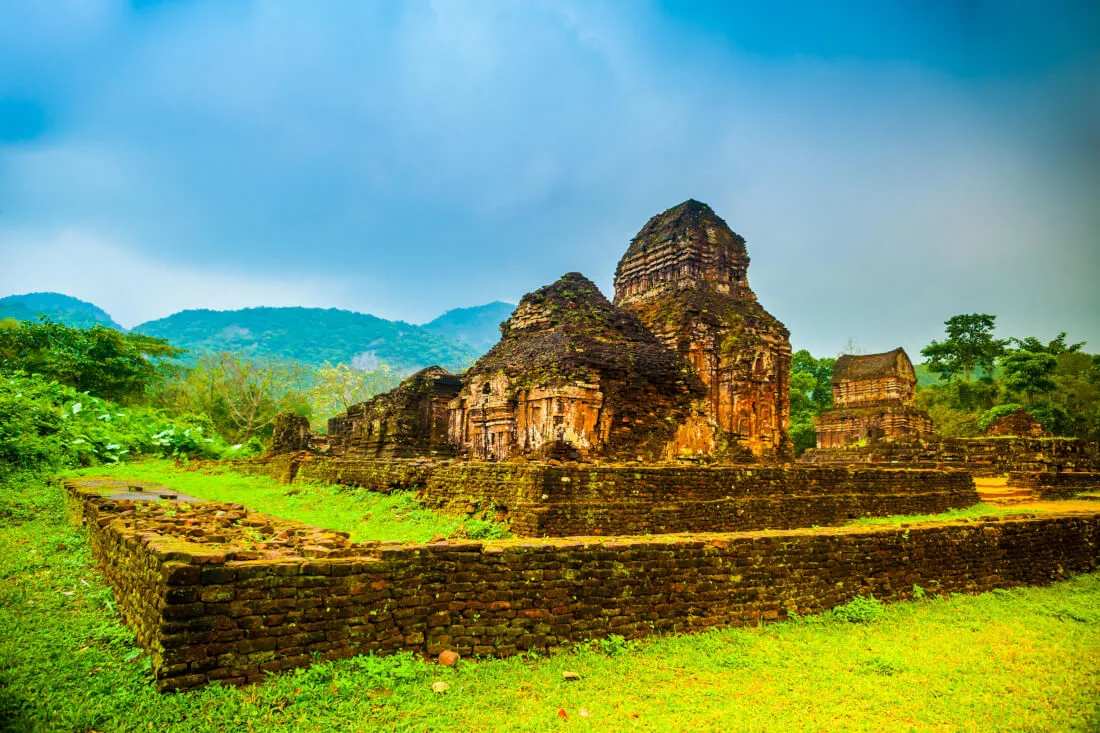
My Son Sanctuary is Vietnam's most spiritually resonant ancient site, and arguably the most underrated UNESCO World Heritage area in Southeast Asia. Hidden in a small valley 45 minutes south of Hoi An, surrounded by jungle and the Hon Quap "Cat's Tooth Mountain," lie the ruins of more than 70 Hindu temples built by the Cham civilization between the 4th and 14th centuries. The Cham were a Hindu-Buddhist kingdom that ruled central Vietnam for over 1,000 years — building elaborate brick temples dedicated to Shiva (their primary deity), Vishnu, Brahma, and assorted Hindu goddesses; carving apsara dancers into temple walls; worshipping linga (the abstract symbol of Shiva) in inner sanctuaries; and creating an artistic tradition with deep, direct connections to ancient India.
For Indian travelers, My Son is unlike anything else in Vietnam. While Hanoi has its Confucian temples, Hoi An has its lanterns, and Saigon has its energy, My Son has Shiva. Walking through the temple groups — most in beautiful red brick, some collapsed, some still standing — you'll see linga and yoni sculptures, multi-armed deities, Sanskrit-style inscriptions, and architectural elements that wouldn't look out of place at Khajuraho, Pattadakal, or Hampi. The Cham civilization received Hinduism via maritime trade with India starting around the 2nd century CE, and the cultural connection ran deep enough that My Son's temple plans, iconography, and rituals all directly mirror Indian temple traditions. Indian travelers consistently say My Son is their favorite Vietnam cultural site precisely because of this familiarity — and the surprise that Vietnam has anything like it.
The site itself is smaller than Angkor Wat, Bagan, or Borobudur — about 70 temple structures originally, fewer than 20 in restorable condition today. The American war devastated My Son in 1969, when B-52 bombers reduced about half the standing temples to rubble. UNESCO listing in 1999 brought restoration support; ongoing archaeological work continues. Most travelers visit as a half-day trip from Hoi An (45 min away) or full-day from Da Nang (1 hr 15 min). Two hours at the site is enough; serious history buffs spend three. There are no overnight accommodations at My Son — this is a day-trip destination, not a multi-day one.
🛕 Why My Son is special for Indian travelers:
My Son is the strongest India-resonance destination in Vietnam — a UNESCO Hindu temple complex with direct cultural DNA from ancient India.
Cham civilization adopted Hinduism via maritime trade routes from the 2nd century CE
Temples dedicated to Shiva (primary), Vishnu, Brahma, Durga, and Lakshmi
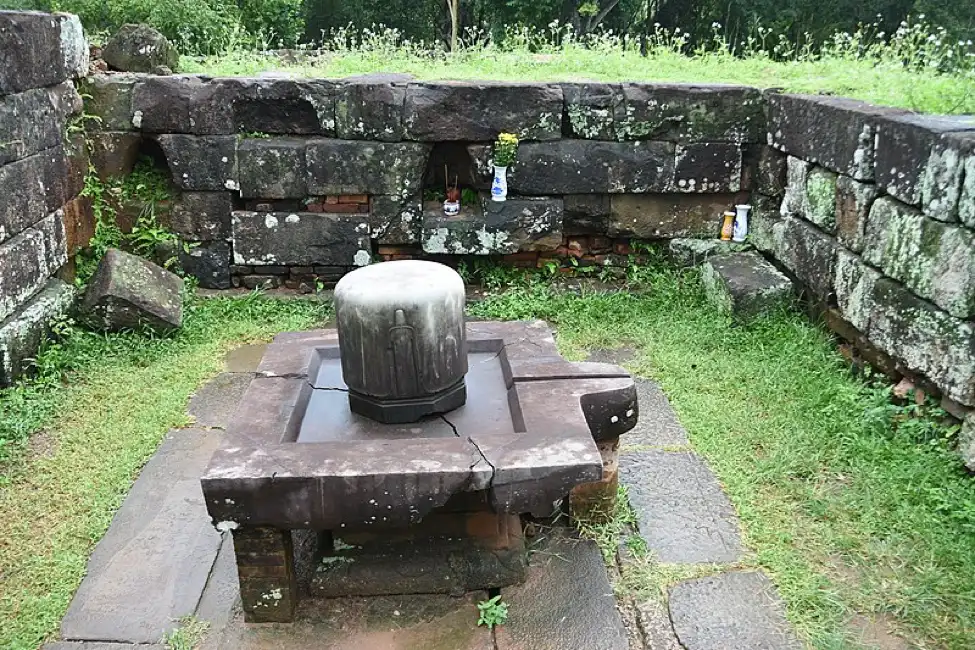
Linga-yoni arrangements in inner sanctuaries — identical to Indian Shiva temples
Sanskrit-derived inscriptions throughout the site
Apsara dance and music traditions parallel Indian classical forms
Architectural style derived from Indian Nagara and Dravidian temple traditions
Cham Brahmin priests conducted rituals from Sanskrit texts
About 160,000 Cham people still live in Vietnam today — a small Hindu Cham community continues modified Hindu traditions, the only Hindu community in mainland Southeast Asia
For Indian Hindu travelers, My Son offers what no other Vietnam destination does: familiar sacred iconography — Shiva, the linga, apsaras — outside India, built by a civilization that received Hinduism from Indian merchant-priests over 1,500 years ago.
Staying in Hoi An? Most Indian travelers use Hoi An as their My Son base — 45 minutes by car, with a sunrise departure at 5:00 AM for the best experience. Hoi An also offers one of Vietnam's most beautiful Old Towns for evenings.
Read the Hoi An guide →
Based in Da Nang? 1 hr 15 min to My Son. Da Nang also has the world's most important Cham Sculpture Museum — combine both in a full day for the most complete Cham heritage experience.
Read the Da Nang guide →
Best Time to Visit My Son Sanctuary
My Son's weather follows central Vietnam's pattern, but the site is mostly outdoor — heat and rain affect the visit experience significantly.
For Indian travelers: Best months for Indian travelers: February to May (excellent weather, dry, comfortable for walking). Mornings (7:00–10:00 AM) are coolest year-round. Avoid September–November (heavy rain, occasional site closures due to flooding). Best time of day: sunrise visit (5:30–7:00 AM) — first tour buses arrive 8:30–9:00 AM, so you get the site nearly to yourself plus spectacular morning light on the red brick.
Best time of day — Sunrise visit: Depart Hoi An at 5:00 AM, arrive My Son at 5:45 AM. Gate opens at 6:00 AM. The site is nearly empty until 8:30 AM when tour buses arrive, and the morning light on the red brick is spectacular. Strongly recommended.
Month
High °C
Low °C
Rainfall
Notes
Jan
24°
19°
Moderate
Cool, sometimes overcast; manageable
FebIdeal
26°
20°
Low
Excellent — cool, dry, comfortable
MarIdeal
29°
22°
Low
Ideal — best weather for site visits
AprIdeal
31°
23°
Low
Ideal — warm, dry, photogenic
MayIdeal
33°
25°
Low
Excellent — hot but dry; early arrival essential
Jun
34°
26°
Light
Very hot; avoid midday; early morning still good
Jul
34°
26°
Light
Same as June
Aug
33°
26°
Moderate
Hot, afternoon showers possible
Sep
31°
25°
Heavy
Storm risk; site may close
Oct
29°
24°
Very heavy
Worst month — flooding common, site sometimes closes
Nov
27°
22°
Heavy
Wet, sometimes closed
Dec
25°
20°
Moderate
Cool, sometimes wet
All temperature ranges are approximate. My Son weather can vary year to year. Always check forecasts closer to travel. Site may close during extreme rain or flooding (Oct–Nov).
How to Reach My Son Sanctuary from India
My Son is a day-trip destination — no overnight accommodation. All Indian travelers fly to Da Nang International Airport (DAD), stay in Hoi An (45 min from My Son) or Da Nang (1 hr 15 min), then visit My Son as a half-day excursion. See our Hoi An guide and Da Nang guide for accommodation and flight options.
My Son has no airport and no overnight accommodation. All Indian travelers visit as a day trip from Hoi An (45 min) or Da Nang (1 hr 15 min). The first step is flying into Da Nang.
Fly into: Da Nang International Airport (DAD) — then stay in Hoi An or Da Nang as your base for the My Son visit. See the Da Nang destination page for India-to-Da Nang flight options.
Flight Routes from India to Da Nang (DAD)
Delhi / Mumbai (via Bangkok)
via Bangkok (BKK) then Da Nang (DAD)
Vietnam Airlines, Thai Airways, VietJet
Total: 7–9 hrs
Delhi / Mumbai (via Singapore)
via Singapore (SIN) then Da Nang (DAD)
Singapore Airlines, IndiGo, VietJet
Total: 8–10 hrs
Bangalore / Hyderabad / Chennai
via Singapore or Bangkok then Da Nang
IndiGo, Singapore Airlines, AirAsia
Total: 8–11 hrs
Kolkata (CCU)
via Bangkok or Kuala Lumpur then Da Nang
IndiGo, AirAsia, Thai Airways
Total: 7–9 hrs
Typical fare: ₹25,000–₹50,000 economy round trip from India to Da Nang. Once in Da Nang, My Son is a half-day excursion from your hotel (₹1,000–₹6,000 depending on tour type).
Smart routing for Indian travelers:
Pattern A — Sunrise priority (best): Sleep in Hoi An → 5:00 AM departure → My Son sunrise (5:30–8:30 AM) → return Hoi An by 9:30 AM for breakfast and rest of day. Strongly recommended.
Pattern B — Combined day trip: Hoi An departure 8:00 AM → My Son 9:00–11:30 AM → lunch at My Son or nearby → afternoon Hoi An or Da Nang.
Pattern C — Full-day Da Nang circuit: Da Nang 8:00 AM → My Son (9:15–12:00 PM) → Da Nang Cham Sculpture Museum (2:00–4:00 PM) → hotel.
Getting to My Son from Hoi An and Da Nang
Mode
Cost (approx.)
Time
Notes
Option 1: Private car from Hoi An (recommended)
₹3,500–₹6,000 round trip
45 min each way
English-speaking driver-guide. Sunrise departure 5:00 AM available. We arrange for all travelers. Most flexible option.
Option 2: Sunrise group tour from Hoi An
₹1,500–₹3,500/person
Depart 5:00 AM, return 10:00 AM
Small group 6–12 people. Arrive before crowds. Best option for photographers. Strongly recommended.
Option 3: Standard group day tour from Hoi An
₹1,000–₹2,500/person
Depart 8:00 AM, return 12:30 PM
Includes transport + site entry + English guide. Groups 15–30 people. Convenient but crowded.
Option 4: Private car from Da Nang
₹4,500–₹7,500 round trip
1 hr 15 min each way
Good for travelers based in Da Nang. Often combined with Cham Sculpture Museum same day.
Option 5: Scooter from Hoi An (self-drive)
₹400/day rental
1 hr each way
Adventurous option for confident riders. Free flexibility. Roads have some traffic on Highway 1.
Option 6: Boat + bus combination from Hoi An
₹1,500–₹3,500/person
Scenic but slower (group tour)
Boat on Thu Bon River to halfway point, then bus to My Son. Pleasant river scenery. Book through Hoi An tour operators.
Visa details: Standard Vietnam e-visa (₹2,100, 3 days processing) covers all of mainland Vietnam including My Son. No special permit needed for the site.
Featured My Son & Central Vietnam Packages
We're curating our My Son Sanctuary packages — including Hoi An + My Son cultural combinations and Central Vietnam heritage circuits. Contact us for a custom My Son itinerary — from a sunrise half-day visit to a full Central Vietnam heritage circuit including Hue, Hoi An, and the Cham Museum.
Top Attractions at My Son Sanctuary
From the main temple complex of Group B with its linga sanctuaries to the daily apsara dance performance, the on-site museum, the Group A bombing crater, the hidden hillside temples, and the sacred spring — My Son rewards careful exploration, especially at sunrise.
1. Group B — Main Temple Complex
Included in site entry (₹750)6:00 AM – 5:00 PM⏱ 30–45 minutes
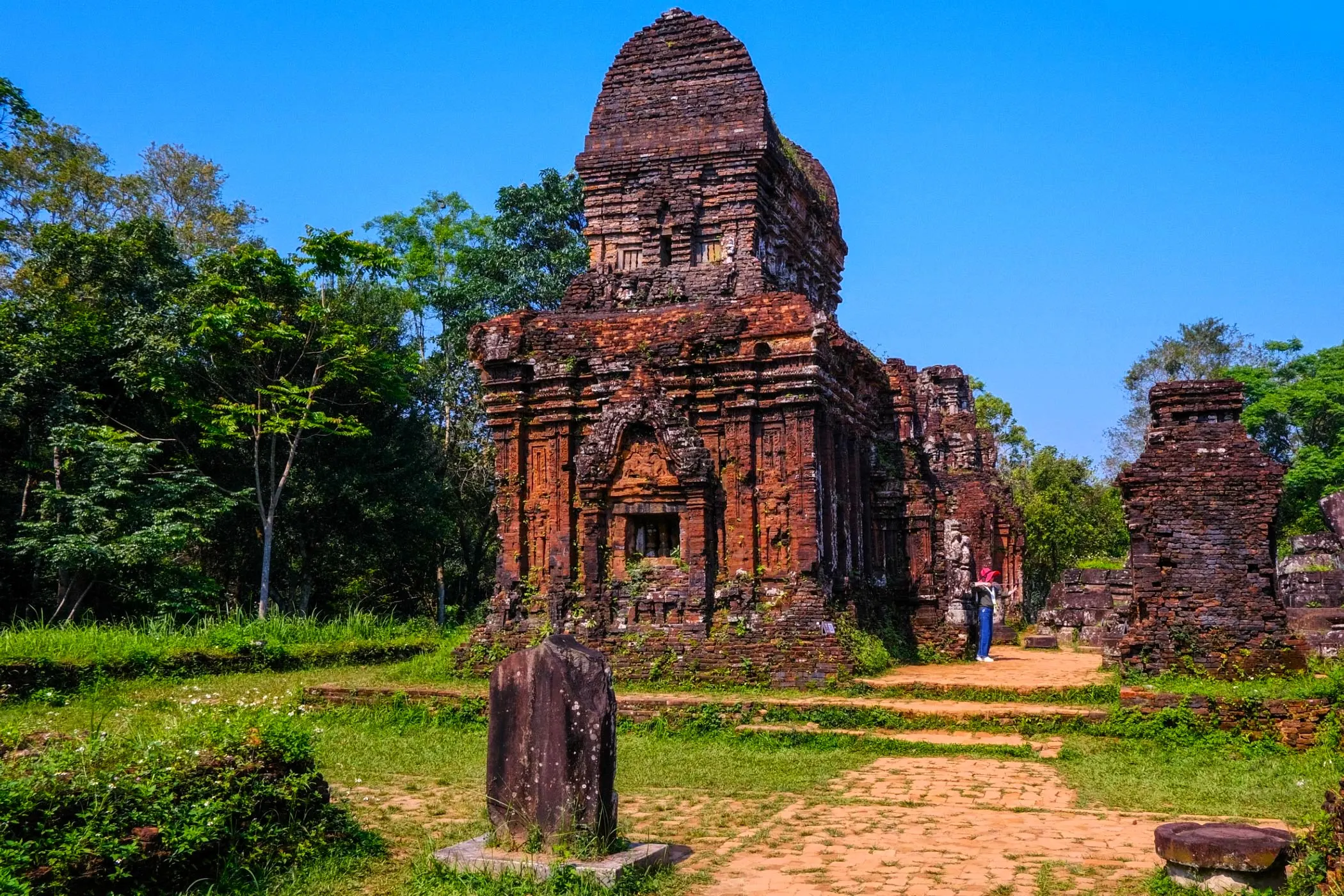
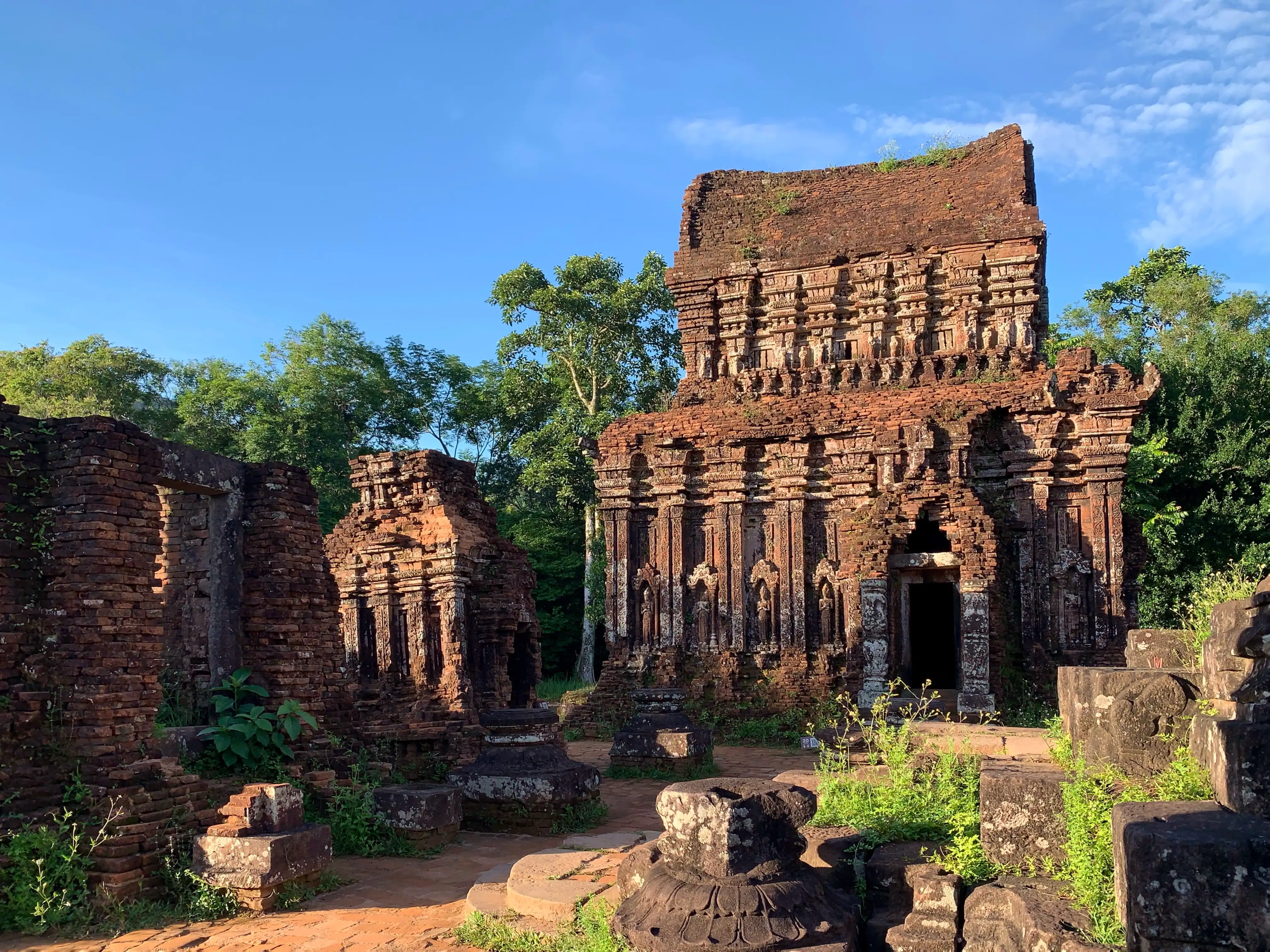
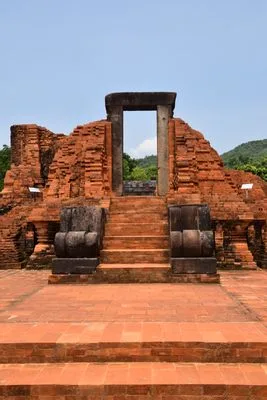
The largest and best-preserved temple group at My Son, dating from the 11th century. Multiple temples and structures in red brick, dedicated to Shiva. Contains the best-preserved linga sanctuaries and the most intact temple towers. The architectural style here mirrors Indian temple plans most directly — garbhagriha (inner sanctum), shikhara (tower), and yoni-linga arrangement.
The first must-see group for any visitor — start here. The B1 main sanctuary houses a large linga inside its inner sanctum. For Indian Hindu visitors, the spatial arrangement of the inner sanctum with its linga will feel immediately familiar. Notice the decorative bands, the corbelled doorways, and the carved apsara figures on the exterior — direct parallels to Indian temple decoration.
2. Apsara Dance Performance
Included in site entry9:30 AM and 10:30 AM daily (15 minutes)⏱ 15 minutes (arrive 5 min early)
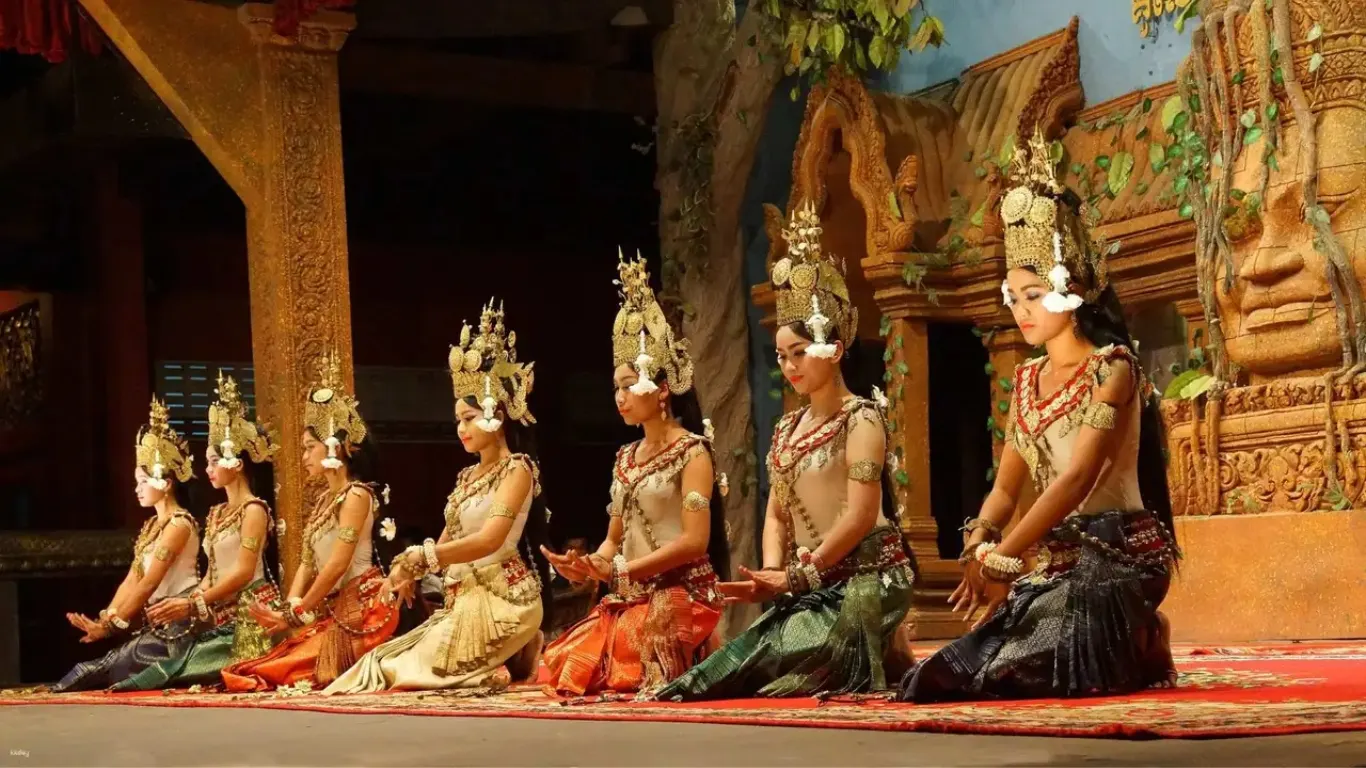
A 15-minute traditional Cham dance performance featuring apsaras (celestial nymphs) and Shiva-related rituals, performed at the open-air theater. Live musicians play traditional Cham instruments; dancers wear traditional Cham costumes.
A genuine highlight for Indian visitors. The apsara dance style, while distinctly Cham, shares clear roots with classical Indian dance forms — the hand gestures (mudras), the costume style, the music's structure, the narrative connection to Shiva all show the Indian-Vietnamese cultural connection vividly. Arrive 5 minutes before the performance for a good seat. The 9:30 AM performance is less crowded than 10:30 AM.
3. Group A — The Destroyed Central Temple
Included6:00 AM – 5:00 PM⏱ 20–30 minutes
Once the largest temple at My Son and the spiritual center of the entire complex. Destroyed by American B-52 bombing in August 1969 — what remains is a giant crater and rubble that you can walk around. The destruction of the site's most important temple in two days of bombing in 1969 is a sobering chapter of modern history.
Sobering and important context for understanding the war's impact on Vietnamese culture. A small information board explains what was destroyed. The contrast with the still-standing Group B makes the loss tangible. The sense of absence here is powerful — you're standing where the central Shiva sanctuary once stood.
4. My Son On-Site Museum
Included with site entry6:30 AM – 4:30 PM⏱ 45 minutes
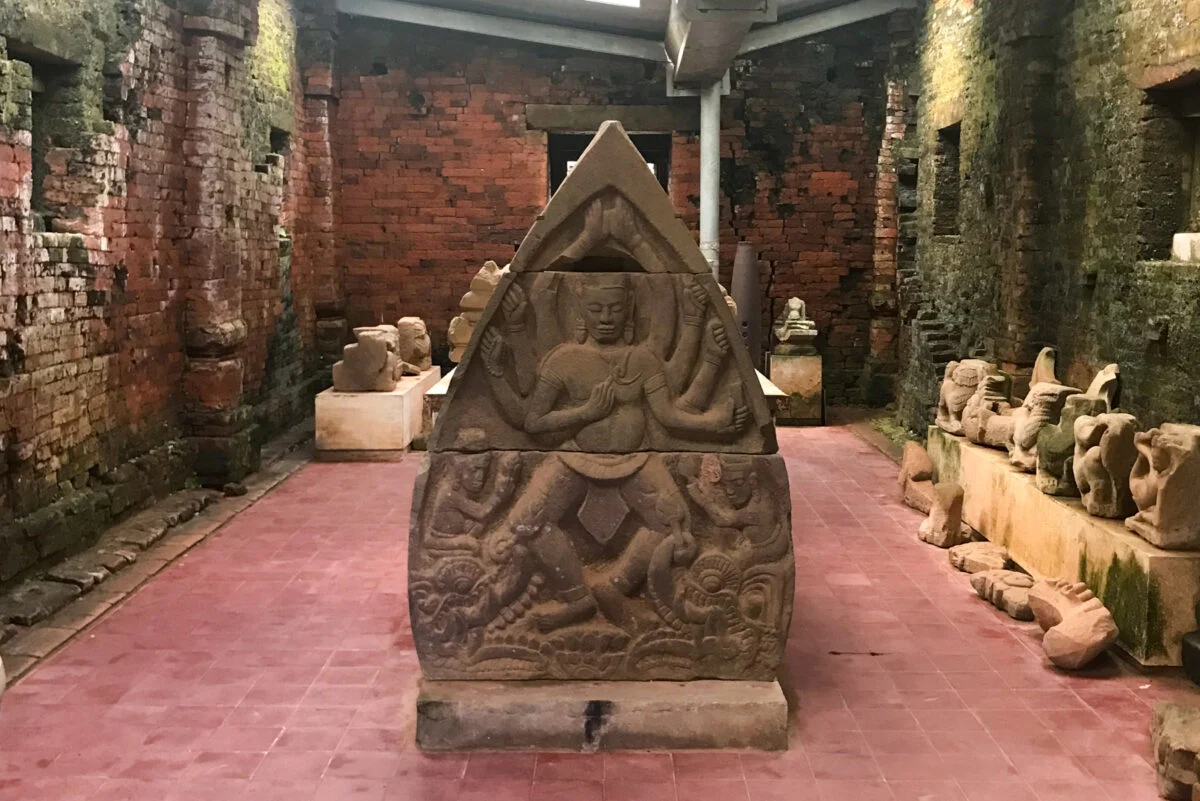
A small on-site museum showcasing Cham sculptures, archaeological artifacts, and the history of the site's discovery and restoration. Includes original linga and Shiva carvings, decorative elements from the temples, and information about Cham culture, religion, and the archaeological record.
Don't skip this — many visitors rush through, but the museum provides essential context for everything you're seeing in the ruins. The Cham linga, Shiva sculptures, and apsara carvings here are exceptional. Pair with the more comprehensive Da Nang Cham Sculpture Museum (the world's most important Cham art collection) if you have a full day.
5. Group C — Buddhist Influence
Included6:00 AM – 5:00 PM⏱ 20 minutes
Smaller temple group showing later Buddhist influence on Cham culture (after the 9th century). Includes interesting sculptures combining Hindu and Buddhist iconography — Shiva figures alongside Bodhisattva carvings, showing the Cham religious evolution from purely Hindu to Hindu-Buddhist syncretism.
Particularly interesting for Indian visitors familiar with both traditions. The mixed iconography shows parallels to Indian syncretic traditions — especially interesting to compare with similar Hindu-Buddhist fusion art from the Gupta-Pala period in India.
6. Group D — Sculpture Gallery
Included6:00 AM – 5:00 PM⏱ 20 minutes
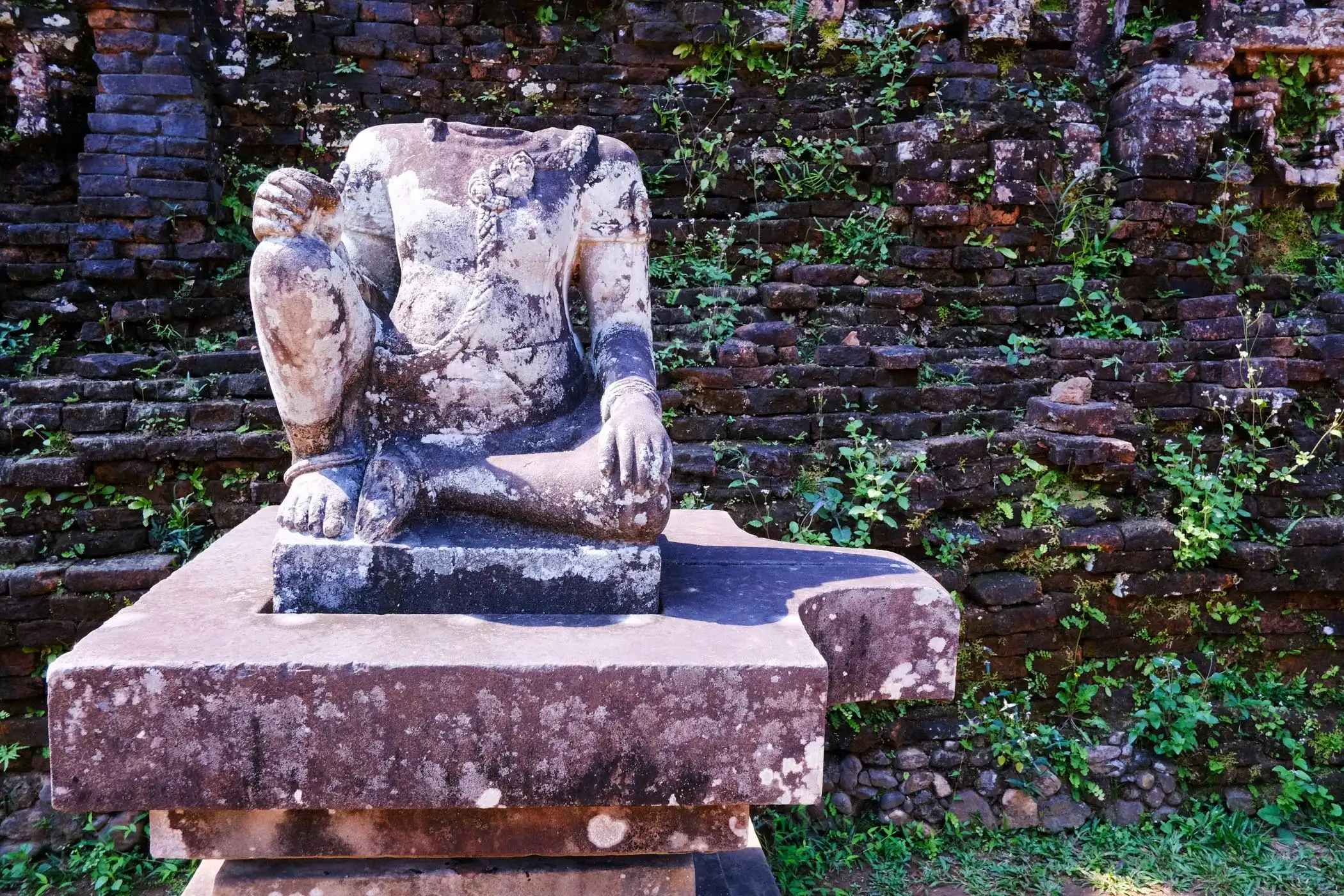
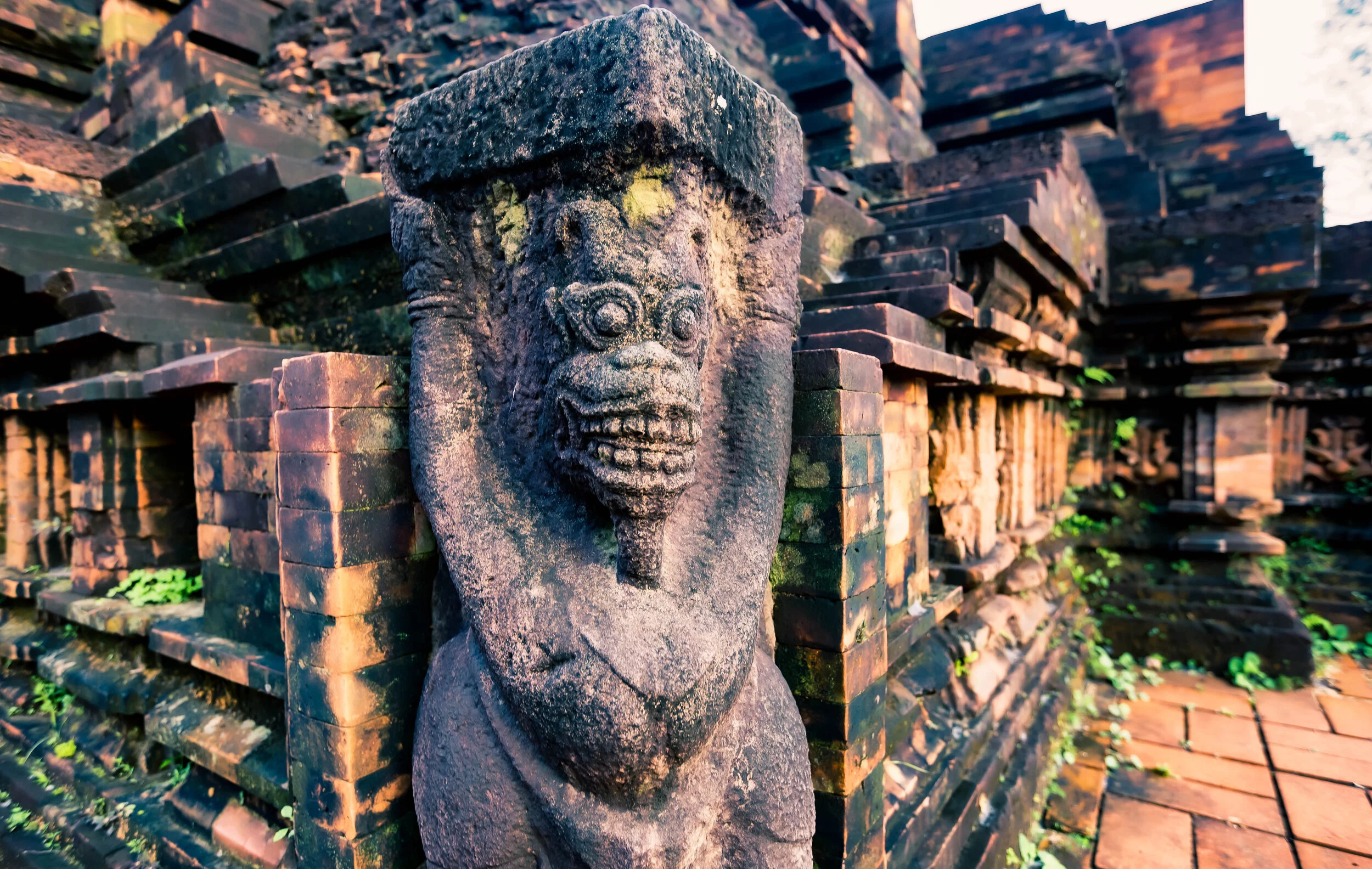
A series of temple ruins housing some of the best-preserved in-situ sculptures from the site. Many statues have been moved to the on-site museum and the Cham Sculpture Museum in Da Nang, but the original placement context and remaining carvings provide good understanding of Cham decorative traditions.
The decorative friezes here show the range of Cham sculptural vocabulary — dancing figures, kala (time demon) faces above doorways, floral scrolls — all with clear Indian influence. Compare with the museum pieces to understand the original decorative program.
7. Group E — Early Cham Temples (8th–9th century)
Included6:00 AM – 5:00 PM⏱ 20 minutes
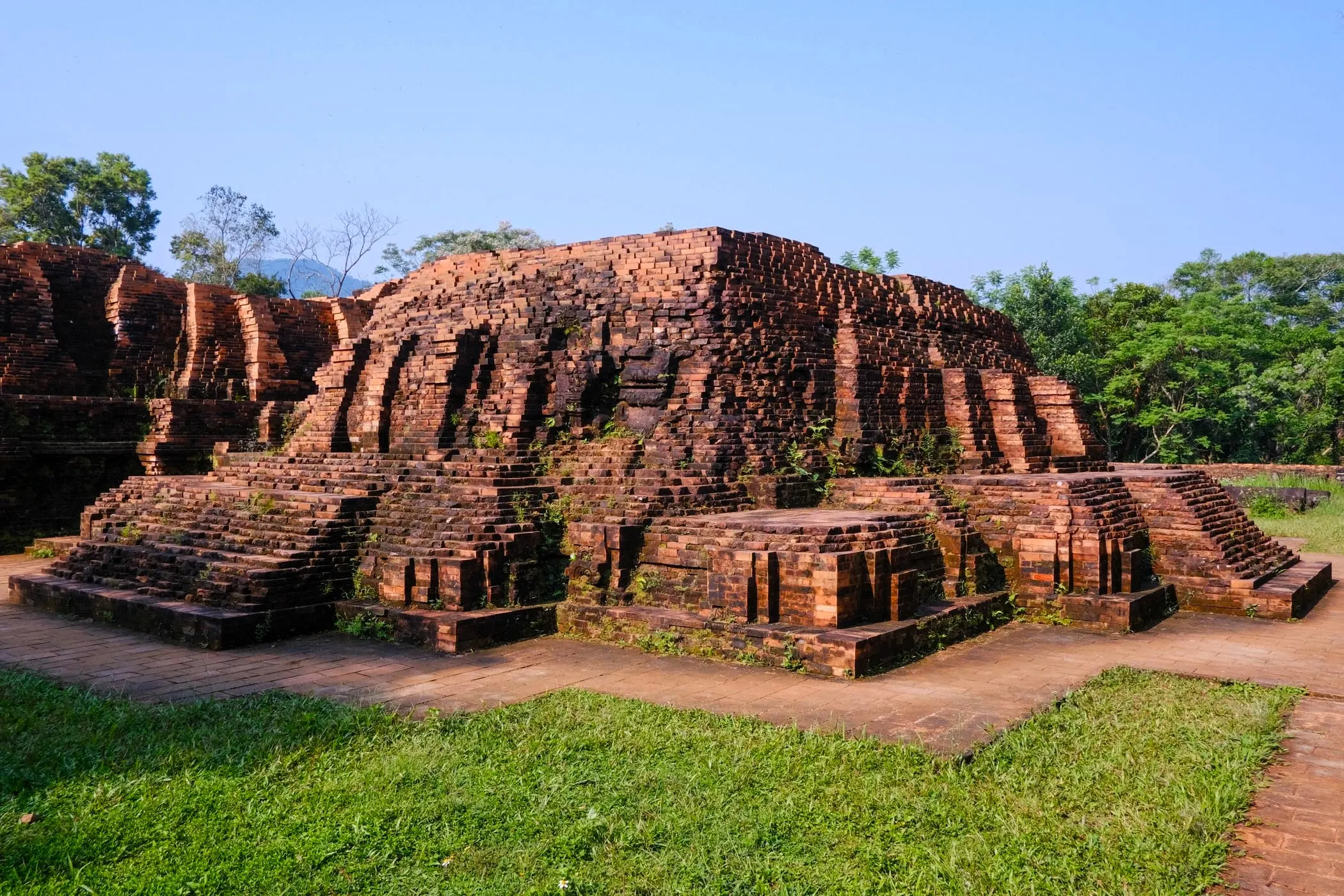
Earlier temple group dating from the 8th–9th centuries. Heavier brick construction, more weathered, with strong Hindu iconography. The architectural style here is closer to South Indian Pallava-period temple traditions than other groups.
For Indian travelers familiar with Pallava or early Dravidian temple architecture, the E group will look strikingly familiar. The constructional technique and proportional system clearly derive from the same Indian architectural tradition. Interesting comparison with Group B (later, more elaborate).
8. Group F — Linga Sanctuaries
Included6:00 AM – 5:00 PM⏱ 20 minutes
Houses some of the best-preserved linga and yoni sculptures at My Son. The inner sanctuaries (garbhagriha) of these temples are intact enough to see the ritual arrangement clearly — a large linga set in a yoni platform, exactly as in Indian Shiva temples.
For Hindu travelers, this is the most direct ritual connection. The lingam-yoni stone here is in its original position — the same sacred arrangement found in Shiva temples across India, from Somnath to Murudeshwar. The emotional recognition many Indian visitors feel here is genuine.
9. Group G — Hidden Hillside Temple
Included6:00 AM – 5:00 PM⏱ 15–20 minutes (10 min uphill walk)
A smaller temple group on a hillside above the central area. Less visited than the main groups — most tour groups skip it. More atmospheric and often completely empty of other visitors.
Hidden gem. Take the uphill path — about 10 minutes from Group B. The elevated position gives views down to the main site with Hon Quap mountain as backdrop. Often completely empty of other visitors. Perfect for quiet reflection or photography without crowds.
10. Hon Quap Mountain (Cat's Tooth Mountain)
Free (within site); guide for climbing ₹600–₹1,200Daylight hours⏱ View from below: included in site walk. Summit climb: 4 hrs round trip
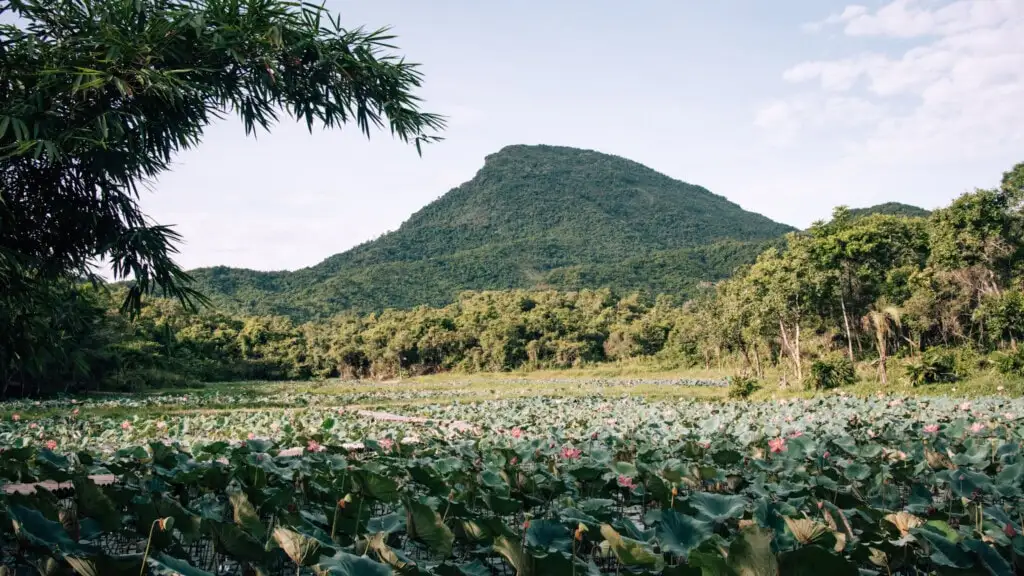
The dramatic single mountain peak that frames the My Son valley, visible from every part of the site. Sacred to the Cham — temples are oriented toward it. Hon Quap ("Cat's Tooth") was considered a manifestation of Shiva, and the valley it overlooks was chosen as the sacred center precisely because of this mountain.
Most visitors photograph it as a backdrop — the peak above the temple towers in early morning mist is one of My Son's iconic images. Serious hikers can attempt the summit (4 hours round trip with guide, strenuous). The mountain's significance as a sacred Shiva presence resonates with Indian visitors who recognize the tradition of sacred peaks in Hindu geography.
11. Cham Tower Foundation Ruins
Included6:00 AM – 5:00 PM⏱ 20 minutes (multiple scattered sites)
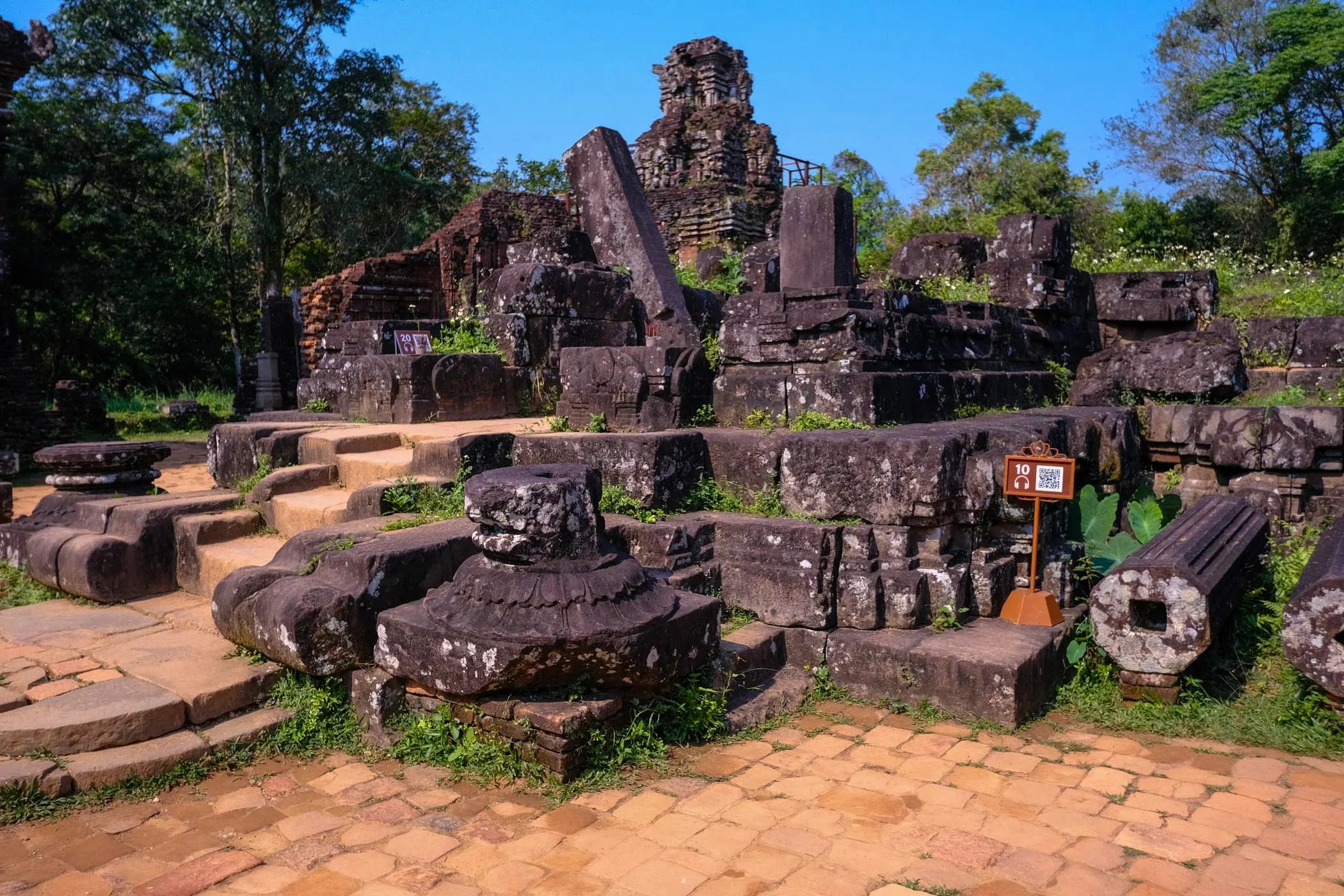
Several smaller temple foundation outlines scattered throughout the valley. Some are just brick footprints; others have partial walls. They give a sense of the original complex's much larger scale — when fully intact, My Son had over 70 structures covering the entire valley floor.
Walking between these foundation outlines helps you grasp the scale of what was lost. Before the 1969 bombing, this valley had 70+ standing structures. Today, fewer than 20 are in restorable condition. The foundations between active restoration zones tell this story most clearly.
12. Sacred Spring & Bathing Tank
Included6:00 AM – 5:00 PM⏱ 10 minutes
A small spring and stone-lined bathing tank within the site, used in Cham religious rituals. The tank is fed by a natural spring that still flows. In Hindu tradition, sacred springs (tirtha) are integral to temple complexes — water ritually purifies worshippers before entering the inner sanctum.
A small but meaningful spot. Indian travelers will recognize the tirtha tradition immediately. Touch the water (it's clean and refreshing on a hot day). The stone tank construction technique mirrors Indian step-well and temple tank traditions.
13. Protected Forest & Wildlife
Included in site entryBest before 9:00 AM⏱ Combined with site walking between groups
The protected forest around the temples houses interesting bird species, butterflies, and occasional small wildlife. The walk between temple groups passes through this primary forest, creating a unique atmosphere where jungle meets ancient brick.
Early morning (before 9 AM) is when wildlife is most active — birds calling, butterflies emerging, occasional monkeys in distant canopy. The combination of jungle atmosphere and red brick ruins creates the characteristic My Son visual. Enhance this by arriving early when mist still hangs between the trees.
14. On-site Cham Cuisine Restaurant
Pay separately; ₹250–₹600/person8:00 AM – 3:00 PM⏱ 1 hour
A small restaurant at the site entrance serving traditional Cham-influenced Vietnamese food — a cuisine rarer to find than mainstream Vietnamese. Cham dishes are sweeter, more aromatic, and show Indian spice influence in their flavor profiles.
Cham cuisine is hard to find elsewhere in Vietnam. Try Cham-style fish curry (coconut-based with aromatic spices unusual in central Vietnamese cooking), coconut Cham chicken, or the Cham rice dishes. Better than it appears from the outside. Most visitors return to Hoi An for lunch, but if you're hungry early, this is worth trying.
15. Photography Circuit (Sunrise Route)
Included in site entryBest 5:30–8:30 AM (sunrise)⏱ 2–3 hours for thorough coverage
A specific walking route around the site optimized for photography — using morning light from the east illuminating the red brick, the Hon Quap mountain backdrop, mist between the temple towers, and the spacing between groups. The most photographically rewarding temple site in central Vietnam.
Best in March–April for clearest light without haze. Arrive at 5:30 AM (gate opens at 6 AM, arrive just before). Start at Group B for first light, move to Group G viewpoint, return for Group F and foundations in mid-morning light. Bring a tripod for low-light interior shots. Polarizing filter helps reduce brick glare.
All ticket prices are approximate (2026). Site entry (₹750 / 250,000 VND) is cash-only — bring cash from Hoi An or Da Nang.
Famous Food at My Son & Nearby
There's limited dining at My Son itself — primarily one on-site restaurant serving Cham-influenced food. Most visitors return to Hoi An for lunch. But Cham-influenced cuisine is worth knowing.
1
Cham Fish Curry₹250–₹500
Coconut-based fish curry with aromatic spices — an unusual flavor profile in central Vietnamese cuisine, showing direct Indian culinary influence. Available at the on-site restaurant.
Best at: My Son on-site restaurant; select Hoi An restaurants serving Cham cuisine
2
Com Lam (Bamboo Sticky Rice)₹80–₹120
Sticky rice cooked inside bamboo tubes. Common at the site entrance and restaurant. Simple, filling, distinctively aromatic.
Best at: On-site restaurant and food stalls
3
Coconut Cham Chicken₹300–₹500
Chicken in sweet coconut-cream sauce with Cham spice profile. Sweeter and more aromatic than mainstream Vietnamese chicken dishes.
Best at: My Son on-site restaurant
4
Mỳ Quảng (Cham-style)₹100–₹200
Central Vietnamese turmeric noodle soup with Cham aromatic herb influence. Different from the Da Nang restaurant version — slightly more aromatic with local herb additions.
Best at: On-site restaurant and nearby village stalls
5
Fresh coconut₹50–₹100
Fresh coconuts sold at the site entrance. Essential hydration in the heat.
Best at: Entrance stalls
6
Vietnamese iced coffee₹50–₹80
Strong Vietnamese coffee over ice at the site café area.
Best at: On-site café
7
Hoi An White Rose Dumplings₹100–₹200
If returning to Hoi An for lunch. Hoi An's signature dumpling — available at restaurants in the Old Town, 45 minutes from My Son.
Best at: Hoi An restaurants (45 min return)
8
Cao Lau (Hoi An noodles)₹100–₹200
The Hoi An signature noodle dish — made with water from a single local well. Best had upon returning from My Son for lunch.
Best at: Hoi An restaurants (45 min return)
9
Bánh Mì₹50–₹100
Hoi An's bánh mì is the most famous in Vietnam (Bánh Mì Phượng). Buy before departing in the morning for a My Son breakfast.
Best at: Bánh Mì Phượng and competitors in Hoi An
10
Cham Spice Rice (Com Chien)₹150–₹300
Fried rice with Cham spice profile — more aromatic and slightly sweet compared to standard Vietnamese fried rice. Available at the on-site restaurant.
Best at: My Son on-site restaurant
🌿 Vegetarian & Vegan Travelers
Very limited vegetarian options at My Son itself. Most Indian travelers do the site on a half-day morning trip and return to Hoi An for lunch at vegetarian-friendly restaurants. The on-site restaurant can sometimes prepare simple vegetable dishes on request.
On-site restaurant — request vegetarian; basic options possible with advance notice
Bring snacks and water from Hoi An for the morning visit
Hoi An (45 min return) — extensive vegetarian-friendly dining. See Hoi An guide.
Karma Waters (Hoi An) — good vegetarian options
Reaching Out Tea House (Hoi An) — quiet café with vegetarian menu
All prices are approximate (2026). Confirm with us before booking.
Markets & Shopping at My Son
Shopping at My Son itself is limited to the site entrance shops — Cham handicrafts, linga and apsara replicas, history books, and postcards. Serious shopping is in Hoi An (45 min), or the Da Nang Cham Museum gift shop for serious collectors.
My Son Entrance Shops
Small shops at the site entrance. Cham handicrafts (linga replicas, apsara figurines, traditional Cham clothing), books on Cham history and Vietnamese archaeology, postcards.
Hours: Site hours ·
Best for: Small Cham-theme souvenirs; Cham history books
Hoi An Ancient Town (base)
The main shopping experience near My Son is in Hoi An — 45 minutes away. Silk, lanterns, tailor shops, lacquerware, ceramics.
Hours: Hoi An hours ·
Best for: Serious shopping — see Hoi An destination page
Da Nang Cham Museum Gift Shop
If visiting the Da Nang Cham Sculpture Museum (recommended complement), their gift shop sells quality Cham-reproduction sculptures and art books.
Hours: Museum hours ·
Best for: Quality Cham art reproductions; serious collectors
💡 Bargaining & Buying Tips
Light bargaining at My Son entrance shops (30% off). Cham history books: fixed price, worth buying. Most travelers save their shopping energy for Hoi An Old Town.
What to Buy at My Son
Cham books and postcards (₹100–₹500), small linga or apsara replica sculptures (₹200–₹600), traditional Cham textile pieces (₹500–₹2,000 at entrance shops). Most notable finds are in Da Nang's Cham Museum gift shop.
Nightlife — Hoi An & Da Nang
My Son Sanctuary closes at 5:00 PM and has no nightlife. All evening experiences are in Hoi An or Da Nang — the traveler's base for the My Son visit.
Hoi An lantern evening (recommended)
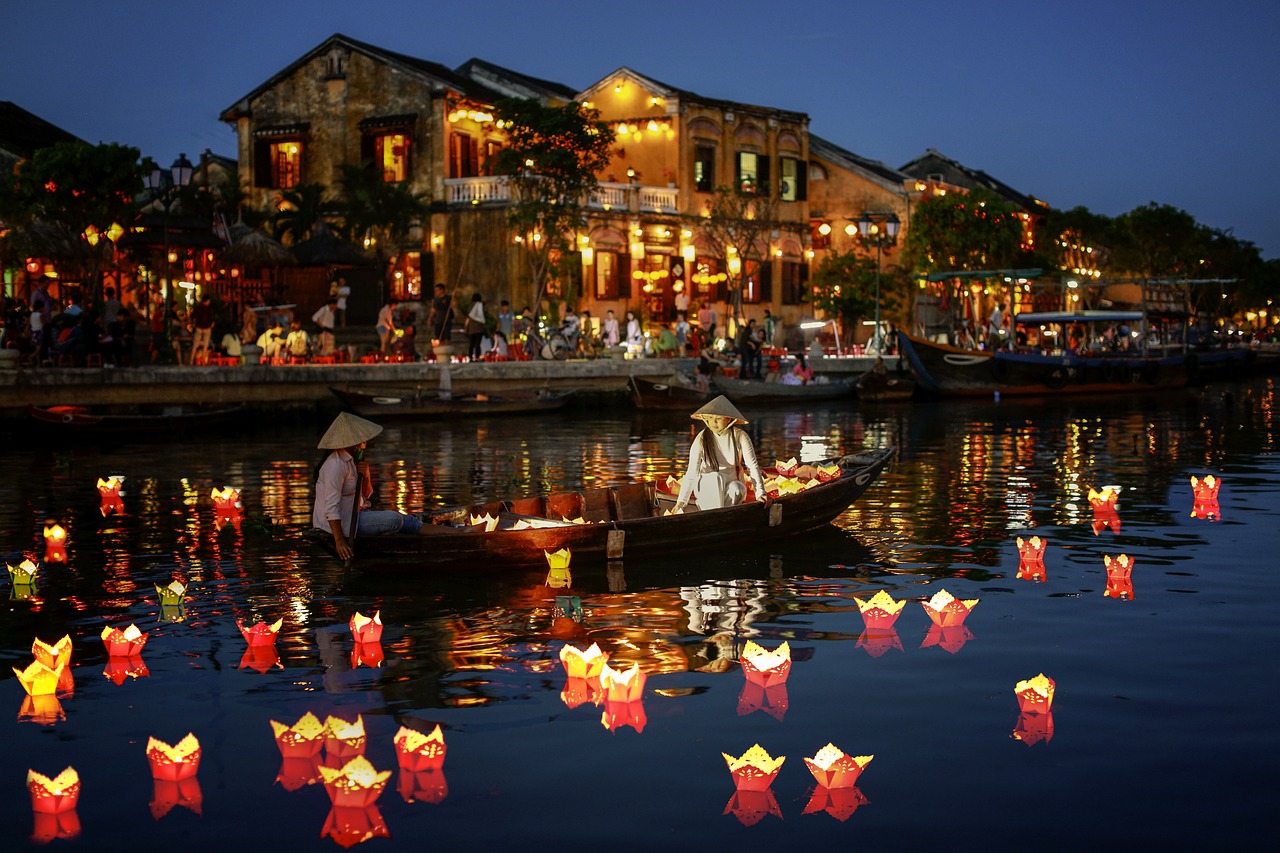
Return to Hoi An by early afternoon, rest, then experience the Old Town at night — lantern-lit streets, river lanterns, night market. The natural complement to a My Son morning.
Romantic, cultural, Hoi An speciality
Da Nang beachfront bars
For travelers based in Da Nang. Several beach bars on My Khe Beach. Good for a relaxed evening after the My Son morning.
Beach, relaxed
Hoi An Old Quarter restaurants
Hoi An's Old Quarter has excellent evening dining options. Most travelers visiting My Son in the morning enjoy Hoi An's restaurant scene for dinner.
Cultural dining, romantic
Note for Indian travelers: My Son is a morning site — plan your evening in Hoi An or Da Nang. The classic My Son day: 5 AM departure → sunrise at My Son → back to Hoi An by 9:30 AM → relaxed afternoon → Hoi An evening.
Day Trips & Nearby
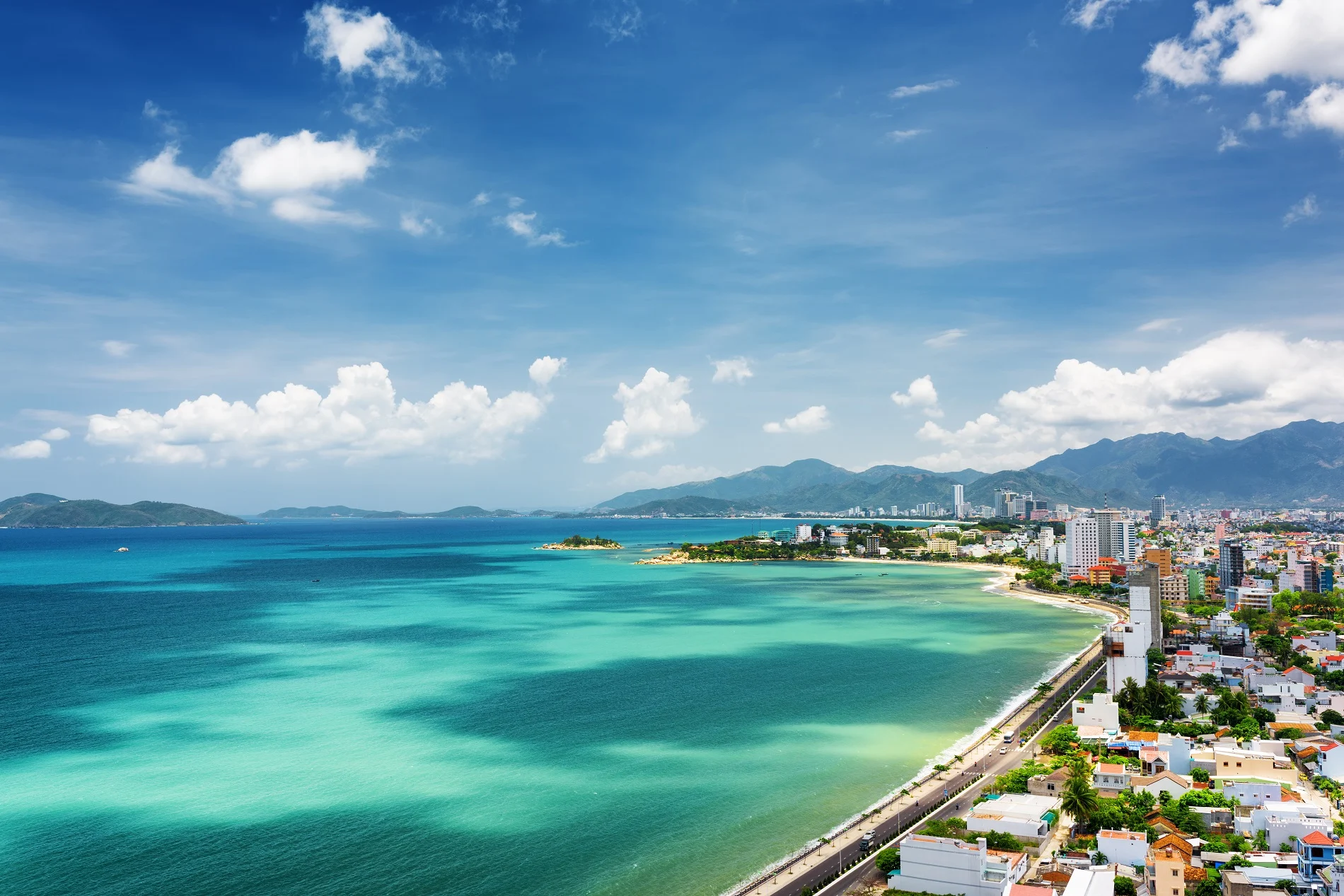
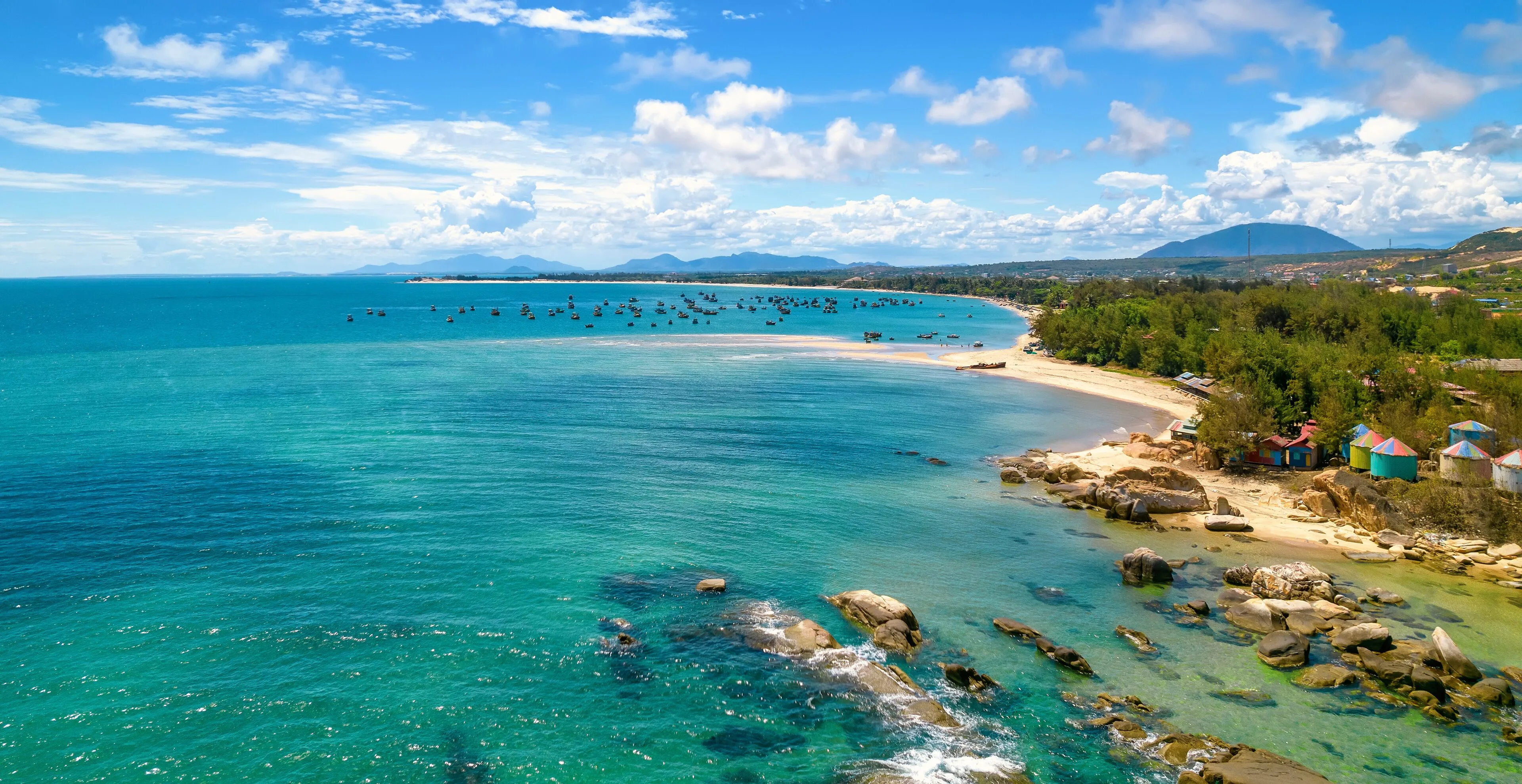
My Son connects naturally with Hoi An (the recommended base, 45 min away) and the Da Nang Cham Sculpture Museum for a comprehensive Cham heritage day. For India-connected travelers, the full Cham circuit continues south to Po Nagar (Nha Trang) and Po Shanu (Mui Ne).
Hoi An Old Town
45 min by car
Half-day to full-day
The most natural complement — My Son morning + Hoi An afternoon/evening. Vietnam's most beautiful preserved trading port.
Another major Cham Hindu site, dedicated to Lady Po Nagar (identified with Uma/Bhagavati). Still in active use. The best-preserved Cham temple still used for worship.
My Son is a day-trip destination — there is no accommodation at the site itself. Choose Hoi An (45 min) or Da Nang (1 hr 15 min) as your overnight base.
Hoi An (Recommended Base — 45 min from My Son) Recommended
The most popular base for My Son visits. Hoi An is 45 minutes by car — close enough for a sunrise departure (5:00 AM). Atmospheric evenings in the Old Town complement the My Son morning. Most Indian travelers we send to My Son are based in Hoi An for 2–3 nights. See the Hoi An destination page for accommodation options across all budgets.
Best for: First-timers, couples, families, cultural travelers — perfect My Son base ·
Noise: Medium (Old Town evenings)
Da Nang (Alternative Base — 1 hr 15 min from My Son)
A larger city with more hotel options and beach access. Best for travelers combining My Son with Da Nang beach time or the Da Nang Cham Sculpture Museum. 1 hr 15 min to My Son is manageable for a morning departure. See the Da Nang destination page for accommodation options.
Best for: Travelers combining My Son with beach time or Da Nang city experiences ·
Noise: Medium (city)
Note: No Overnight at My Son
There is no accommodation at My Son Sanctuary itself. The closest options are in Duy Xuyen town (15 min from My Son, limited options) — not recommended. Choose Hoi An or Da Nang as your base and visit My Son as a half-day excursion.
Best for: Context note — not a stay recommendation ·
Noise: N/A
Our recommendation: Base yourself in Hoi An (45 min, most popular) or Da Nang (1 hr 15 min, larger options). No accommodation at My Son itself. See Hoi An and Da Nang destination pages for hotel recommendations.
Getting Around My Son Sanctuary
Mode
Cost
Best For
Tips
Free electric shuttle
Included in entry
From parking area to the main temple complex (10-min walk distance)
Recommended especially in the heat. Runs continuously during site hours.
Walking
Free
Between temple groups once at the site
All temple groups connected by well-marked paths. Total walking 1.5–2 km for a complete visit. Mostly flat with some inclines to Groups G and H.
Cycle-rickshaws (cyclo)
₹50–₹100
Elderly or mobility-limited visitors
Available at the entrance for passengers who prefer not to walk between groups.
Private car (to reach site)
₹3,500–₹6,000
From Hoi An to My Son (round trip)
The recommended way to reach My Son. We arrange English-speaking driver-guides.
Scooter (to reach site)
₹400/day rental
Independent, experienced riders from Hoi An
45-min ride from Hoi An on good roads. Good flexibility for sunrise departure.
All prices are approximate (2026). Confirm with us before booking.
Suggested Itineraries
Whether you're doing a quick sunrise visit from Hoi An, a standard group tour, a full day combined with the Da Nang Cham Museum, or integrating My Son into a full Hoi An day — here are tried-and-tested day plans optimised for Indian travelers.
Sunrise Visit from Hoi An (Recommended)
1
My Son Sunrise Half-Day
4:30 AM: Wake up in Hoi An hotel
5:00 AM: Depart Hoi An by private car or sunrise tour bus
5:45 AM: Arrive My Son — gate opens at 6:00 AM
6:00–7:30 AM: Explore Group B (main complex), Group F (linga sanctuaries), foundations — nearly empty site, magical morning light
7:30–8:30 AM: On-site museum + Group A ruins
9:00 AM: Group G (hillside, views) + remaining groups
9:30 AM: Apsara dance performance (15 min) at open-air theater
10:00–11:00 AM: Final photography, sacred spring, forest walks
11:00 AM: Light snack at on-site restaurant or depart
11:45 AM: Return to Hoi An
12:30 PM: Lunch in Hoi An Old Town — Cao Lau or White Rose dumplings
Afternoon/evening: Hoi An Old Town, lantern-lit evening
9:45–11:00 AM: Guided tour of temple groups (English guide included)
11:00–11:30 AM: Museum + souvenir shops
11:30 AM: Depart for Hoi An
12:30 PM: Return to Hoi An hotel
Note: Convenient but the site is at its busiest. Upgrade to sunrise private tour for better experience.
Full Day from Da Nang (My Son + Cham Museum)
1
My Son + Da Nang Cham Museum Full Day
8:00 AM: Depart Da Nang hotel by private car
9:15 AM: Arrive My Son
9:30 AM: Apsara dance performance
9:45 AM–12:00 PM: Full site visit (Groups B, A, C, D, E, F, G, museum)
12:00 PM: Lunch at My Son on-site restaurant or roadside
1:30 PM: Da Nang Cham Sculpture Museum (pre-book tickets)
2:00–4:00 PM: Cham Museum — complement to My Son ruins (sculptures that came FROM My Son and other sites)
4:30 PM: Return to Da Nang hotel
Evening: Da Nang My Khe Beach or Han Market
My Son + Hoi An Combined Day
1
My Son Morning + Hoi An Afternoon/Evening
8:00 AM: Hoi An hotel pickup (group or private car)
9:00 AM: Arrive My Son
9:30 AM: Apsara dance performance
9:45 AM–12:00 PM: Full site visit with guide
12:00 PM: Return to Hoi An
1:00 PM: Lunch in Hoi An — Cao Lau, White Rose, or Bánh Mì
2:00–5:00 PM: Hoi An Old Town walking tour
5:00 PM: Rest at hotel
6:30 PM: Hoi An evening — river lanterns, Old Quarter night market, dinner
Ready to plan your My Son trip?
Tell us your travel dates and we'll build a personalised My Son itinerary — sunrise private car, Hoi An combination, or full Central Vietnam Cham heritage circuit — at no extra cost.
Strongly recommended. Depart 5:00 AM from Hoi An, arrive 5:45 AM, get the site nearly to yourself until 8:30 AM when tour buses arrive. Plus the morning light through the trees on the red brick is photographically spectacular.
🎓
Hire a Guide
Without context, My Son is just brick ruins. A good guide (₹600–₹1,500 for 2 hours, often included in tours) brings the Cham culture and Hindu connections alive. Particularly recommended for Indian visitors interested in the religious and architectural context.
🛕
Indian Hindu Connection is Real
The linga in Group F is in its original position — the same sacred arrangement found in Shiva temples across India. The apsara dance uses mudras parallel to Indian classical dance. The temple plan of Group B mirrors Indian garbhagriha-shikhara tradition. This is genuine Hindu heritage outside India.
👟
Comfortable Walking Shoes
The site has uneven paths between temple groups. Total walking 1.5–2 km. Flip-flops are workable but hiking shoes are more comfortable on uneven temple stone surfaces.
☀️
Water and Sun Protection
Limited shade in the temple areas. Cool mornings turn hot by 10 AM in dry season. Bring 1.5L water per person, sunscreen, and a hat for the mid-morning sun.
👗
Modest Dress Appreciated
Cover shoulders and knees at active worship areas. Some local Cham Hindu families still visit the site for prayer. Respectful dress shows awareness of the site's living heritage.
📷
Photography Allowed Everywhere
Photography allowed throughout the site. Don't climb on temples or sculptures, and don't touch linga or sacred objects (genuine artifacts). Polarizing filter helps with the red brick and blue sky contrast.
🏛️
Pair with Da Nang Cham Sculpture Museum
If you have a full day, pairing My Son with the Da Nang Cham Sculpture Museum (1 hr 15 min away) gives the most complete Cham heritage experience. The museum has sculptures from My Son and related sites — context that makes the ruins more meaningful.
🌏
Build a Vietnam Cham Heritage Circuit
If you're interested in Cham Hindu culture, My Son can be part of a larger circuit: My Son (ruins) → Po Nagar Nha Trang (active Cham Hindu temple) → Po Shanu Mui Ne (coastal towers) → Po Klong Garai Phan Rang (most intact active site). Together these create a unique Hindu heritage journey through Vietnam.
🥗
Return to Hoi An for Lunch
Very limited vegetarian options at My Son. Plan your morning visit and return to Hoi An for lunch at vegetarian-friendly restaurants. Hoi An has excellent vegetarian options — see the Hoi An guide.
💵
Entry Fee Cash Only
Site entry (₹750 / 250,000 VND) is cash-only. Bring sufficient cash from Hoi An or Da Nang. ATMs at the parking area sometimes work but can't be relied on.
📸
Best Photography Months
March and April offer the clearest light without haze. The mist in the valley mornings (January–February) creates atmospheric fog-and-ruins photographs. October–November is the worst for photography (heavy rain, grey skies, possible site closure).
👶
Children Note
Younger children (under 8) may find the site dull — just brick ruins with limited interactive elements. Older children (10+) interested in history and Hindu culture will get more out of it, especially with a good guide.
🕐
Two Hours is Usually Enough
Two hours covers the main temple groups, the museum, and the apsara dance. Three hours for thorough photography or serious cultural interest. The site is not as large as Angkor — don't over-schedule.
⚠️
Manage Angkor Comparison Expectations
My Son is genuinely special but it's 1/20th the size of Angkor Wat. The cultural connection to India is what makes it remarkable, not the scale. Travelers who arrive expecting Angkor are sometimes disappointed; travelers who arrive knowing what it is — a direct piece of Hindu civilization history — are invariably moved.
My Son Sanctuary FAQs
Common questions from Indian travelers planning a My Son visit — including Hindu connections, Angkor comparison, best season, how to get there from Hoi An and Da Nang, Cham heritage circuit, and vegetarian options.
Yes — particularly for Indian travelers interested in Hindu heritage, history, or unique cultural experiences. My Son is the only Hindu UNESCO site in Vietnam, with direct iconographic and architectural connections to ancient Indian temples. For purely beach-focused trips, less essential. For first-time Vietnam visitors who care about culture, definitely worth half a day.
2–3 hours at the site itself. Half-day total with transport from Hoi An (5–6 hours round trip including travel, breakfast, and return lunch). Full-day if combining with the Da Nang Cham Sculpture Museum.
Similar concept (Hindu temple ruins from a vanished civilization), but much smaller scale and different style. Angkor Wat is one of the largest religious complexes on Earth; My Son is roughly 1/20th the size. The connection to India is similar — Cham temples actually show more direct North Indian architectural influence than Angkor, which blends Indian and Khmer traditions.
February to May (excellent weather, dry, comfortable). Avoid October–November (flooding common; site occasionally closes). Best time of day: sunrise (5:30–7:00 AM) for an empty site and the best photography light. Most rewarding visit pattern is sunrise from Hoi An.
Both work. A guide adds significant value for understanding the temples' cultural and religious context — strongly recommended. Independent visitors can rent a private car or scooter from Hoi An. Group tours from Hoi An (₹1,000–₹2,500) are convenient but crowded. We arrange private car + guide for all our travelers.
Particularly meaningful. The linga sanctuaries, Shiva iconography, and apsara dance are direct connections to Indian Hindu traditions. Several Indian travelers have told us that standing in front of a linga in its original My Son sanctuary — in Vietnam, built by Cham Brahmins 1,000 years ago — was an unexpected emotional experience.
Yes — they're all within 1 hr 15 min of each other. Most travelers stay in Hoi An 2–3 nights with My Son as a half-day excursion. Da Nang's Cham Sculpture Museum is a recommended add-on for serious cultural travelers — do it on the same day as My Son for a comprehensive Cham experience.
Yes — about 160,000 Cham people live in central and southern Vietnam today. A small Hindu Cham community maintains modified traditional practices and still worships at Po Nagar (Nha Trang) and Po Klong Garai (Phan Rang). My Son was their historical sacred center; the living tradition continues at those other sites.
All three are Cham Hindu temple sites. My Son = the largest historical complex, UNESCO-listed, mostly ruins. Po Nagar (Nha Trang) = the best-preserved Cham temple still in active use — dedicated to Uma/Bhagavati and still worshipped. Po Shanu (Mui Ne) = the smallest, most coastal site, scenic hillside position. Together they form a meaningful Cham heritage circuit through central-southern Vietnam.
The American military believed the Viet Cong used the My Son temple complex as a strategic hideout due to its remote jungle valley location. B-52 bombers conducted intensive raids in August 1969, destroying approximately half the standing structures in two days. The deliberate destruction of a 1,000-year-old UNESCO-caliber heritage site remains one of the most regrettable cultural losses of the Vietnam War.
Very limited at the site itself. Most Indian travelers visit on a morning trip and return to Hoi An for lunch at vegetarian-friendly restaurants. Bring snacks if strict vegetarian. Hoi An has excellent vegetarian options.
Very safe. Tourist-friendly site, well-managed by UNESCO and Vietnamese heritage authorities, clear paths, no significant hazards. Don't climb on ruins or touch sculptures. Standard precautions for any archaeological site apply.
All My Son & Central Vietnam Packages
We're curating our My Son Sanctuary packages — including Hoi An + My Son cultural combinations and Central Vietnam heritage circuits. Contact us for a custom My Son itinerary — from a sunrise half-day visit to a full Central Vietnam heritage circuit including Hue, Hoi An, Da Nang Cham Museum, and My Son.
Related Guides
My Son pairs naturally with Hoi An (the recommended base, 45 min away), Da Nang (alternative base with the world's best Cham Museum), Nha Trang (Po Nagar Cham towers — the best-preserved Cham temple still in active use), and Mui Ne (Po Shanu towers). Together they form Vietnam's complete Cham Hindu heritage circuit.
Our Vietnam specialists know the best sunrise routes, the Hindu connections that make My Son special for Indian travelers, and how to combine it with Hoi An and the Da Nang Cham Museum. Tell us your dates and we'll handle the rest.