Vietnam's soul in a bowl — one sip and you understand everything
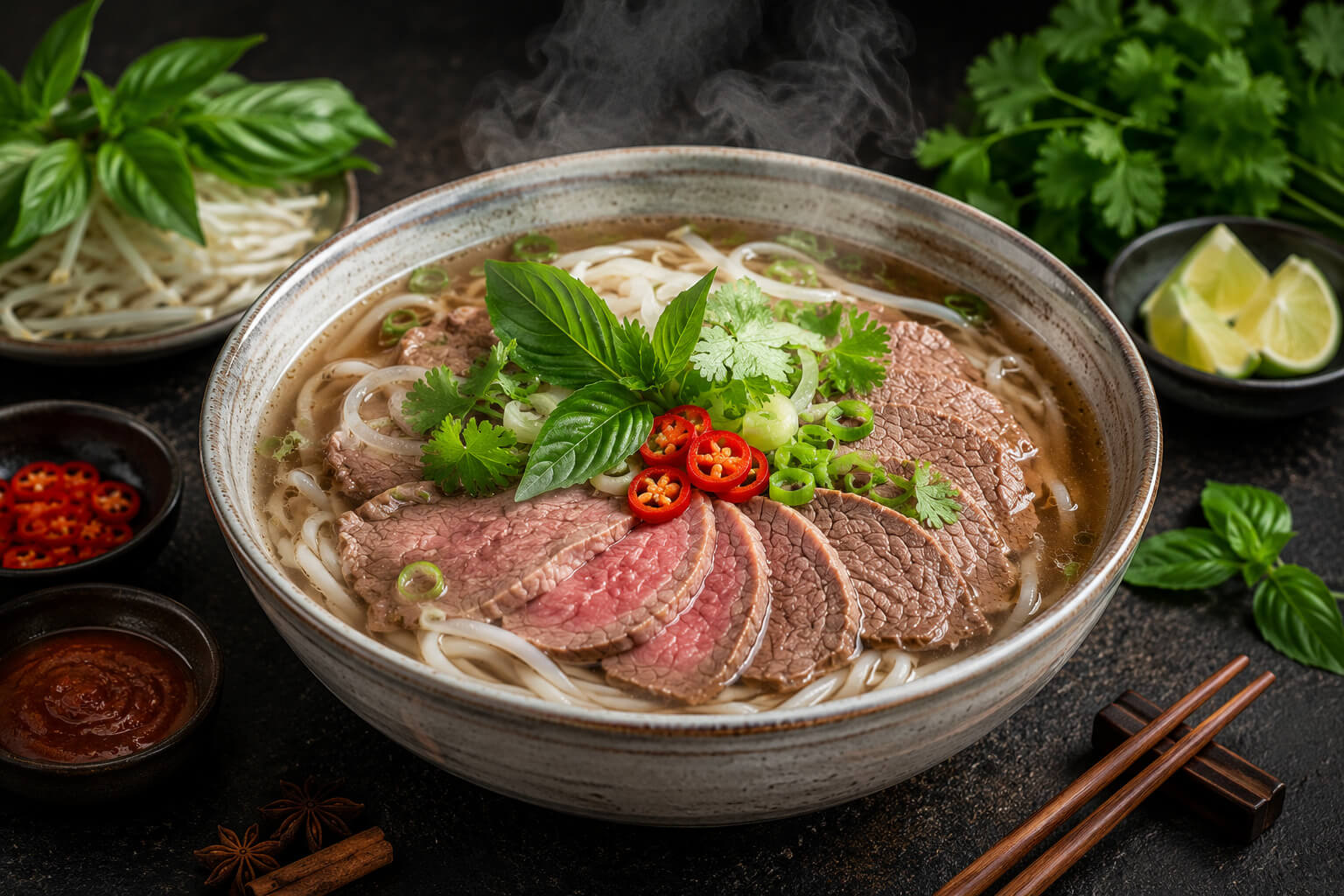
Phở is Vietnam's most iconic dish: a clear, deeply aromatic broth poured over flat rice noodles (bánh phở) and topped with sliced beef or chicken, fresh herbs, and a squeeze of lime. The broth is the soul of the dish — simmered for 6–12 hours with charred onion, ginger, star anise, cinnamon, cloves and cardamom.
In Hanoi, phở is served with clean restraint — minimal garnish, broth takes centre stage. In Ho Chi Minh City, a mountain of bean sprouts, hoisin and chilli sauce arrives alongside, and the broth runs slightly sweeter.
The word “phở” (pronounced roughly “fuh”) refers specifically to the rice noodle. The dish is phở bò (beef) or phở gà (chicken). Ordering “phở” anywhere in Vietnam is universally understood.
Phở emerged in the early 20th century in the Red River Delta — most likely Nam Ðịnh province — where Vietnamese cooks combined French pot-au-feu beef-bone technique with local spices and rice noodles. It arrived in Hanoi by the 1920s and spread south after 1954 partition, evolving into a richer, garnish-heavy southern style.
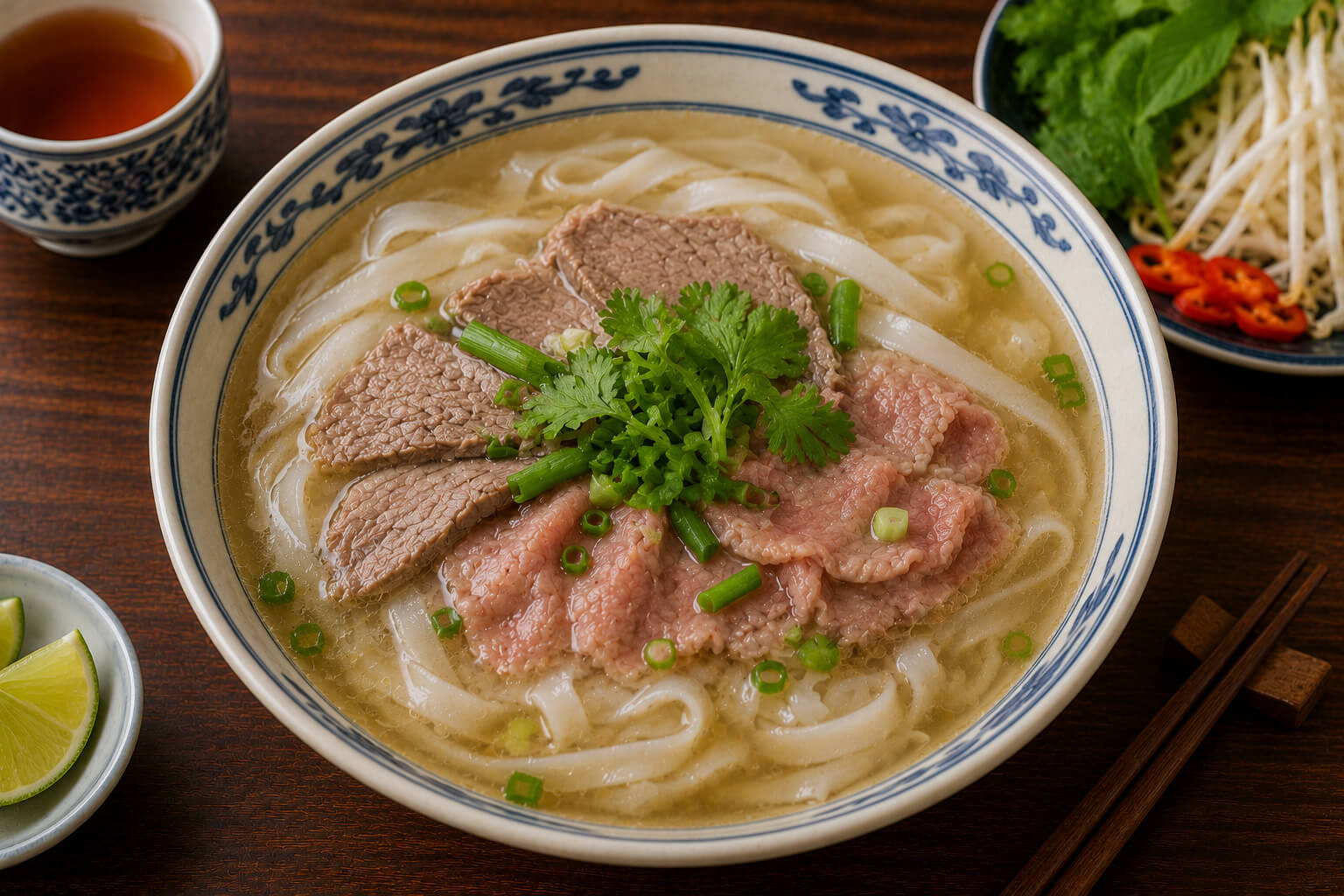
Phở Bắc
Clear, pale golden broth; wider noodles; very few garnishes (just spring onion and coriander). Broth is savoury, clean and complex. Beef served rare or well-done — no hoisin, no sprouts.
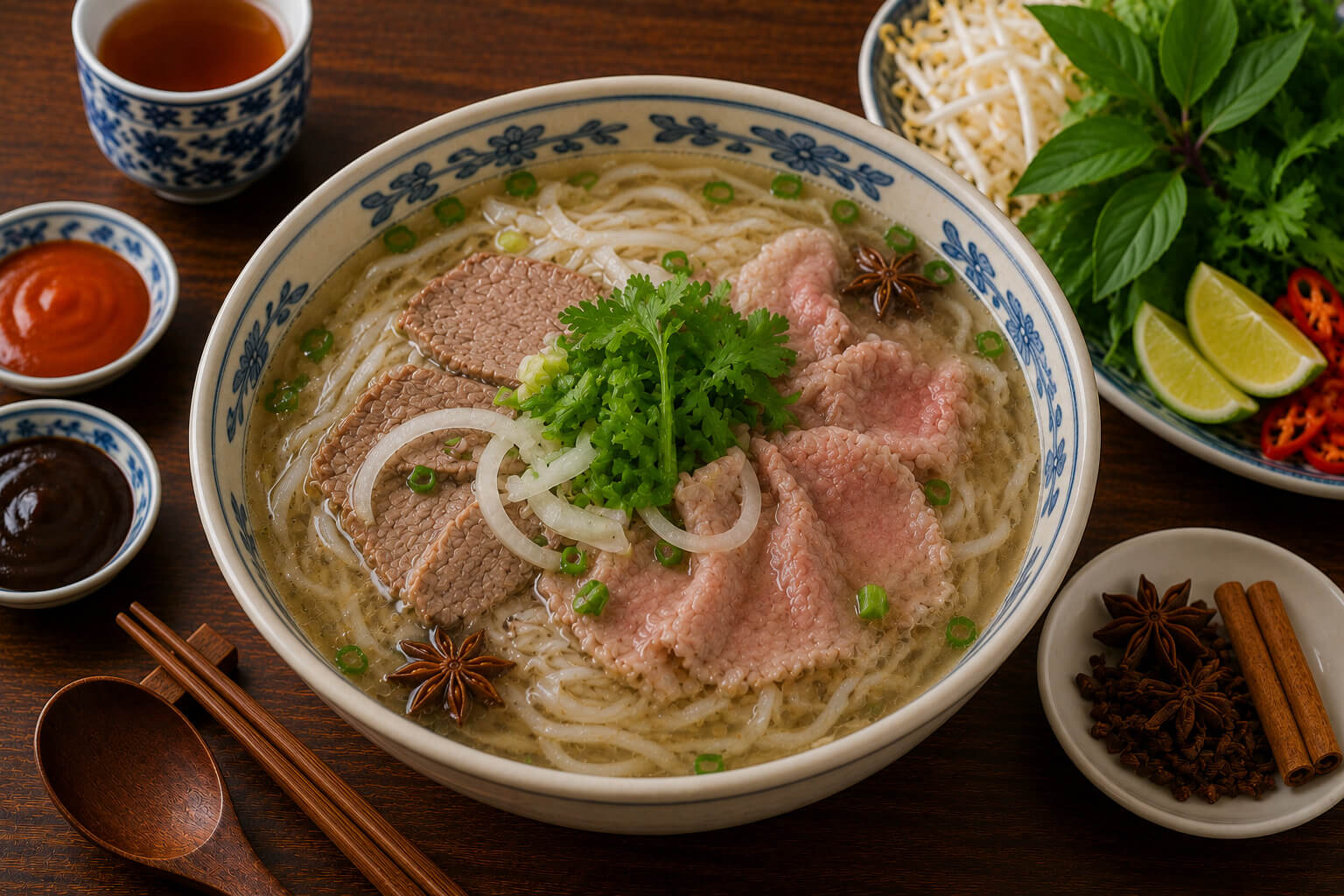
Phở Nam
Slightly sweeter, richer broth with more star anise. Thinner noodles. Served with a full herb plate: bean sprouts, Thai basil, saw-tooth coriander, lime, chilli. Hoisin and sriracha on the side.
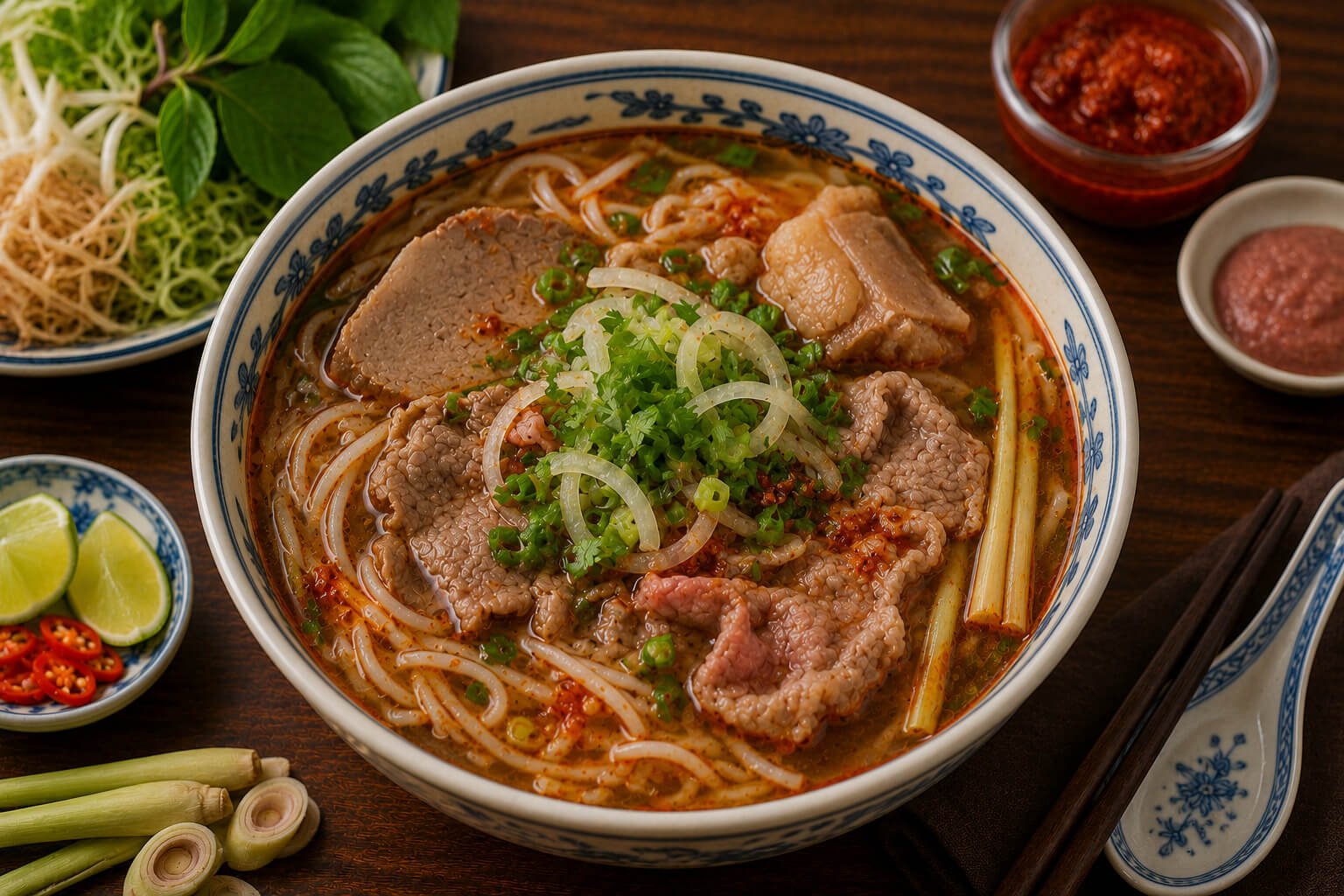
Phở Huế
Rarer variant — spicier, with lemongrass notes. Sometimes confused with bún bò Huế (a different dish). Worth trying if you're in Hue.
Bánh phở — flat dried or fresh rice noodles, 2–5mm wide
Phở Gia Truyền (Bát Ðàn)
📍 49 Bát Ðàn, Hoàn Kiếm, Hanoi
The most famous phở queue in Hanoi — open only until sold out (~10am). Cash only. No menu choices.
Phở Thìn (Lò Ðúc)
📍 13 Lò Ðúc, Hai Bà Trưng, Hanoi
Known for stir-frying the beef in garlic before adding to the bowl — creates a distinct aroma. Queues from 6am.
Phở 10 Lý Quốc Sư
📍 10 Lý Quốc Sư, Hoàn Kiếm, Hanoi
Popular with both locals and tourists. Clean, sit-down setting. Reliable quality all day.
Phở Hòa Pasteur
📍 260C Pasteur, Quận 3, Ho Chi Minh City
Opened 1960. Classic HCMC phở — rich broth, full garnish plate, always busy. Expat favourite.
Phở Lệ
📍 413–415 Nguyễn Trãi, Quận 5, Ho Chi Minh City
Open since the 1970s. Queue out the door at 7am. Generous portions, excellent brisket.
The Pho (Hai Bà Trưng)
📍 5 Hai Bà Trưng, Quận 1, Ho Chi Minh City
Modern, air-conditioned. Reliable for travellers who want a sit-down experience with English menu.
| Venue Type | VND | USD (approx.) | INR (approx.) |
|---|---|---|---|
| Street cart / market stall | 30,000–50,000 | $1.20–$2.00 | ₹100–165 |
| Local phở shop | 50,000–70,000 | $2.00–$2.80 | ₹165–230 |
| Mid-range restaurant | 70,000–120,000 | $2.80–$4.80 | ₹230–395 |
| Hotel / tourist restaurant | 120,000–200,000 | $4.80–$8.00 | ₹395–660 |
Vegetarian phở uses a mushroom, daikon and spice broth — no bones. Toppings are tofu, king oyster mushrooms, and the same herb garnishes. Available mainly in temple areas and vegetarian restaurants; less common at street stalls.
"Cho tôi phở chay" — I'd like vegetarian phởVegan note: Usually vegan — confirm no egg noodles are used. Ask "Không có trứng không?" (No egg?)
Jain note: Standard phở broth contains onion and garlic. Jain travellers should ask specifically — a few Buddhist vegetarian restaurants will omit alliums on request.
Yes — the broth is boiling when it reaches your bowl, which kills any pathogens. The risk is in uncooked garnishes (bean sprouts, herbs). If you have a sensitive stomach, skip the raw sprouts for the first day or two.
Phở uses flat rice noodles in a bone-spice broth. Bún bò Huế is spicier, uses round noodles and lemongrass. Bún riêu is a tomato-crab broth. Mì Quảng is a turmeric noodle with very little broth. Each is distinct.
The closest English approximation is "fuh" with a slight rising tone. The "ph" is an "f" sound in Vietnamese. "Foh" or "fo" are common mispronunciations.
Absolutely — in fact, a bowl of phở at 7am at a street stall is the most authentic way to eat it. Vietnamese people eat phở at any hour, but it's most traditionally a morning meal.
They're genuinely different dishes, not a ranking. Hanoi phở is restrained, mineral-clean, broth-forward. HCMC phở is richer, sweeter and more garnished.
"Cho tôi một tô phở bò tái" = one bowl of rare beef phở. "Phở gà" = chicken phở. "Ðặc biệt" = special / all cuts.
The noodles are rice-based and gluten-free. The risk is soy sauce used in seasoning (contains wheat) and the hoisin dipping sauce. If you're coeliac, it's worth asking specifically at each restaurant.
A standard bowl (medium, beef) is approximately 350–500 kcal depending on portion size and fat content. Phở gà (chicken) runs slightly lower at 300–400 kcal.
At most phở shops you can ask for "thêm nước dùng" (more broth) — it's usually free or very cheap.
Yes — Nam Ðịnh (the original) is closest to old-school northern phở. Phở in Hải Phòng has a slightly different spice profile. The Hanoi vs. HCMC divide is the most practically relevant for most travellers.
Our specialists plan food-focused itineraries around what you want to eat.
Plan My Food Trip