The dish that made Barack Obama queue on a plastic stool
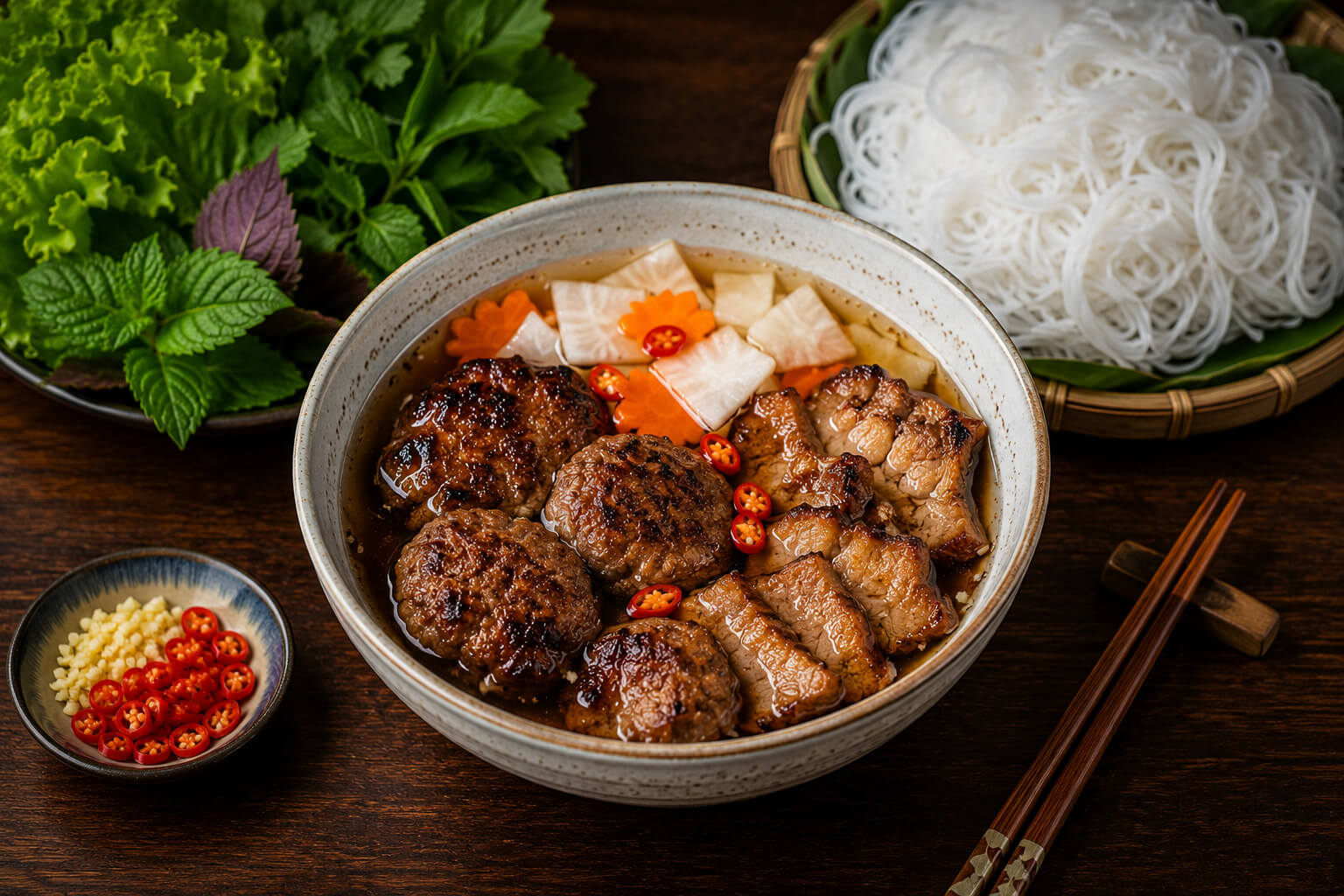
Bún chả is Hanoi’s beloved lunch dish: charcoal-grilled pork patties (chả viên) and slices of caramelised pork belly (chả miếng) served in a warm, sweet-sour-savoury dipping broth (nước chấm) made from fish sauce, rice vinegar, sugar, garlic and chilli. This arrives alongside a separate plate of cold rice vermicelli noodles (bún) and a plate of fresh herbs. The whole effect is a study in contrasts: smoky pork, tangy broth, cool noodles, fresh greenery.
The dish became globally famous in May 2016 when US President Barack Obama sat down for dinner with Anthony Bourdain at Bún Chả Hương Liên in Hanoi — the resulting “Parts Unknown” episode showed the pair eating on low plastic stools and sharing Hanoi beer. The image of a sitting US President eating street food in Vietnam became an iconic moment of culinary diplomacy. The restaurant has preserved Obama’s table, stool and even the unfinished beer.
Bún chả is emphatically a lunch dish in Hanoi. Most dedicated shops open at 11am and sell out by 2pm — arriving after that you’ll likely find empty grills and closed shutters. This is not a breakfast or dinner food in the traditional Hanoi sense.
Bún chả is a Hanoi original, with written references tracing back to at least the 1930s. Vietnamese food writer Thạch Lam described it in his 1943 essay collection “Hà Nội 36 Phố Phường”, placing it firmly as a Hanoi street food institution well before its international fame.
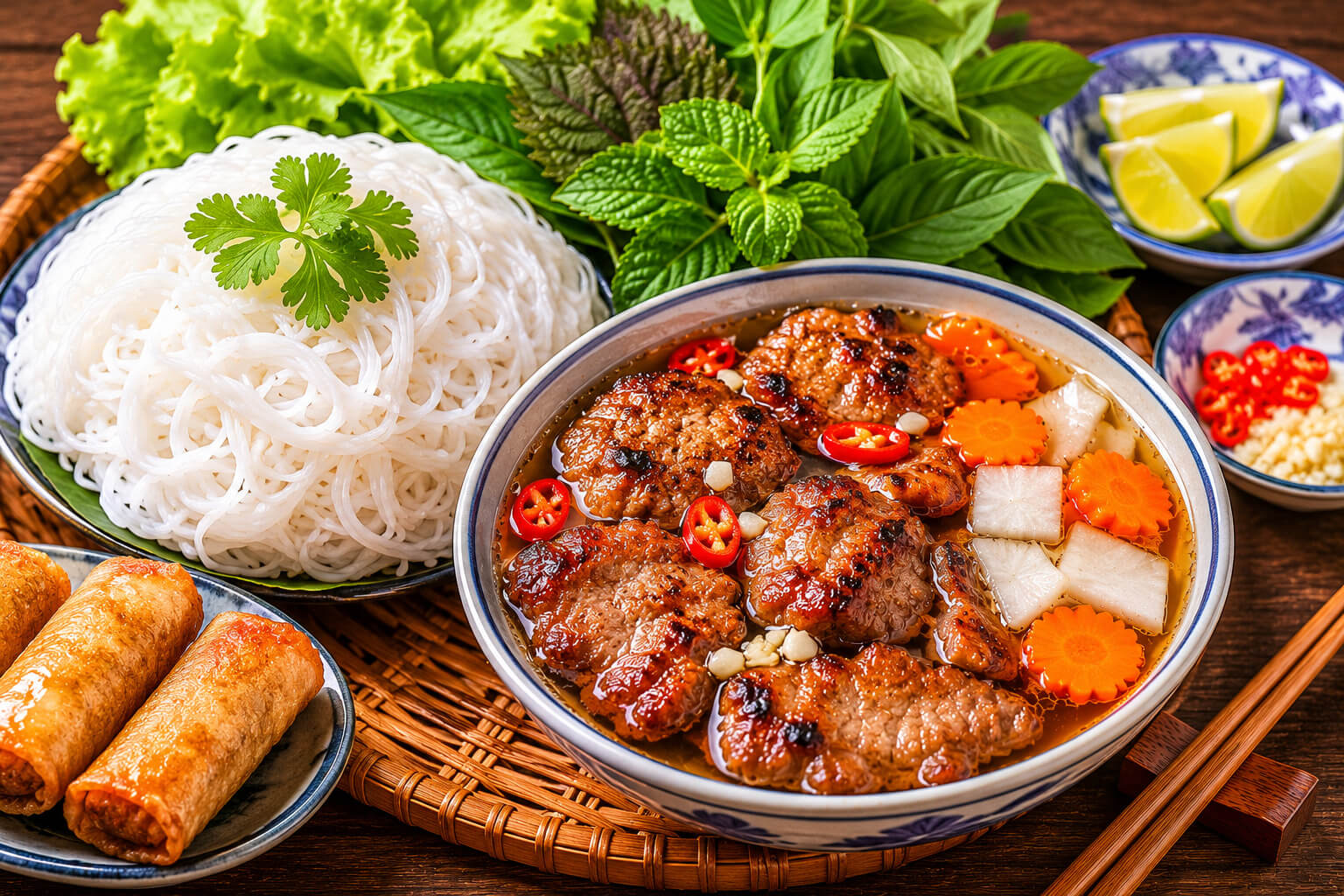
Bún Chả Hà Nội
The definitive version: pork patties and pork belly slices grilled over charcoal, served in a warm nước chấm broth. Cold bún noodles on the side. Fresh herb plate with lettuce, mint, perilla and saw-tooth coriander. Often accompanied by nem rán (crispy deep-fried spring rolls) as an optional extra.
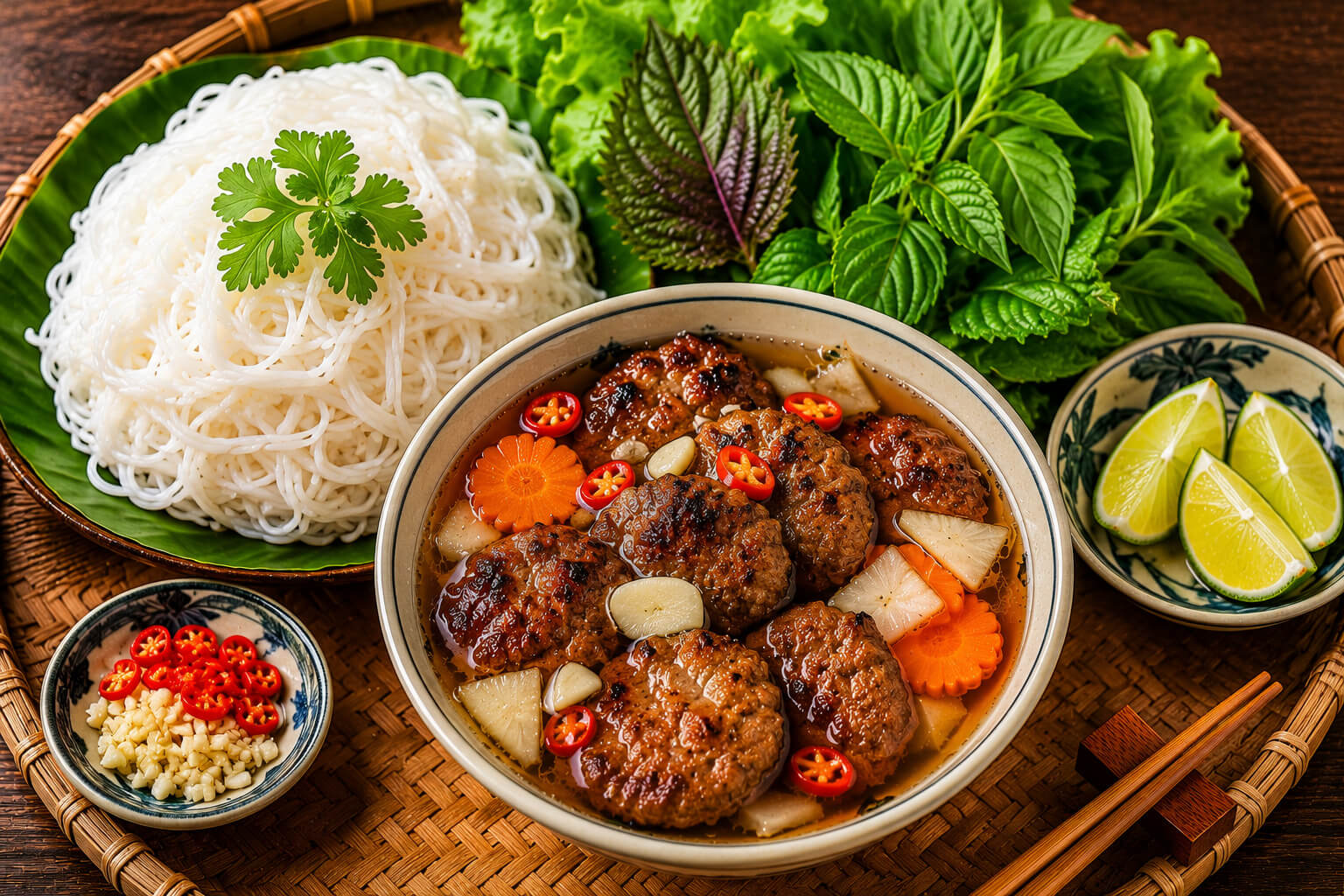
Bún Chả Nam
A drier, slightly different interpretation found in HCMC. The broth is sometimes served warmer and sweeter to suit southern palates. Less common than in Hanoi — in HCMC, bún thịt nướng (cold vermicelli with grilled pork) is the more popular equivalent dish.
Nước chấm — fish sauce, rice vinegar, sugar, warm water, minced garlic, fresh chilli
Bún — thin round rice vermicelli noodles, served cold at room temperature
Nem rán — crispy deep-fried pork and glass noodle spring rolls (contain wheat wrapper)
Bún Chả Hương Liên (“Obama Restaurant”)
📍 24 Lê Văn Hưu, Hai Bà Trưng, Hanoi
THE famous bún chả restaurant — now a fully-fledged tourist attraction. Obama’s original table, stool and unfinished Hanoi beer are preserved behind glass. The bún chả is genuinely good (not just hype), but you’re also paying for the experience. Arrive before noon to avoid queues.
Bún Chả Ðắc Kim
📍 1 Hàng Mành, Hoàn Kiếm, Hanoi
Open since 1965 and consistently voted by Hanoi locals as one of the best. The pork is marinated longer than most, the charcoal grill gives a deeper smokiness, and the nước chấm is perfectly balanced. Cash only. Arrive by 11:30am for the best experience.
Bún Chả 34 Hàng Than
📍 34 Hàng Than, Ba Ðinh, Hanoi
An old-street neighbourhood spot with an authentic Hanoi atmosphere. Plastic stools, communal tables, smoke from the grill drifting into the lane. Excellent nem rán alongside. Best visited on weekdays.
Bún Chả Hà Nội
📍 142 Ðinh Tiên Hoàng, Quận 1, Ho Chi Minh City
One of the better northern-transplant bún chả restaurants in HCMC. The charcoal grill is used authentically and the broth is close to the Hanoi standard. A solid option if you’re not making it to Hanoi.
Quan Bún Chả Hà Nội
📍 Multiple locations, Ho Chi Minh City
A small chain bringing reliable Hanoi-style bún chả to HCMC. Consistent quality, air-conditioned, English-friendly. Not as atmospheric as Hanoi but a dependable option for the dish.
Bún Chả & Bánh Cuốn
📍 17 Lý Tự Trọng, Quận 1, Ho Chi Minh City
Combines bún chả with bánh cuốn (steamed rice rolls) — good if you want to try two northern dishes in one sitting. Central location, reasonable prices.
| Venue Type | VND | USD (approx.) | INR (approx.) |
|---|---|---|---|
| Street stall / local shop | 40,000–55,000 | $1.60–$2.20 | ₹140–182 |
| Sit-down bún chả restaurant | 55,000–80,000 | $2.20–$3.20 | ₹182–264 |
| Famous / tourist restaurant | 80,000–120,000 | $3.20–$4.80 | ₹264–395 |
| + Nem rán (spring rolls, per piece) | 5,000–10,000 | $0.20–$0.40 | ₹17–33 |
Bún chả is fundamentally built around fish sauce — the nước chấm broth is its defining element. A vegetarian version is technically possible (substituting soy sauce and using tofu patties) but is extremely rare and almost never offered at standard bún chả shops. The dish loses its identity without the fish sauce broth.
Do not expect to find this at a typical bún chả restaurant — look for dedicated vegetarian restaurants (nhà hàng chay) instead.Jain note: Standard bún chả contains pork, fish sauce and sometimes eggs (in spring roll filling). It is not suitable for vegetarians, vegans or Jain travellers. We recommend phở chay (vegetarian phở) or bún bò huế chay as alternatives that can be found in vegetarian form.
Obama ordered a standard serving of bún chả — the grilled pork patties, pork belly, rice vermicelli and broth. He and Bourdain also had nem rán (spring rolls) and washed it down with Hanoi Beer (Bia Hà Nội). The total bill was approximately $6. The restaurant has preserved the exact table, stools and Obama’s unfinished beer bottle behind glass.
Bún chả is a northern Hanoi dish served warm, with the broth as a dipping sauce. Bún thịt nướng is a southern dish served cold — noodles in a bowl topped with grilled pork, fresh herbs and a drizzle of nước chấm. Bún chả uses both patties and sliced belly; bún thịt nướng typically uses only sliced grilled pork.
This is a Hanoi culinary tradition — bún chả is considered a lunch food. Historically vendors set up their charcoal grills in the morning, prepared everything fresh for the midday rush, and closed when it was sold out. The tradition has persisted even as the city has modernised. Breakfast bún chả simply isn’t done in Hanoi.
The broth bowl is a dipping vessel, not a soup bowl. Use your chopsticks to pick up a small bundle of bún noodles, dip into the broth, add a piece of pork, wrap in herb leaves if you like, and eat together. Do not pour broth over the noodles — this is the most common mistake visitors make.
In practice, no. The nước chấm broth is made with fish sauce and is the soul of the dish. A vegetarian version exists theoretically but is not offered at standard bún chả restaurants. Vegetarians should try phở chay or bún riêu chay instead.
The bún (rice vermicelli) and the broth are gluten-free. However, the nem rán (spring rolls) contain wheat wrappers. If you have a gluten intolerance, skip the spring rolls and confirm the soy sauce used in marinades is gluten-free.
That’s the charcoal grill cooking the pork patties and belly slices. Most bún chả shops have a small charcoal brazier at the entrance. The fragrant smoke — pork fat, caramelised marinade, charcoal — is one of the iconic sensory experiences of Hanoi’s Old Quarter at noon.
Yes, but with declining quality the further south you go. HCMC has some good northern-transplant bún chả restaurants, but the authentic charcoal-grill street version is very much a Hanoi experience. If you’re visiting Hanoi, this should be on your lunch itinerary.
At a local street restaurant you’re paying 40,000–70,000 VND (₹140–245 / $1.60–$2.80) for a full portion. At the famous Hương Liên it runs 70,000–90,000 VND. Add 5,000–10,000 VND per nem rán spring roll. Even at the most expensive restaurant it’s an extraordinarily good-value meal.
Approximately “boon cha” — “bún” has a rising tone (like a question in English), “chả” has a dipping-then-rising tone. In practice “boon cha” said with confidence will be understood anywhere in Hanoi.
Our specialists plan food-focused itineraries around what you want to eat.
Plan My Food Trip