Phở’s spicier, louder cousin from the imperial city
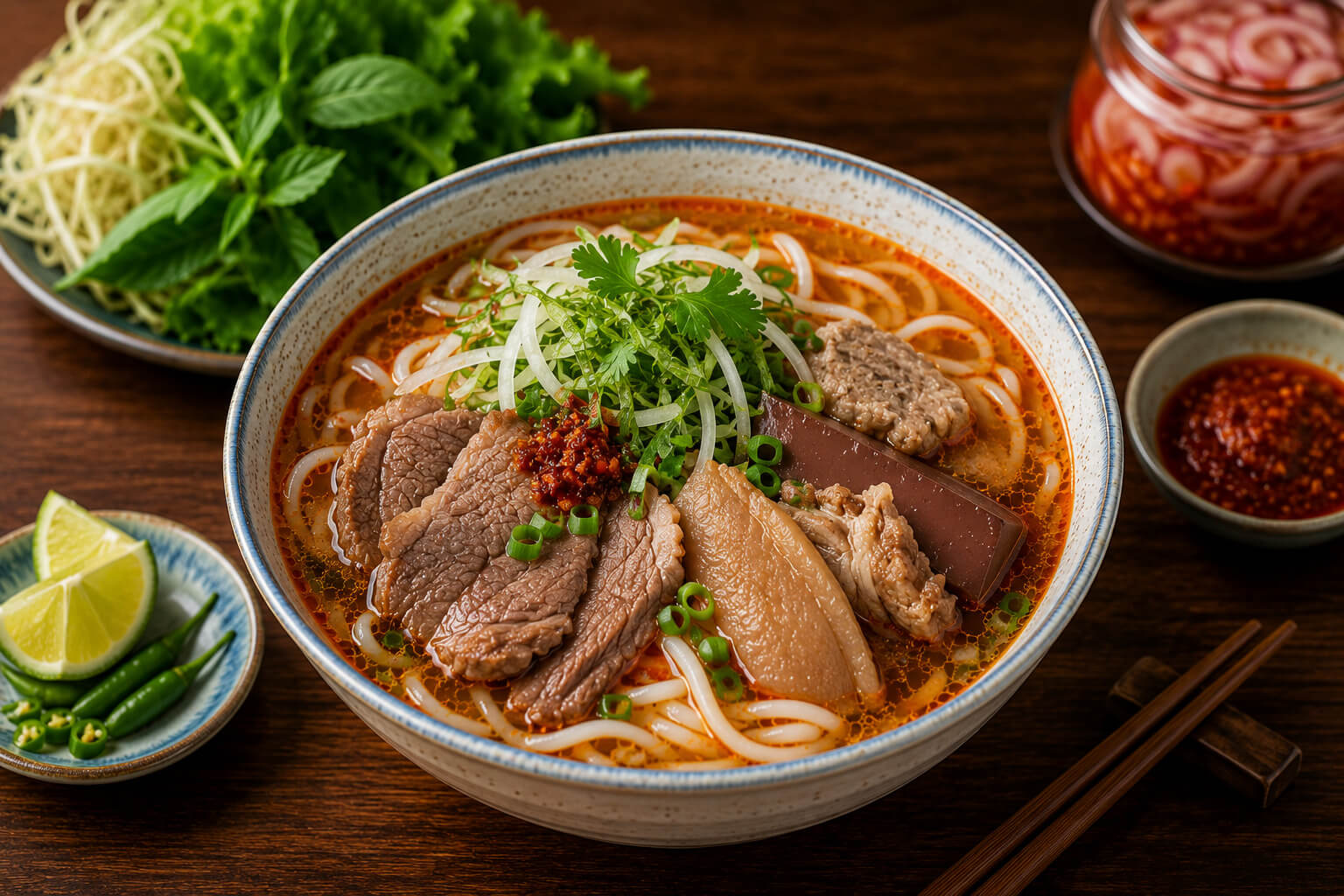
Bún bò Huế is a full-flavoured, deeply spiced noodle soup from Huế, Vietnam’s old imperial capital. Thick, round rice noodles (bún) swim in a broth built on lemongrass, fermented shrimp paste (mắm ruốc), chilli oil and beef bones — giving it a funky, aromatic complexity that phở simply doesn’t have. The bowl arrives with sliced beef shank, pork knuckle, and often cubes of congealed pork blood (tiết) — optional for the uninitiated. A generous herb plate arrives alongside.
The key ingredient that separates bún bò Huế from all other Vietnamese noodle soups is mắm ruốc — fermented shrimp paste. Added to the broth in carefully controlled quantities, it imparts a savoury, oceanic depth that is immediately identifiable. Combined with lemongrass-infused oil and a slick of red chilli oil on top, the broth is at once fragrant, spicy and funky in the best possible sense.
This is food shaped by imperial court cuisine. Huế was the seat of the Nguyễn dynasty (1802–1945) and its cuisine reflects a tradition of complex, multi-ingredient dishes with bold flavour contrasts. The richness and complexity of bún bò Huế reflects this heritage — it is far more elaborate than the restrained broths of Hanoi.
Bún bò Huế originated in the imperial city of Huế, capital of the Nguyễn dynasty. The dish reflects the royal court’s tradition of complex, layered cooking — richer and more spiced than northern Vietnamese cuisine. After the fall of the Nguyễn dynasty and especially after 1975 reunification, the dish spread nationwide, with versions adapted to local palates becoming standard across Vietnam.
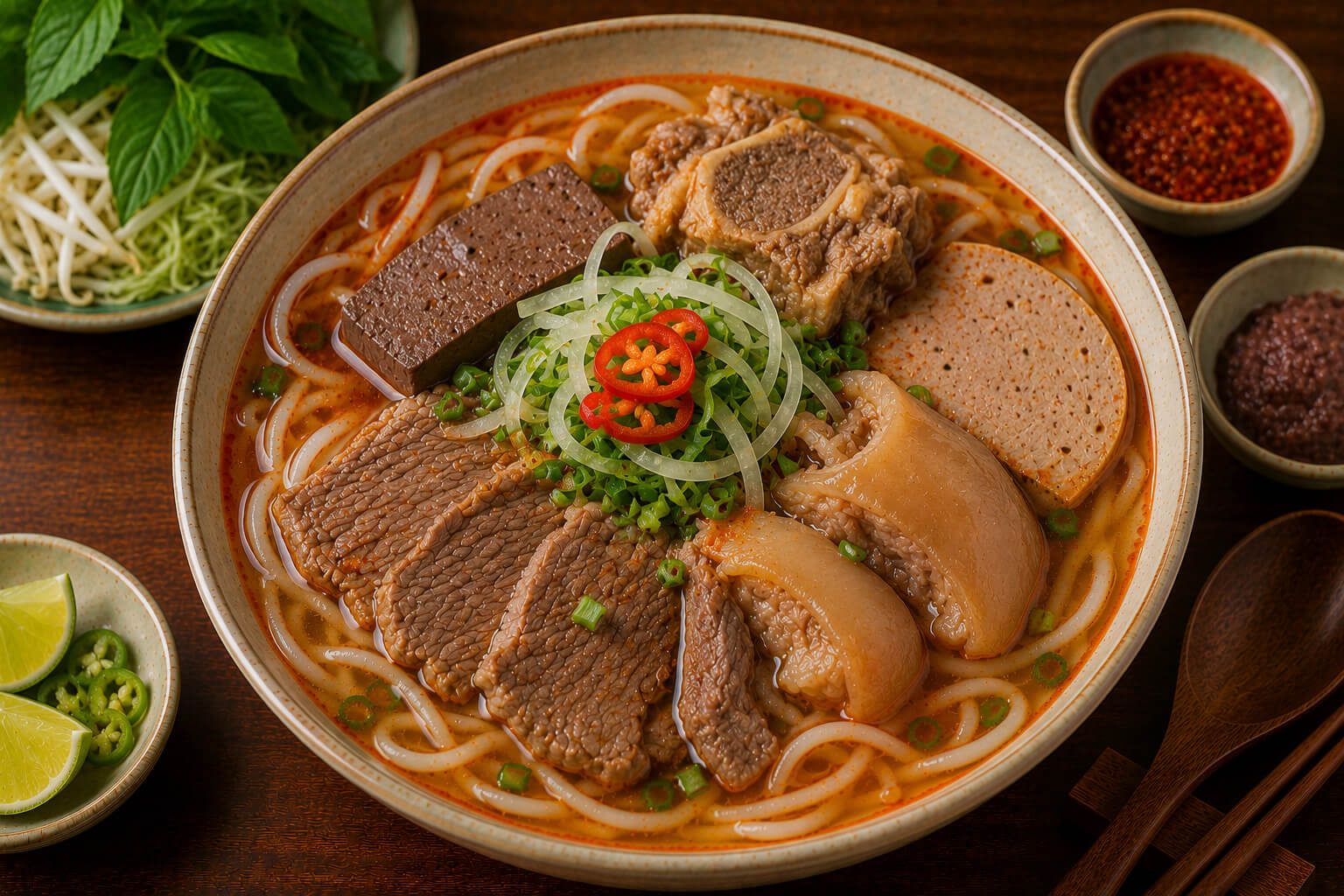
Bún Bò Huế Chính Gốc
The most authentic version: very spicy, with mắm ruốc (fermented shrimp paste) used generously, creating a powerfully funky and aromatic broth. Served with pork blood cubes (tiết), pork knuckle and thick beef slices. The herb plate includes banana blossom (hoa chuối) and perilla. The spice level is noticeably higher than versions elsewhere.
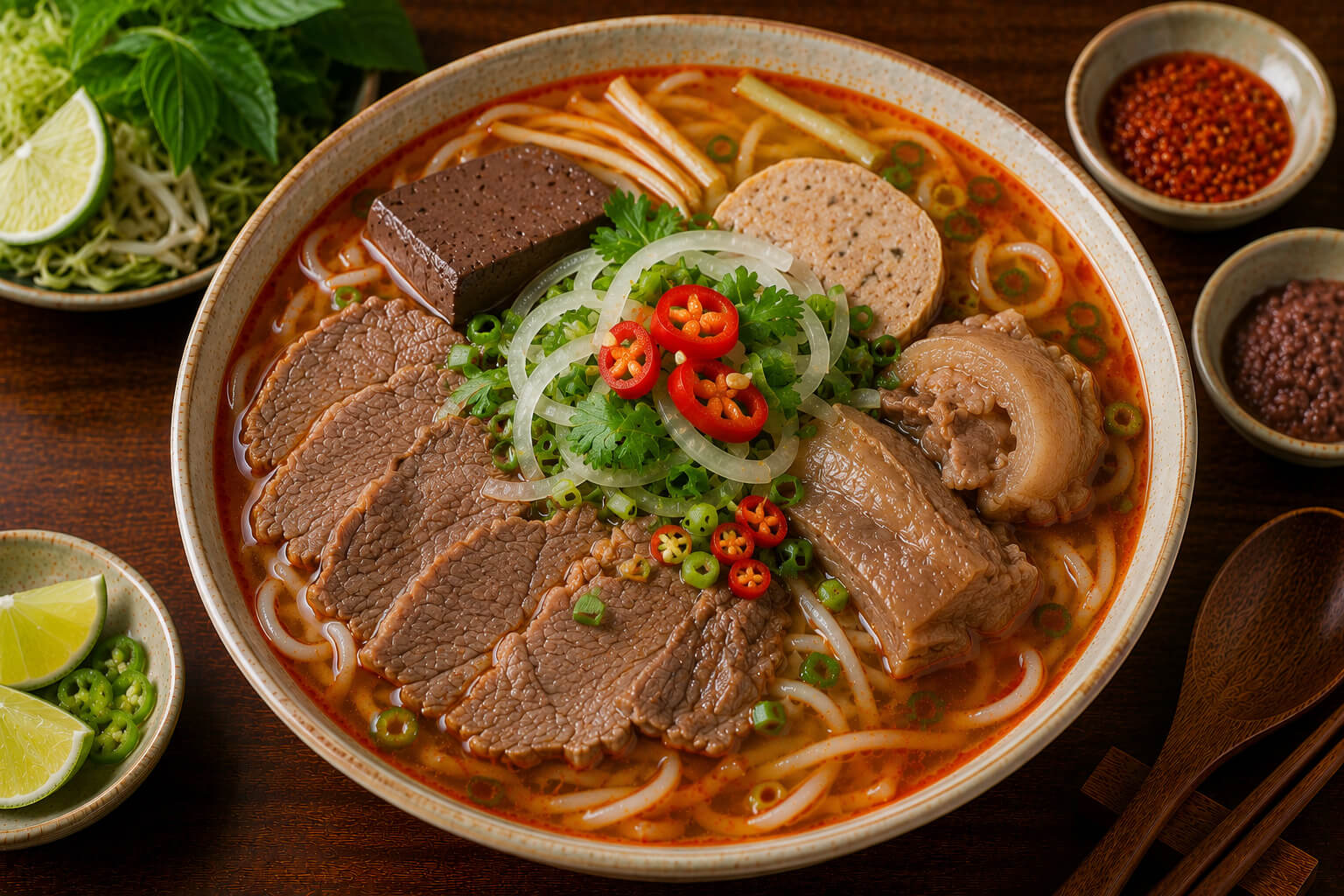
Bún Bò Huế Nam
Milder and slightly sweeter to suit southern palates. The fermented shrimp paste is used more sparingly; the broth has more lemongrass prominence. Bean sprouts are more common in the herb plate. Still excellent, but lacks the funky depth of the Hue original.
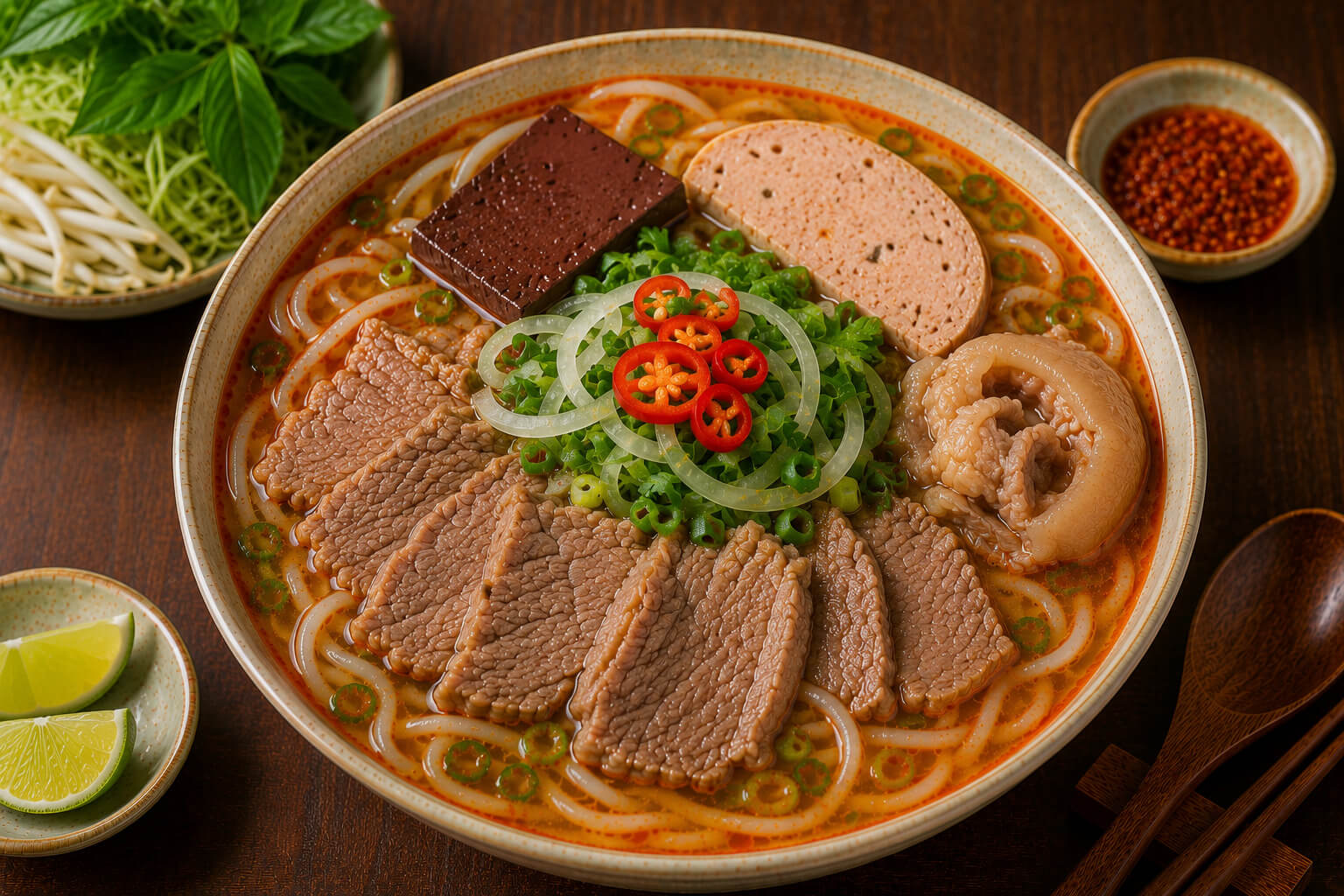
Bún Bò Huế Hà Nội
The mildest adaptation — Hanoi palates traditionally prefer restrained broths, so the chilli and shrimp paste are pulled back further. Pork blood (tiết) is often omitted or served on the side. The lemongrass character remains but the overall bowl is gentler.
Thick round rice vermicelli (bún) — chewier and thicker than phở noodles
Bún Bò Huế Ba Ðinh
📍 29 Hàng Chuối, Hai Bà Trưng, Hanoi
A long-established Hue-style noodle shop in Hanoi. The broth is made to a Hue family recipe and uses fermented shrimp paste properly — rare for Hanoi. Full herb plate including banana blossom. Opens from 6am.
Quán Bún Bò Huế Ô Quan Chương
📍 11 Ô Quan Chương, Hoàn Kiếm, Hanoi
One of the most-reviewed bún bò Huế spots in the Old Quarter area. Authentic lemongrass broth, generous portions, and conveniently located for sightseers. Busy at lunch — arrive before noon.
Nhà Hàng Bún Bò Huế Ngô Thì Nhậm
📍 65 Ngô Thì Nhậm, Hai Bà Trưng, Hanoi
Slightly off the tourist trail but popular with Hanoi locals who know their central Vietnamese food. Good shrimp paste presence in the broth, excellent nem cuon alongside. Worth the short taxi ride from the Old Quarter.
Bún Bò Huế 202
📍 202 Võ Thị Sáu, Quận 3, Ho Chi Minh City
A long-running Hue-family restaurant in District 3. The broth retains good shrimp paste character even adapted for southern tastes. Popular with Hue ex-pats living in HCMC — a reliable endorsement of authenticity.
Quán Bún Bò Huế Cô Ô
📍 89 Ðinh Tiên Hoàng, Bình Thạnh, Ho Chi Minh City
One of the most authentic HCMC versions. Full banana blossom herb plate, proper shrimp paste presence, generous pork knuckle. Opens early (from 6:30am) and sells out by 10am on busy days.
Bún Bò Huế Thanh Thảo
📍 17 Lê Hồng Phong, Quận 10, Ho Chi Minh City
A family-run shop with a large loyal following. The spice level is between the mild HCMC norm and the fiery Hue original — ideal if you want the authentic flavour without the maximum heat. Very reasonable prices.
| Venue Type | VND | USD (approx.) | INR (approx.) |
|---|---|---|---|
| Market stall / street vendor | 40,000–55,000 | $1.60–$2.20 | ₹140–182 |
| Local bún bò restaurant | 55,000–80,000 | $2.20–$3.20 | ₹182–264 |
| Mid-range / sit-down restaurant | 80,000–120,000 | $3.20–$4.80 | ₹264–395 |
| In Huế (most authentic / cheapest) | 35,000–60,000 | $1.40–$2.40 | ₹115–198 |
A vegetarian version is available at dedicated vegetarian restaurants (nhà hàng chay) and on the 1st and 15th of the lunar month when many Vietnamese eat vegetarian food. The broth uses mushroom stock and soy sauce instead of fish sauce and shrimp paste; toppings are tofu, king oyster mushrooms and mock meat. The flavour is significantly different from the original but still satisfying.
"Cho tôi bún bò Huế chay" — I’d like vegetarian bún bò HuếVegan note: Usually vegan at dedicated vegetarian restaurants — confirm no egg in mock meats.
Jain note: Standard bún bò Huế contains beef, pork, pork blood and fish sauce — not suitable for vegetarian or Jain travellers. The chay (vegetarian) version avoids meat but may use onion and garlic. Jain travellers should ask "không hành tôi" (no onion/garlic) at a Buddhist vegetarian restaurant.
They share the concept of noodle soup but diverge significantly. Phở uses flat rice noodles in a clear, mild beef bone broth flavoured with star anise and cinnamon. Bún bò Huế uses thick round rice noodles in a spicy, lemongrass-forward broth flavoured with fermented shrimp paste and chilli oil. Bún bò Huế is bolder, funkier and significantly spicier. The proteins also differ — pork knuckle is standard in bún bò Huế but never in phở.
That’s tiết — congealed pork blood. It’s cooked solid, has a dense, slightly mineral flavour, and is a traditional ingredient in the dish. It is completely safe to eat. If you’d prefer not to have it, ask for "không có tiết" when you order.
In Huế itself — notably spicy. Medium-hot by Indian standards, though the flavour profile is different. In HCMC and Hanoi versions, the spice is toned down considerably. You can always ask for less spice ("ít cay") or add more chilli oil at the table to your preference.
Mắm ruốc is fermented shrimp paste — a deeply pungent condiment made from fermented krill. It’s the secret weapon of bún bò Huế broth. The smell is intense but the taste, once diluted into the broth, becomes a savoury, umami-rich background note rather than an overwhelming foreground flavour. It is one of the defining ingredients of central Vietnamese cuisine.
It is difficult — pork knuckle is a standard component and the broth is often made with pork bones alongside beef bones. At most restaurants, ordering without pork will leave you with just beef shank in the bowl. You can ask for "không có thịt heo" (no pork) but the broth itself will likely still contain pork bone stock.
The round rice noodles are gluten-free. The broth itself (fish sauce, shrimp paste, lemongrass, bones) is gluten-free. The main risk is soy sauce sometimes added as a seasoning — if you’re coeliac, confirm this is not used. Overall it’s one of the safer Vietnamese noodle soups for gluten-sensitive travellers.
Huế city itself — without question. If your itinerary includes Huế (highly recommended), seek out a small local shop near the market (Chợ Ðông Ba) early in the morning. Outside of Huế, HCMC has better versions than Hanoi.
Generally yes — the dish’s bold spice, lemongrass aromatics and rich broth tend to resonate with Indian palates more than the milder phở. The main challenge is the funky shrimp paste note if you’re not used to fermented seafood flavours. Try it once — most people who try it become devoted fans.
Say "Không có tiết" — this means "no blood". Most shops are entirely accustomed to this request from foreign visitors. The rest of the dish remains complete and delicious.
Approximately “boon baw hway” — “bún” (rising tone), “bò” (falling tone, like “baw”), “Huế” (falling then rising — like “hway”). The full phrase said as “boon baw hway” will be understood immediately anywhere in Vietnam.
Our specialists plan food-focused itineraries around what you want to eat.
Plan My Food Trip