Saigon on a plate — the broken rice that outsells everything else
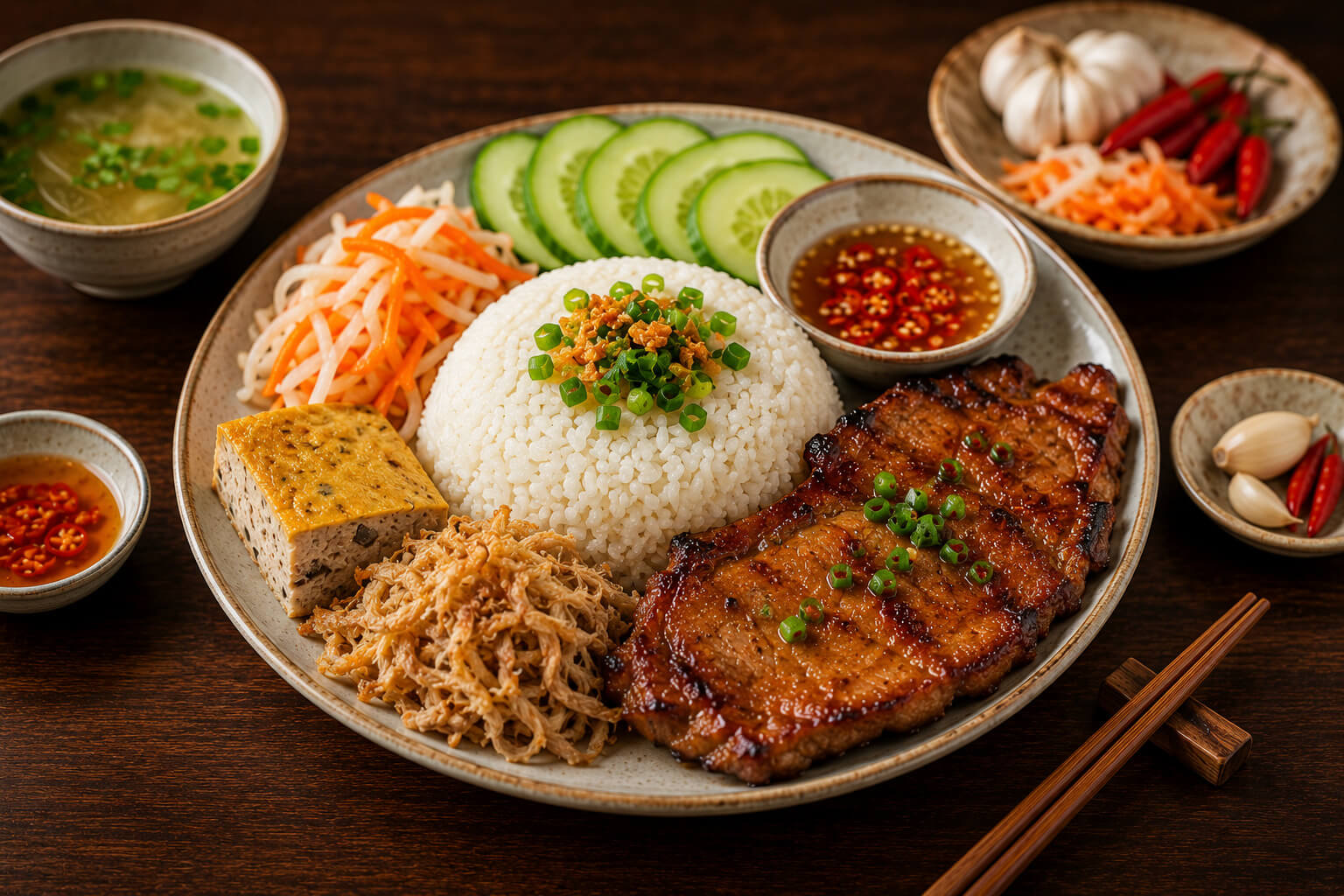
Cơm Tấm means “broken rice” — the fractured rice grains that fell through the milling sieve and were once considered worthless. Today these same imperfect grains are Saigon’s most beloved street food staple, prized for their slightly softer, more absorbent texture.
A full plate of Cơm Tấm arrives with the broken rice at the base, topped with one or more of: a grilled pork chop (sườn nướng) marinated in lemongrass and fish sauce; shredded pork skin mixed with toasted rice powder (bì); and a steamed egg-and-pork meatloaf (chả trứng hấp). A side bowl of light fish sauce broth, sliced cucumber, tomato, and a drizzle of spring onion oil complete the plate.
The broken rice has a distinctly different texture from standard jasmine rice — slightly stickier, more porous, and better at absorbing the fish sauce and pork juices. This was, paradoxically, the whole reason it was once discarded: it did not look right. Now it is exactly what you want.
Cơm Tấm is sold from dawn to midnight across HCMC. Tiny plastic stools on the pavement, fluorescent-lit restaurants, and upmarket all-day diners all serve versions of it. It is, without exaggeration, Saigon’s national dish.
The “broken” grains are not a marketing gimmick — they genuinely absorb flavour faster than whole grains and create a softer, creamier mouthfeel. Eat Cơm Tấm and you will understand why Saigon chose them over the perfect grain.
Cơm Tấm originated in the rice markets of early 20th-century Saigon. Broken rice grains — the by-product of milling — were sold cheaply to the urban poor who could not afford whole-grain rice. Street vendors in the city’s markets began pairing this affordable rice with similarly economical cuts of pork, and a dish was born.
Cơm Tấm Bà Ba — Hà Nội
📍 28 Hàng Chuối, Hai Bà Trưng, Hà Nội
One of the better-regarded Cơm Tấm spots in Hanoi. Note that Hanoi versions differ from the HCMC original — this is a southern-influenced dish and is less embedded in northern food culture.
Cơm Tấm Mười Xiềm
📍 2009 Huỳnh Tấn Phát, Phường Phú Thuận, Quận 7, TP. Hồ Chí Minh
A legendary HCMC institution — open from early morning and famous for its charcoal-grilled pork chop and perfectly cooked broken rice. Arrive before 10 am for the best seats.
Cơm Tấm Thuận Kiều
📍 195 Đinh Tiên Hoàng, Bình Thạnh, TP. Hồ Chí Minh
Well-known among locals for its generous portions and quality pork chop. Air-conditioned indoor seating available — a good option if you prefer a more comfortable environment.
Cơm Tấm Ba Gẻ — Quận 1
📍 260 Lý Tự Trọng, Quận 1, TP. Hồ Chí Minh
Central District 1 location, convenient for tourists. Serves the full complement of toppings. Slightly higher price point but reliable quality and English-speaking staff.
| Venue Type | VND | USD (approx.) | INR (approx.) |
|---|---|---|---|
| Pavement stall / market | 40,000–50,000 | $1.60–$2.00 | ₹140–₹170 |
| Local restaurant (plastic stools) | 50,000–60,000 | $2.00–$2.40 | ₹170–₹200 |
| Mid-range sit-down restaurant | 60,000–70,000 | $2.40–$2.80 | ₹200–₹240 |
| Tourist-facing / air-conditioned | 70,000–80,000 | $2.80–$3.20 | ₹240–₹280 |
Ask for Cơm Tấm chày. The grilled pork chop is replaced with grilled tofu or marinated mushrooms, and the egg meatloaf is replaced with a tofu-based steamed cake. The shredded pork skin topping is omitted. The rice and spring onion oil remain the same. Not all Cơm Tấm vendors offer a chay version — look for restaurants displaying the word “chày” on the sign.
Vegan note: The fish sauce broth bowl contains fish sauce by default. Ask for a soy sauce substitute (tương) if vegan.
“Broken rice” refers to rice grains that fracture during the milling process. These smaller, irregular pieces fall through the milling sieve and were historically discarded or sold cheaply. The broken grains cook slightly differently from whole grains — they are softer, stickier, and more absorbent of sauces and juices, which is now considered a virtue rather than a flaw.
Yes, you can find it across Vietnam, but it is fundamentally a Saigon dish. The quality and authenticity drop noticeably in Hanoi and other northern cities. If you are visiting HCMC, make it a priority. If you are only visiting the north, it is still worth trying but temper expectations.
The base dish — rice, grilled pork, and vegetables — is naturally gluten-free. However, some marinades and sauces may contain soy sauce with wheat. If you have coeliac disease, confirm with the restaurant that the marinade for the pork chop does not contain wheat-based soy sauce.
Yes. Ask for Cơm Tấm chày. Tofu and mushroom toppings replace the pork, and the spring onion oil and rice remain unchanged. Not all vendors offer this, so look for restaurants with a chay menu or those in areas with a strong vegetarian food culture.
“Chả” refers to chả trứng hấp — a steamed cake made from minced pork and egg. It is sliced and laid over the rice. The texture is firm and smooth, the flavour mild and slightly sweet. It is one of the three classic Cơm Tấm toppings alongside the grilled pork chop and shredded pork skin.
Cơm Tấm is served throughout the day and night in HCMC — it is genuinely an all-day dish. Many vendors open as early as 5 am for breakfast. The pork chop is typically freshest at breakfast and lunch when the grills are busiest. Late-night versions are equally popular and beloved.
At a street stall you can expect to pay 40,000–50,000 VND (around ₹140–170). At a sit-down local restaurant it is 50,000–70,000 VND (₹170–240). Tourist-facing air-conditioned restaurants charge up to 80,000 VND (₹280). It remains one of the most affordable meals in the city.
Cơm Tấm reflects Saigon’s history as a city of migrants, commerce, and resilience — a dish born from poverty (discarded rice) that became the city’s most-loved meal. It is sold at every economic level, from pavement stools to restaurants, and is eaten by everyone from street workers to business professionals.
The small bowl of seasoned fish sauce broth (nước mắm pha) is used as both a rice seasoning (pour a little over the top) and as a dipping sauce for the grilled pork chop. It is diluted, sweetened, and often contains lime and chilli — it is not as intense as undiluted fish sauce.
Standard Cơm Tấm contains pork — both the chop and the shredded pork skin topping — and is therefore not halal. The chay (vegetarian) version with tofu and mushroom toppings avoids pork entirely. Muslim travellers should either opt for the vegetarian version or seek out halal-certified Vietnamese restaurants.
Our specialists plan food-focused itineraries around what you want to eat.
Plan My Food Trip