Half French, half Vietnamese — the world’s best sandwich
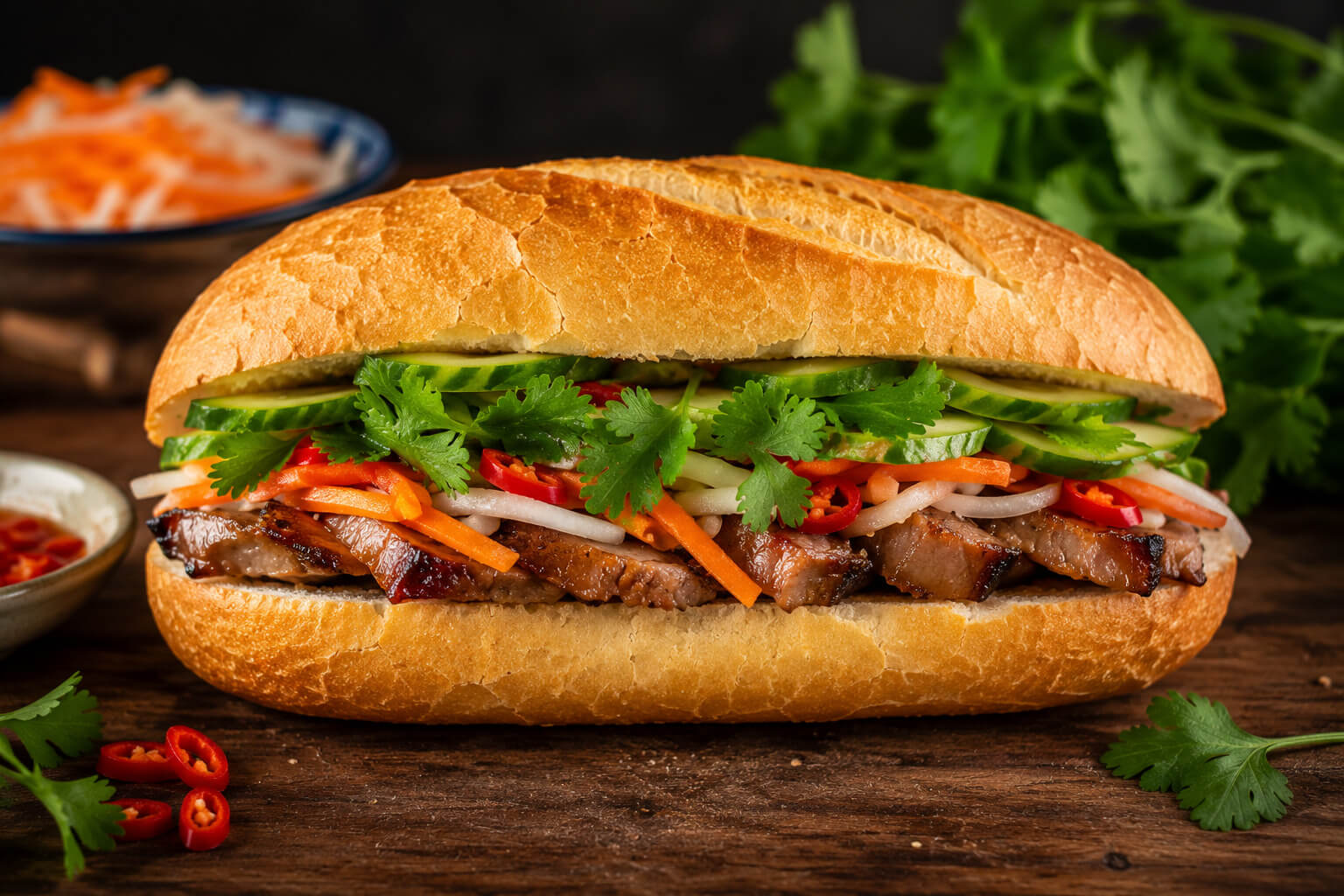
Bánh mì is Vietnam’s legendary street sandwich: a crispy, airy French-style baguette split lengthways and stuffed with a colourful combination of pâté, sliced meats or tofu, pickled daikon and carrot, fresh cucumber, coriander, spring onion, and fiery fresh chilli. The contrast of textures — shatteringly crisp crust, soft crumb, tangy pickles, silky pâté — makes it one of the most perfectly balanced street foods on earth.
Bánh mì is a direct product of French colonial rule in Vietnam (1887–1954). The French introduced the baguette; Vietnamese bakers adapted it using rice flour to create a lighter, crispier loaf suited to the tropical climate. Local cooks filled it with ingredients that were already familiar — pâté, cold cuts, pickles — but overlaid with distinctly Vietnamese aromatics: fish sauce, fresh herbs, and bird’s-eye chilli.
Today it is sold from carts and shop-fronts all over Vietnam from 6am onwards, and its reputation has spread globally. In 2011, “banh mi” entered the Oxford English Dictionary — a mark of how thoroughly it had transcended its origins to become a world food in its own right.
Bánh mì grew out of the French colonial introduction of the baguette to Vietnam in the late 19th century. Vietnamese street vendors in Saigon began filling the bread with local ingredients in the 1950s, creating a hybrid that was neither French nor traditionally Vietnamese but something entirely new. After 1975 the Vietnamese diaspora carried it worldwide, and it is now eaten on every continent.

Bánh Mì Sài Gòn
The original and most celebrated style. Baguette is baked extra-crispy; fillings are generous — pork belly slices, pâté, Vietnamese sausage (chà lưa), mayonnaise, pickled daikon and carrot, cucumber, coriander, and a whole fresh chilli. Bánh Mì Huỳnh Hoa in Quận 1 is considered the gold standard.

Bánh Mì Hội An
Made famous worldwide by Bánh Mì Phương at 2B Phan Châu Trinh. The Hoi An version uses a slightly shorter, rounder baguette and a distinctive combination of house-made pork fillings and sauces. Anthony Bourdain called it “a symphony in a sandwich”, and the UNESCO food heritage of Hoi An has cemented its fame.
French-style baguette (wheat flour) — baked fresh, crispy crust, airy interior
Bánh Mì 25
📍 25 Hàng Cá, Hoàn Kiếm, Hanoi
The most recommended tourist-friendly bánh mì spot in Hanoi. Consistent quality, wide range of fillings, English-friendly. Gets busy at peak times — arrive early.
Bánh Mì Bà Lan
📍 26 Hàng Cân, Hoàn Kiếm, Hanoi
A neighbourhood favourite with Hanoi locals. Classic fillings, no-frills service, very reasonably priced. The bread is baked in-house and arrives crispy throughout the day.
Bánh Mì Lúa
📍 9A Ðinh Lễ, Hoàn Kiếm, Hanoi
Popular with Hanoi office workers at lunch. The bread is notably crispy and the fillings are generous. Good option if you’re near Hoan Kiem Lake.
Bánh Mì Huỳnh Hoa
📍 26 Lê Thị Riêng, Quận 1, Ho Chi Minh City
Widely regarded as HCMC’s — and possibly Vietnam’s — best bánh mì. Enormous portions, extraordinary fillings, always a queue. Open afternoons and evenings only (from 3pm). Worth every minute of waiting.
Bánh Mì Phương
📍 2B Phan Châu Trinh, Hội An (day trip from Ðà Nẵng)
Hoi An’s most famous bánh mì, made globally famous by Anthony Bourdain. Requires a day trip to Hoi An but absolutely worth it. Queue from early morning — opens at 6:30am. A UNESCO-celebrated food experience.
Bánh Mì Như Lan
📍 50 Hàm Ngại, Quận 1, Ho Chi Minh City
A Saigon institution since 1974. Locals have been coming here for decades. Large selection of bánh mì and Vietnamese baked goods. Reliable, affordable and very authentic.
| Venue Type | VND | USD (approx.) | INR (approx.) |
|---|---|---|---|
| Street cart / pavement vendor | 20,000–35,000 | $0.80–$1.40 | ₹65–115 |
| Proper bánh mì shop | 35,000–60,000 | $1.40–$2.40 | ₹115–198 |
| Tourist-area / famous shop | 60,000–100,000 | $2.40–$4.00 | ₹198–330 |
Vegetarian bánh mì replaces meat with tofu, mushrooms, and sometimes mock meat or pickled jackfruit. The same pickled vegetables, fresh herbs and condiments are used. Available at dedicated bánh mì chay stalls (often near pagodas on the 1st and 15th of the lunar month) and increasingly at regular shops in tourist areas.
"Cho tôi bánh mì chay" — I’d like vegetarian bánh mìVegan note: Mostly vegan — however, standard bánh mì chay may still contain eggs (mayonnaise). Ask: "Không có trứng không?" (No egg?)
Jain note: Standard bánh mì contains eggs (mayonnaise) and may use onion/garlic in sauces. Jain travellers should request "không trứng" (no egg) and "không hành" (no onion/spring onion). Also confirm the pâté is omitted. Some Buddhist vegetarian stalls adhere to no-allium cooking — these are your safest option.
Yes — bánh mì is one of the safest street foods in Vietnam. The bread is freshly baked, the fillings are either cured or pickled (high-acid), and the whole thing is assembled to order. The main caution is the fresh coriander and raw chilli — on day one of your trip, you can ask for those to be omitted if you have a sensitive stomach.
Yes — the baguette is made from wheat flour and is definitely not gluten-free. The fillings themselves (meats, pickles, herbs) are generally gluten-free, but the bread cannot be substituted. Those with wheat allergies or coeliac disease should avoid bánh mì.
A standard bánh mì dác biệt (special) contains: pork liver pâté, mayonnaise, sliced pork belly, Vietnamese sausage (chà lưa), pickled daikon and carrot, fresh cucumber, coriander, spring onion, and fresh chilli. Fillings vary by vendor and region.
Say “không ớt” (no chilli) when you order. If there’s a language barrier, simply shake your head and point at the chilli. Most vendors are very accustomed to this request from foreign customers.
Ho Chi Minh City is the spiritual home of modern bánh mì, and Bánh Mì Huỳnh Hoa is frequently cited as the best in the country. However, Hoi An’s Bánh Mì Phương is arguably even more famous internationally. Hanoi has good bánh mì but it’s not the city’s signature dish the way phở is.
Absolutely — it’s one of the most popular Vietnamese breakfasts. Carts are set up from 6am and the bread is at its crispiest fresh from the morning bake. Many vendors sell out of the best bread by 10–11am.
Yes — bánh mì chay uses tofu, mushrooms or mock meat instead of pork products. It’s available at vegetarian stalls (look near temples and pagodas) and increasingly at regular shops in tourist areas.
For vegetarians, bánh mì chay is widely available. For those who eat chicken, some vendors offer a chicken bánh mì. The standard version contains pork and pork-derived pâté — always confirm fillings. Jain travellers should also be aware of mayonnaise (eggs) and onion/spring onion in the standard filling.
Bánh mì from a street vendor costs around ₹70–140 (20,000–40,000 VND) — comparable to a Mumbai vada pav or a Delhi paratha from a street stall. Even at a famous tourist-area shop you’re unlikely to pay more than ₹330.
Roughly “bahn mee” in English approximation. The first word has a falling then rising tone; the second has a falling tone. In practice, saying “bahn mee” clearly will be understood anywhere in Vietnam.
Our specialists plan food-focused itineraries around what you want to eat.
Plan My Food Trip