Cubed, marinated, wok-tossed — Vietnam's finest beef dish.
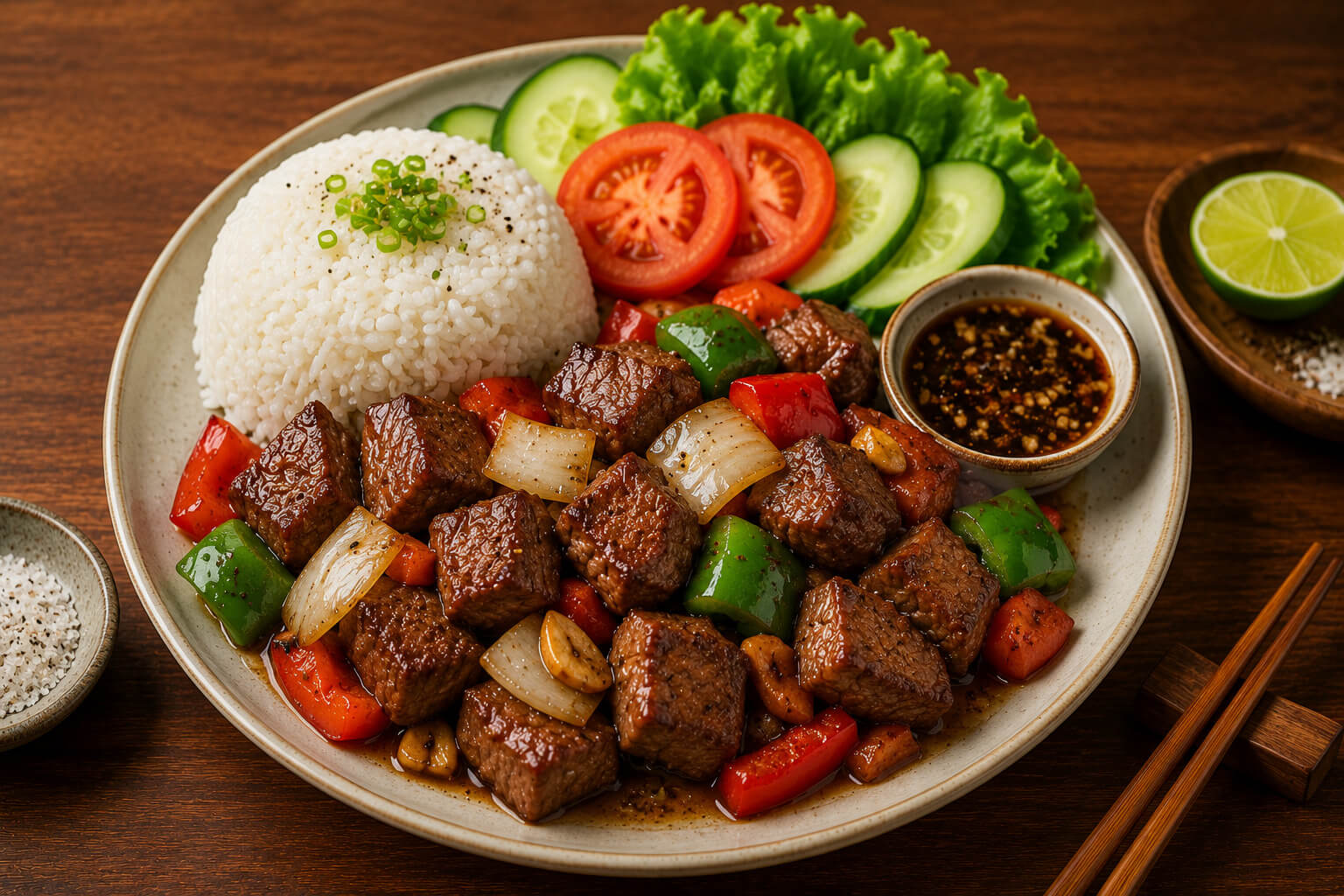
Bò Lúc Lắc is Vietnam's most celebrated beef dish: tender cubes of filet or sirloin marinated in a buttery soy-oyster sauce mixture, then flash-wok-fried at blistering heat while the cook "shakes" the pan to sear every surface.
The name lúc lắc literally means "to shake" in Vietnamese — a reference to the constant wok motion that gives each cube its caramelised crust while keeping the interior juicy and pink. The beef is served atop a crisp bed of watercress or green-leaf lettuce with sliced tomato and rings of red onion. The essential accompaniment is a small bowl of lime juice, flaky sea salt, and cracked black pepper — you dip each piece of beef into this before eating, the acid and salt cutting the richness of the meat perfectly.
The dish carries a distinctly French colonial fingerprint: butter (beurre) in the marinade is not a traditional Vietnamese technique but a legacy of French culinary influence during the colonial period. This French-Vietnamese fusion is what gives the beef its unusually glossy, rich finish compared to other Southeast Asian stir-fries. Today it is served everywhere from roadside côm bi̓nh dân restaurants to five-star hotel dining rooms, and it is one of the few Vietnamese dishes where the quality of beef matters enormously — budget versions use cheaper cuts and miss the point.
Bò Lúc Lắc emerged in southern Vietnam during the French colonial era, when European beef-eating culture merged with Vietnamese wok technique and local aromatics. It became a Saigon restaurant staple in the mid-20th century.
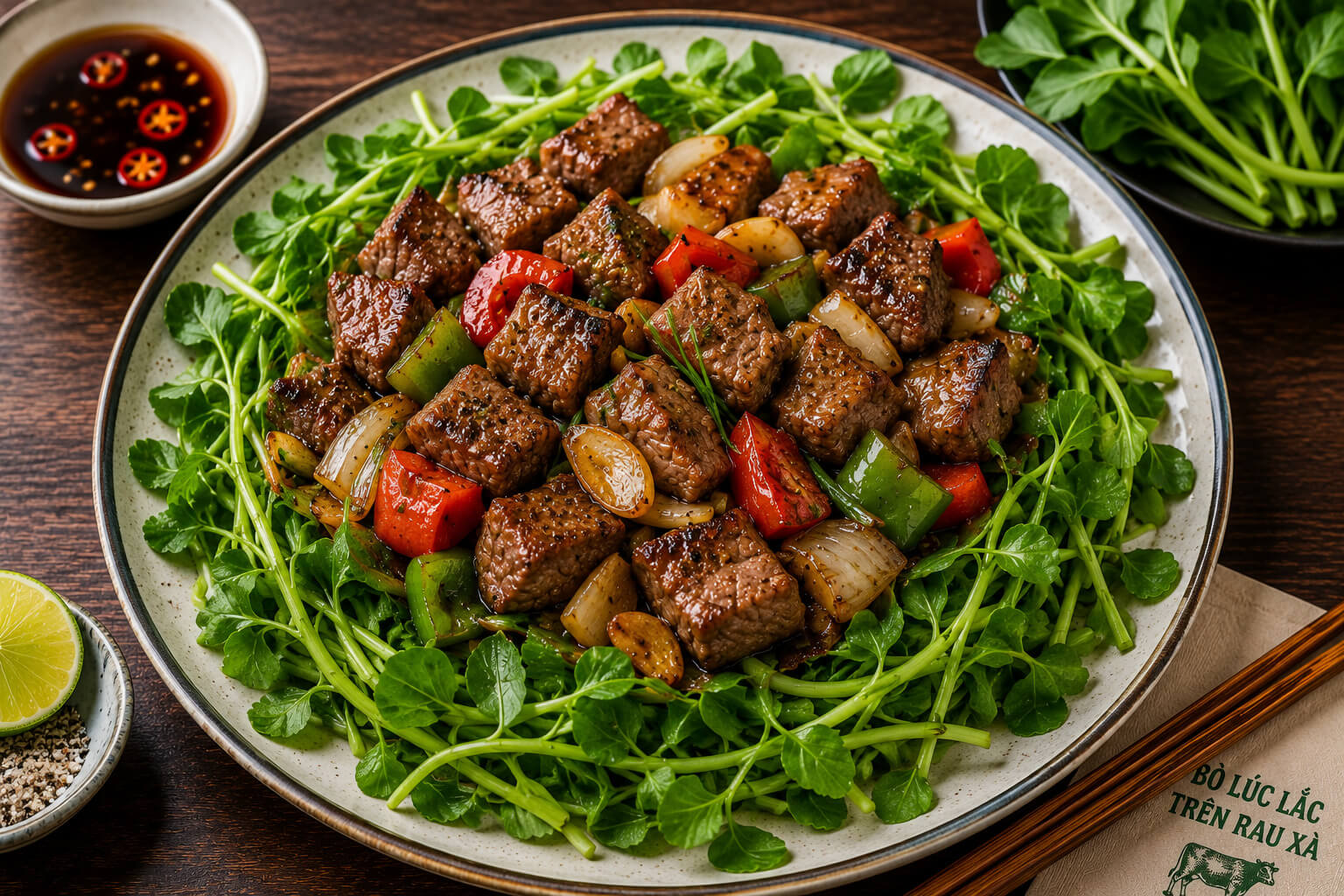
Bò Lúc Lắc trên rau xà
The original — beef on watercress with tomato and red onion. The lime-salt-pepper dip is essential. Often served with a fried egg on top at budget restaurants.
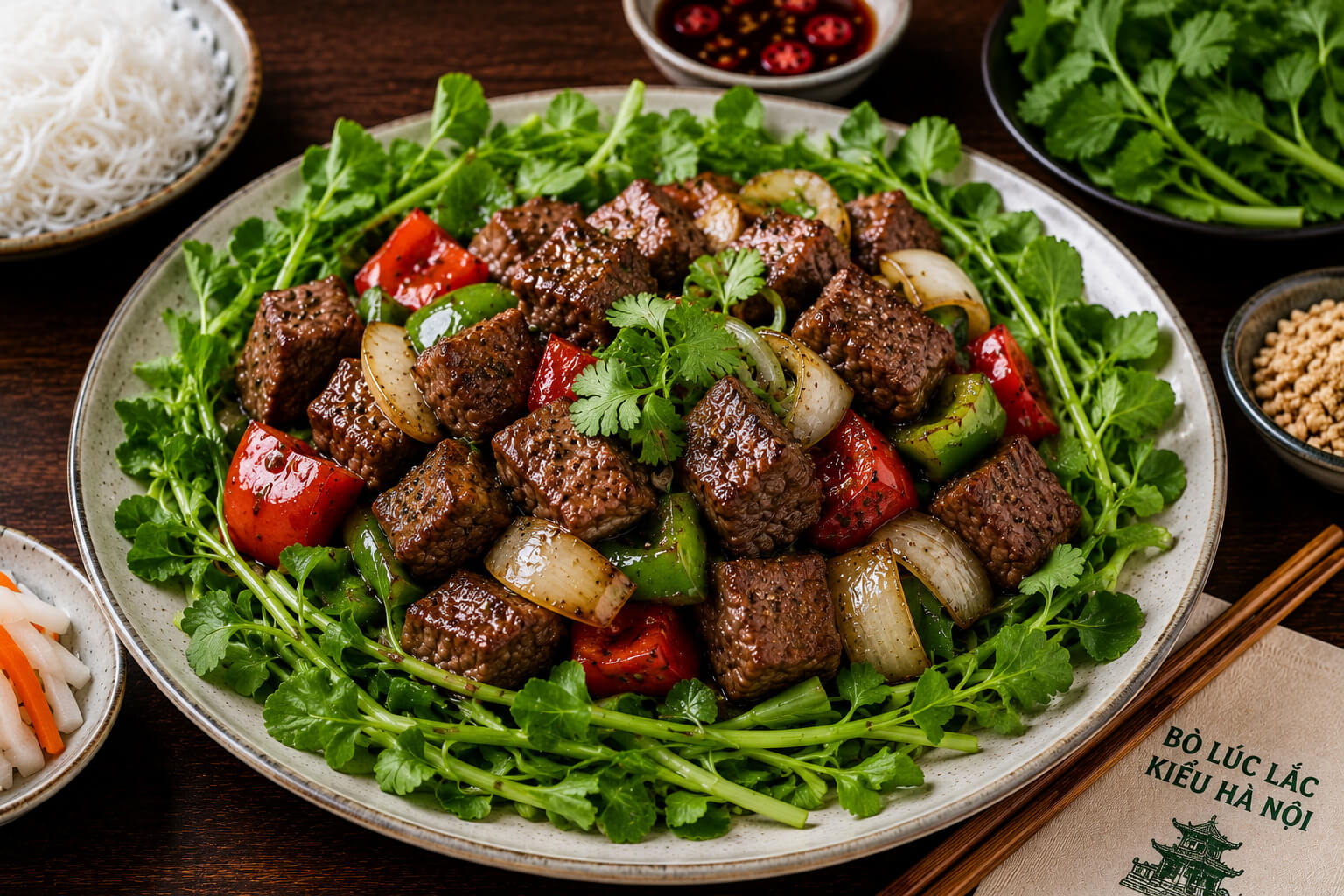
Bò Lúc Lắc kiểu Hà Nội
Northern versions tend to use less butter in the marinade and sometimes serve the beef with steamed rice rather than a salad bed. The flavour profile is slightly less rich.
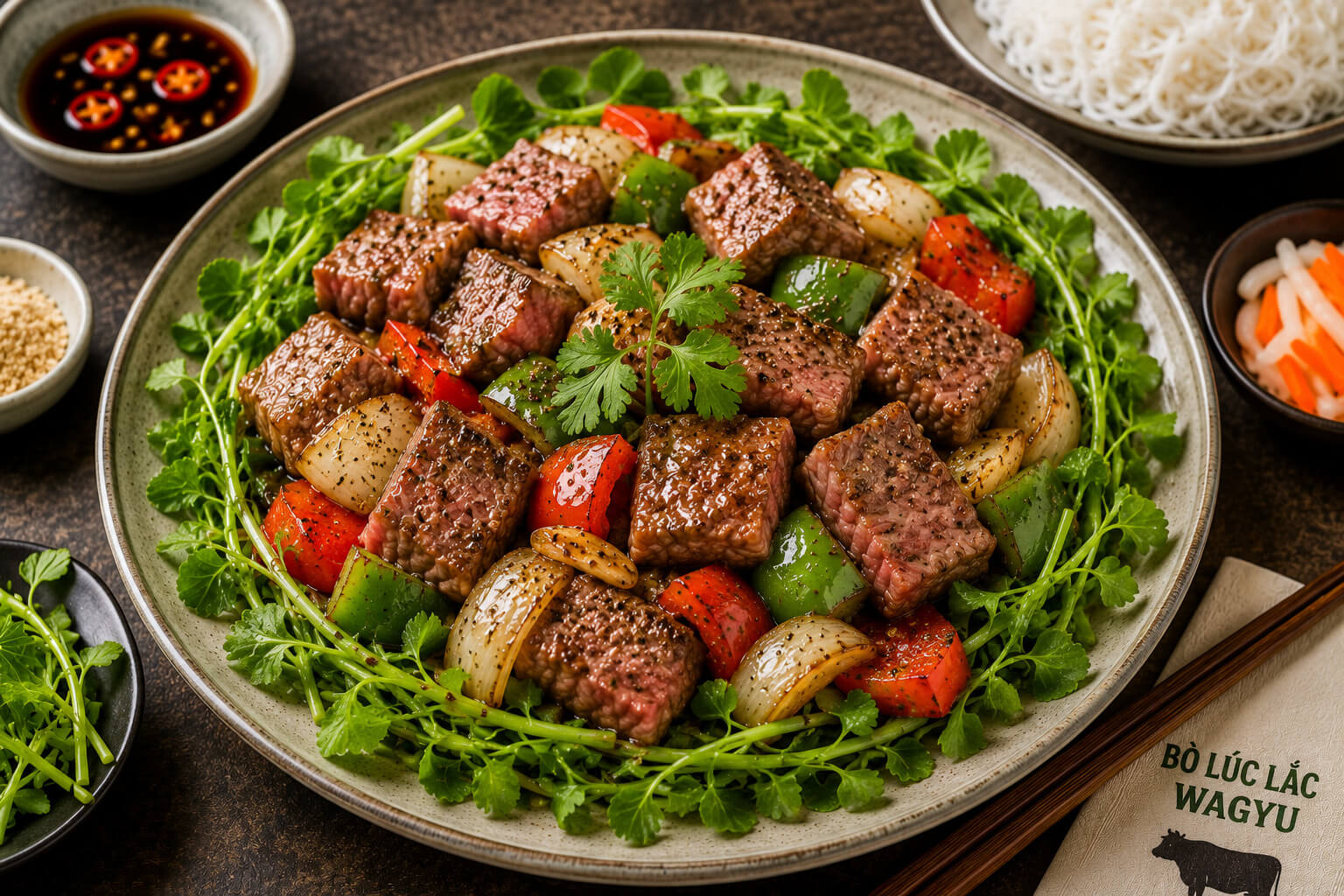
Bò Lúc Lắc Wagyu
High-end restaurants in both cities now offer wagyu or grain-fed beef versions with truffle salt and premium garnishes. The technique is the same; the quality jump is significant.
Beef filet, sirloin, or ribeye — cut into 2–3 cm cubes
Soy sauce, oyster sauce, fish sauce, sugar, garlic, black pepper, butter
Watercress or green-leaf lettuce
Sliced tomatoes, red onion rings
Fresh lime juice, flaky salt, coarsely ground black pepper
Fried egg, steamed rice or French baguette on the side
Bò Lúc Lắc Phúc Dê
📍 7 Ðỗ Chiếu, Hoàn Kiếm, Hà Nội
A Hoan Kiem stalwart popular with local professionals. Uses quality sirloin, proper high-heat wok technique. Simple decor, consistent quality. Steamed rice included in the price.
The Hanoi Social Club
📍 6 Hỗi Vũ , Ba Ðình, Hà Nội
Upscale cafe-restaurant. Offers a refined bò lúc lắc with premium beef on organic greens. English-speaking staff, comfortable setting. Good for first-timers wanting a safe introduction.
Côm Bà Bé
📍 34 Châu Long, Ba Ðình, Hà Nội
Famous Hanoi côm bi̓nh dân (everyday rice) restaurant. Bò lúc lắc is a menu staple. Generous portion, excellent value. Always busy at lunch — arrive early.
Le Boudoir
📍 16 Tôn Thất Dạm, Bến Nghé, Quận 1, TP. Hồ Chí Minh
Upscale Franco-Vietnamese restaurant that is widely credited with serving one of the best bò lúc lắc in the city. Grain-fed beef, butter-enriched wok. Reservation recommended.
Côm Niêu Sài Gòn
📍 2 Hoạt Ðộng, Quận 1, TP. Hồ Chí Minh
Famous for its theatrical rice-pot service, but the bò lúc lắc here is equally celebrated. Tourist-friendly environment, English menu, good service. Worth the slightly higher price.
Quán Bò Lúc Lắc Dì Lan
📍 54 Võ Văn Tần, Quận 3, TP. Hồ Chí Minh
A District 3 local favourite serving generous portions with particularly good dipping sauce. No-frills setting, serious food. Locals queue here at lunchtime. Cash only.
| Venue Type | VND | USD (approx.) | INR (approx.) |
|---|---|---|---|
| Street cart / market stall | 80,000 — 110,000 | $3.20 — $4.40 | ₹267 — ₹367 |
| Local restaurant | 110,000 — 160,000 | $4.40 — $6.40 | ₹367 — ₹533 |
| Mid-range restaurant | 160,000 — 220,000 | $6.40 — $8.80 | ₹533 — ₹733 |
| Hotel / tourist restaurant | 220,000 — 400,000 | $8.80 — $16.00 | ₹733 — ₹1,333 |
Bò Lúc Lắc is a beef dish by definition and has no vegetarian equivalent under the same name. Some creative vegetarian restaurants substitute tofu or mushroom, but this is not traditional.
Not applicable. Look for other dishes.Vegan note: Not available in traditional form.
Jain note: This dish is not suitable for vegetarians, vegans, or Jain diners. The marinade contains oyster sauce and fish sauce in addition to beef. Indian vegetarian tourists should skip this dish.
Traditionally beef filet (tenderloin) or sirloin. Budget restaurants may use cheaper cuts, which is why texture varies so much between venues. Ask "thịt bò phi-lê" if you want filet specifically.
Lúc lắc means "to shake" in Vietnamese. The cook shakes the wok constantly over extremely high heat to sear all sides of each beef cube simultaneously without steaming them.
Yes, it shows clear French influence: butter in the marinade is a European technique adopted during the colonial period. The wok technique and fish sauce are Vietnamese. It is a true fusion.
Yes. Many Indian tourists who eat beef enjoy this dish as one of the finest beef preparations in Vietnam. It is safe, well-cooked, and widely available.
No. The dish is pure beef with butter, soy, and oyster sauce. There is no pork in the standard recipe. Confirm with the restaurant if concerned.
The standard serving is medium-rare (seared on all sides with a pink centre). You can request well-done (chín) but it is not recommended as it toughens the meat.
The beef juices and residual butter sauce drip down onto the watercress, wilting it slightly and dressing it naturally. The peppery watercress balances the richness of the beef. Eat it together, not separately.
Yes — soy sauce and oyster sauce both contain wheat. Diners with coeliac disease or gluten intolerance should avoid this dish or ask for gluten-free soy sauce (tamari) substitution at upscale venues.
At a good local restaurant, 120,000–180,000 VND (approximately ₹400–600) is a fair price. Anything below 100,000 VND usually means lower-quality beef.
No. The seasoning is soy-based with black pepper as the only heat. It is one of the least spicy Vietnamese mains, making it suitable for those who cannot tolerate chilli.
Our specialists plan food-focused itineraries around what you want to eat.
Plan My Food Trip