Hanoi's most theatrical dinner — fish sizzling tableside in turmeric and dill.
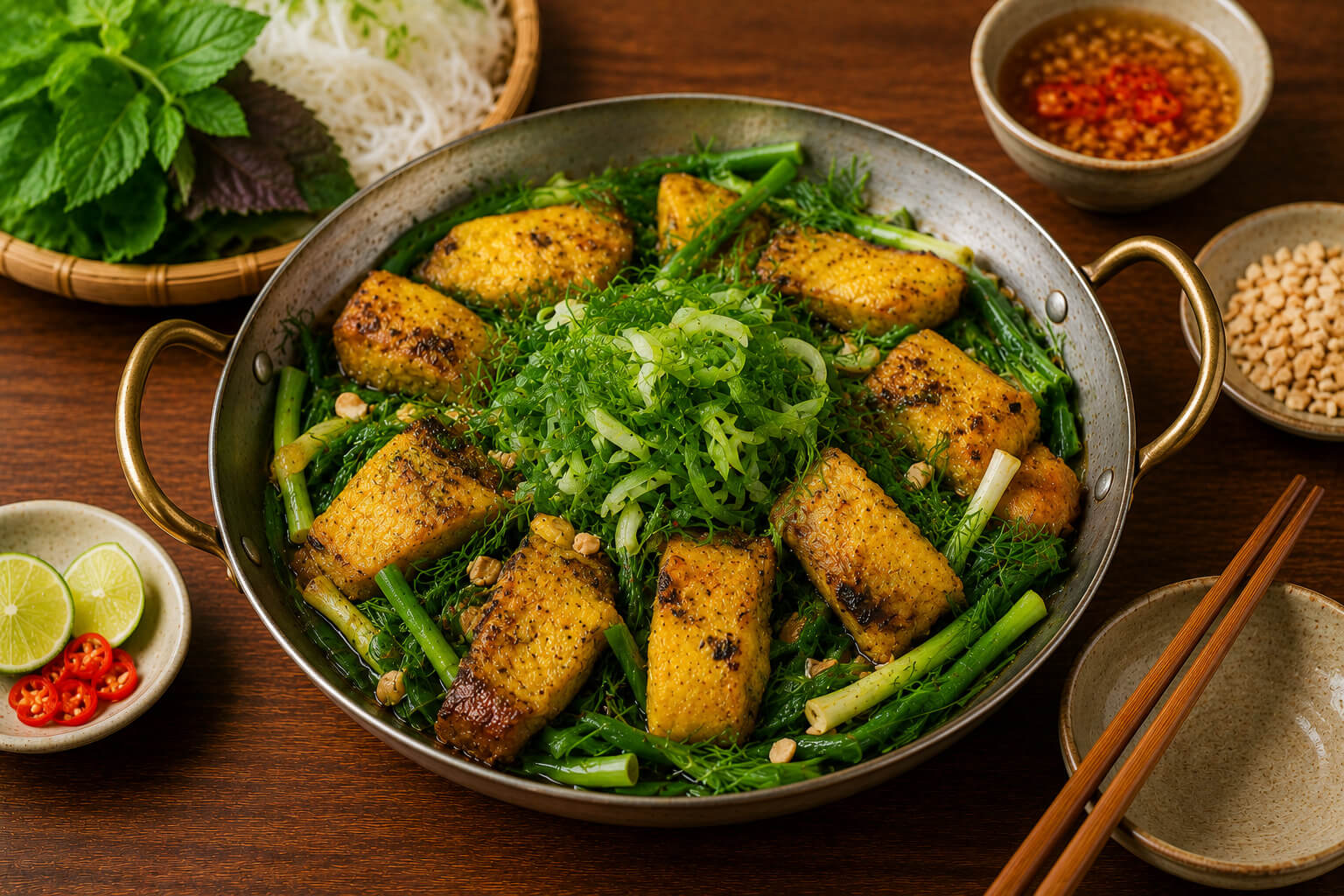
Chả Cá Lã Vọng is one of the most singular dining experiences in all of Vietnam — a dish so beloved that the street on which it is served was renamed after it. Pieces of white fish marinated in turmeric and galangal arrive at your table sizzling in a small wok of butter, surrounded by handfuls of fresh dill and spring onion.
The fish — traditionally snakehead or catfish, now often any firm white-fleshed fish — is first marinated overnight in ground turmeric, galangal, ginger, and shrimp paste, which stains it a vivid gold and infuses it with complex aromatics. At the table, the cook (or you) adds the fish to a small wok of clarified butter and cooks it briefly before burying it under a mountain of fresh dill and spring onion. The herbs wilt in seconds and take on a nutty, almost grilled character. You eat the fish and herbs over a bowl of bún rice vermicelli, scattered with roasted peanuts and served alongside shrimp paste (mắm tôm) diluted with lime — its pungency is the foil the rich, buttery fish needs.
For Indian visitors, the turmeric-galangal marinade will feel immediately familiar — these are the building blocks of much South Asian fish cookery. The combination of dill (unusual in Vietnamese cuisine outside this dish) and butter creates something closer to a French beurre blanc preparation than a typical Southeast Asian dish. It is Hanoi's most theatrical meal and one that rewards eating at the original restaurant — Chả Cá Lã Vọng — where the recipe has not changed since the 19th century.
Chả Cá Lã Vọng has been served by the same family — the Ðình family — at their home on the street that now bears the dish's name since the late 19th century. It is the closest thing Hanoi has to a single-dish restaurant, a tradition that persisted through wars, reunification, and globalisation.
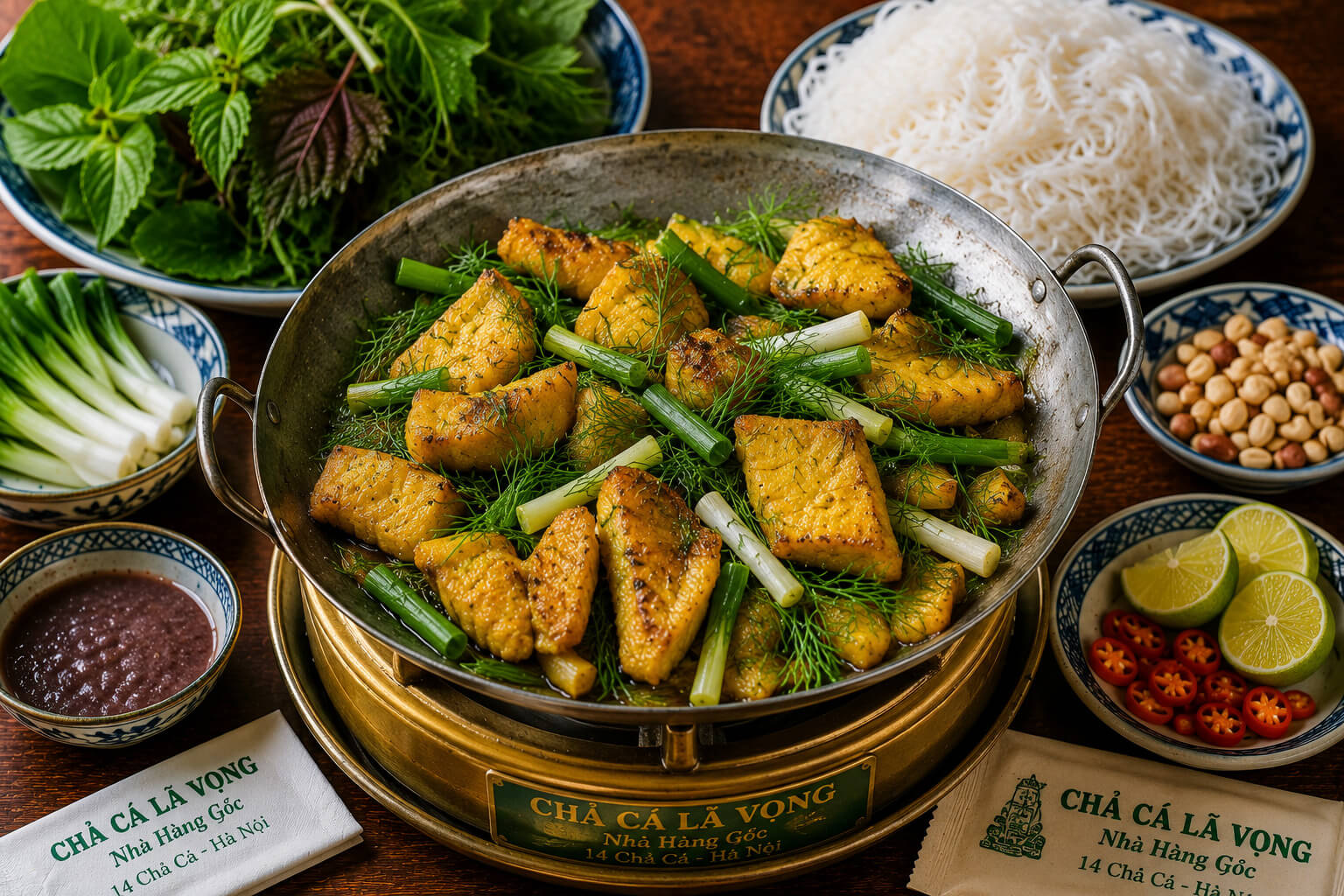
Chả Cá Lã Vọng (Nhà Hàng Gốc)
The original recipe at the family restaurant on Chả Cá Street. Snakehead fish, overnight turmeric-galangal marinade, cooked in clarified butter at the table. Eaten with bún, roasted peanuts, and mắm tôm.
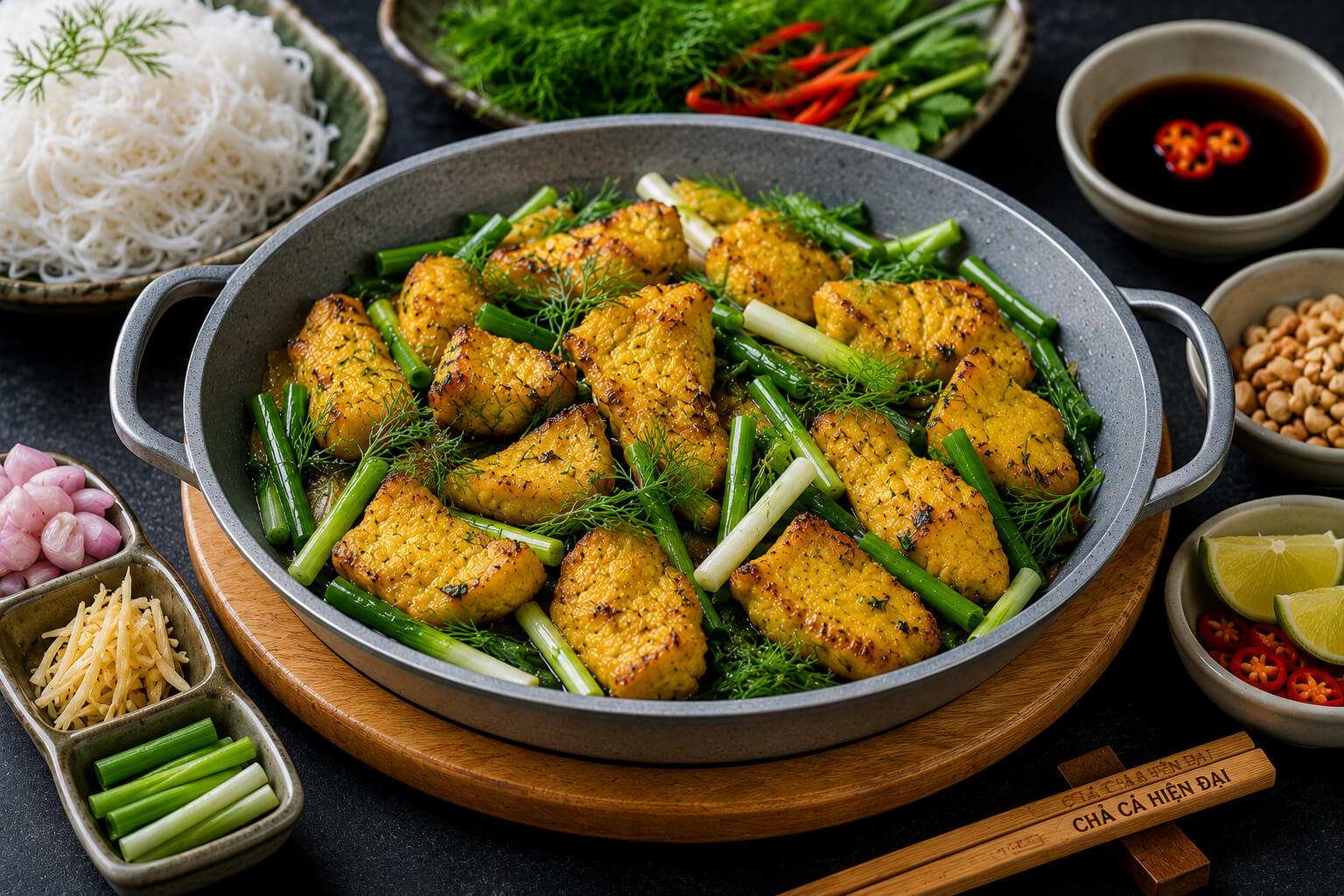
Chả Cá Hiện Ðại
Many newer Hanoi restaurants use sea bass, red snapper, or barramundi for a milder flavour. The marinade is similar; some add lemongrass. Served in the same tableside wok style.
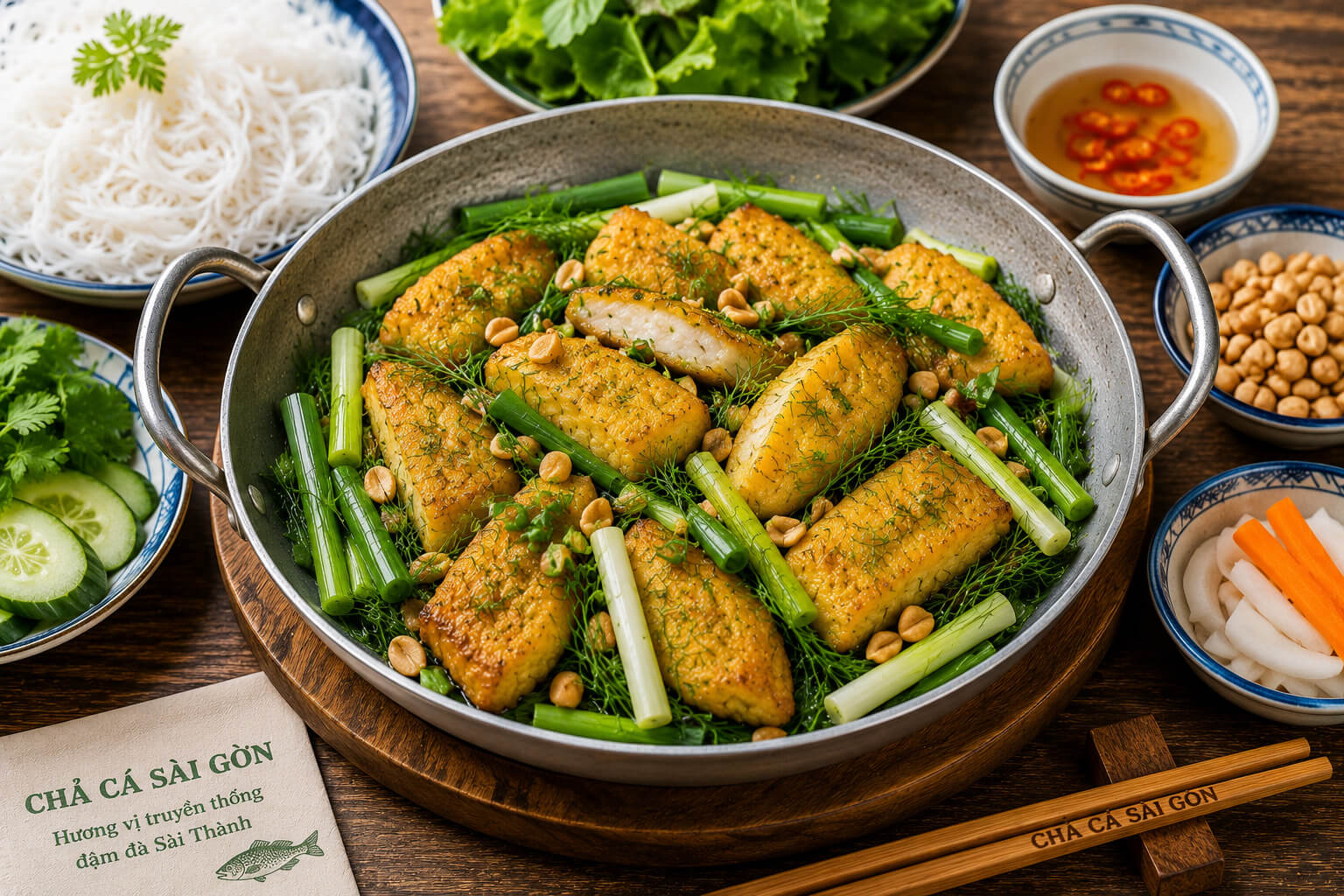
Chả Cá Sài Gòn
Southern interpretations are generally sweeter in marinade and use locally available catfish. The tableside cooking element is often omitted; the fish arrives pre-cooked. Less theatrical but still flavourful.
Snakehead fish or catfish (firm white flesh) — cut into thick slices
Ground turmeric, galangal, ginger, shrimp paste, fish sauce, sugar — marinated overnight
Clarified butter (gi bò) or vegetable oil for cooking
Fresh dill (thìa là) — used in unusually large quantities — and spring onion (hành lá)
Bún — round rice vermicelli, served separately
Roasted peanuts, roughly crushed
Mắm tôm (fermented shrimp paste) diluted with lime juice and sugar
Chilli paste, extra lime wedges
Chả Cá Lã Vọng (Original)
📍 14 Chả Cá, Hoàn Kiếm, Hà Nội
The original family restaurant — over 150 years of continuous service. The recipe has not changed. No English menu, no concessions to tourism, and that is exactly the point. The fish is superb. Book ahead for dinner.
Chả Cá Thăng Long
📍 21 Ðường Thành, Hoàn Kiếm, Hà Nội
Nearby alternative — English menu and tourist-friendly service. Slightly lower quality than the original but much easier to navigate for first-timers. Good for those who want explanation of the dish.
Chả Cá Anh Vũ
📍 120 Ðội Cán, Hoàn Kiếm, Hà Nội
A newer entrant that has built a strong local following. Uses fresh sea bass rather than snakehead — the flavour is cleaner and milder, which some visitors prefer. Good herb quantities.
Chả Cá Lã Vọng Sài Gòn
📍 79 Ðinh Tiên Hoàng, Bình Thạnh, TP. Hồ Chí Minh
HCMC branch of the famous Hanoi name. Quality is acceptable but does not match the original — catfish replaces snakehead and tableside cooking is less theatrical. Worth trying if you cannot visit Hanoi.
Quán Chả Cá Ngàn Hương
📍 36 Trần Cao Vân, Quận 3, TP. Hồ Chí Minh
District 3 restaurant with a loyal local following for its turmeric fish. Not marketed as a Chả Cá Lã Vọng replica — rather its own take on the style. Good dill supply and strong peanut garnish.
Nha Hang Ngon
📍 160 Pasteur, Bến Nghé, Quận 1, TP. Hồ Chí Minh
Famous multi-dish restaurant where you can sample chả cá alongside other Vietnamese classics. The version here is simplified for a mixed menu but quality is reliable. Beautiful colonial villa setting.
| Venue Type | VND | USD (approx.) | INR (approx.) |
|---|---|---|---|
| Street cart / market stall | Rarely available at street level | N/A | N/A |
| Local restaurant | 150,000 — 220,000 | $6.00 — $8.80 | ₹500 — ₹733 |
| Mid-range restaurant | 220,000 — 300,000 | $8.80 — $12.00 | ₹733 — ₹1,000 |
| Hotel / tourist restaurant | 300,000 — 500,000 | $12.00 — $20.00 | ₹1,000 — ₹1,667 |
Chả Cá Lã Vọng is fundamentally a fish dish and there is no widely accepted vegetarian version. The shrimp paste dip also contains seafood.
Not applicable. Vegetarian travellers should explore other dishes.Vegan note: Not available.
Jain note: Not suitable for vegetarian, vegan, or Jain diners. The marinade contains shrimp paste and the dipping sauce is shrimp-based. Indian vegetarian tourists should skip this dish entirely.
The Ðình family's restaurant became so famous during the 19th and 20th centuries that the city renamed the street "Chả Cá Street" in 1964 to honour the dish's cultural importance. It is one of the only streets in the world named after a single food from one restaurant.
Traditionally snakehead fish (cá quả) or catfish (cá trê). Modern restaurants increasingly use sea bass or barramundi for a cleaner, milder flavour. The marinade works equally well with any firm white fish.
Yes — at authentic restaurants the fish arrives pre-marinated and you (or the server) cook it in the small wok at your table. This tableside element is central to the experience.
Dill (thìa là) appears almost exclusively in this dish in Vietnamese cuisine — it may have been introduced via French or northern Chinese culinary exchange. Its anise-like freshness cuts the richness of the turmeric-butter fish perfectly.
Fermented shrimp paste is intensely savoury and pungent — somewhat like a very funky anchovy paste. It is safe and widely eaten across Vietnam. Diluted with lime juice for this dish, it becomes more approachable. Start with a tiny amount.
At most restaurants, no — the fish is marinated overnight and the shrimp paste is integral to the recipe. The dipping sauce can be skipped — just say "không mắm tôm".
Not spicy at all in its base form. Chilli paste is served on the side and is entirely optional. This is one of the most accessible Vietnamese mains for those who cannot eat spicy food.
Yes, but the quality drops significantly away from Hanoi. The original recipe and fish variety are specific to the north. If you are visiting Hanoi, make it a priority; if you are only visiting HCMC, try the southern versions but expect a different experience.
Allow 250,000–350,000 VND per person (approximately ₹833–1,167) including noodles, dip, and drinks at a good restaurant. At the original, prices are similar — it is not as expensive as its reputation suggests.
Yes — it is not spicy, the fish is tender, and the tableside cooking is engaging for children. Skip the shrimp paste dip for younger diners and serve with plain rice noodles and peanuts.
Our specialists plan food-focused itineraries around what you want to eat.
Plan My Food Trip