Sour, sweet, savoury — the soup that defines southern Vietnamese home cooking.
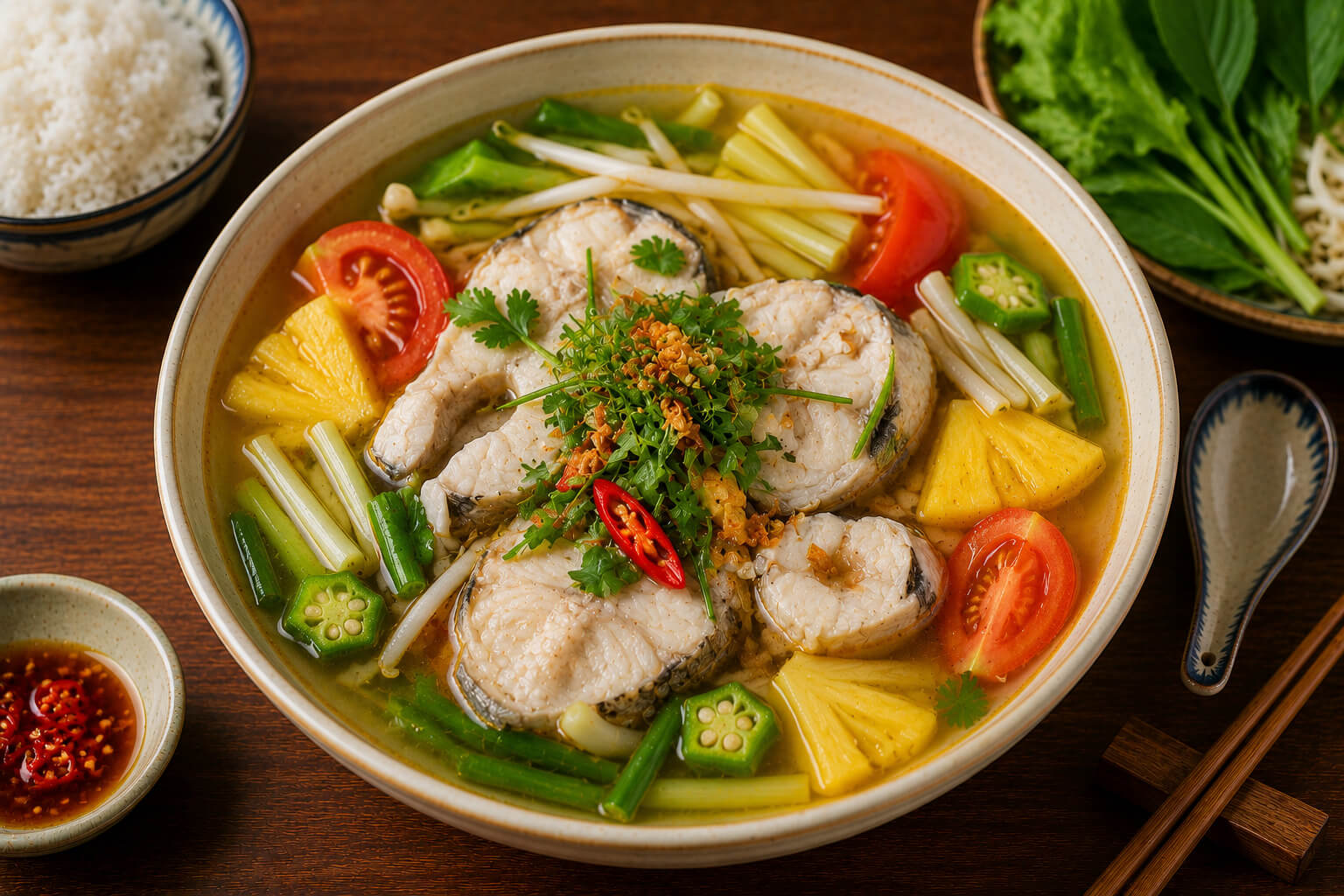
Canh Chua is the soul of southern Vietnamese family cooking — a bright, clear soup built on a tamarind and pineapple broth that achieves a remarkable balance of sour, sweet, and savoury flavours in a single bowl. It is cooked in nearly every home in the Mekong Delta and served at family meals across the south.
The broth begins with tamarind water (nước me) and pineapple chunks cooked together to create the signature sweet-sour base. Fish — most commonly catfish (cá trê) or snakehead fish — is simmered in this broth alongside tomato wedges, taro stem, okra, bean sprouts, and rice paddy herb (ngổ om). The result is a light, fragrant soup that is fundamentally different from the heavy bone broths of the north. It is ladled into a communal bowl at the centre of the table and eaten alongside steamed rice, grilled fish, and other shared dishes.
For Indian visitors, Canh Chua will feel like home in the best possible way. The tamarind-based sourness is identical to that used in rasam, dal-based sambhar, and Tamil sour fish curries. The pineapple-and-tomato combination mirrors certain Goan and coastal fish preparations. The soup is light enough that it does not overpower rice — it is meant to be eaten with rice, spooned over it much as one would pour dal or sambar. The flavour intensity is gentle, the heat level is zero, and it is one of the most digestible things you will eat in Vietnam.
Canh Chua is a product of the Mekong Delta's extraordinary natural abundance — a region with more freshwater fish, tropical fruit, and aquatic vegetables than anywhere else in Southeast Asia. The dish developed as a way to use the surplus of tamarind, pineapple, tomato, and freshwater fish that characterise Mekong cooking.
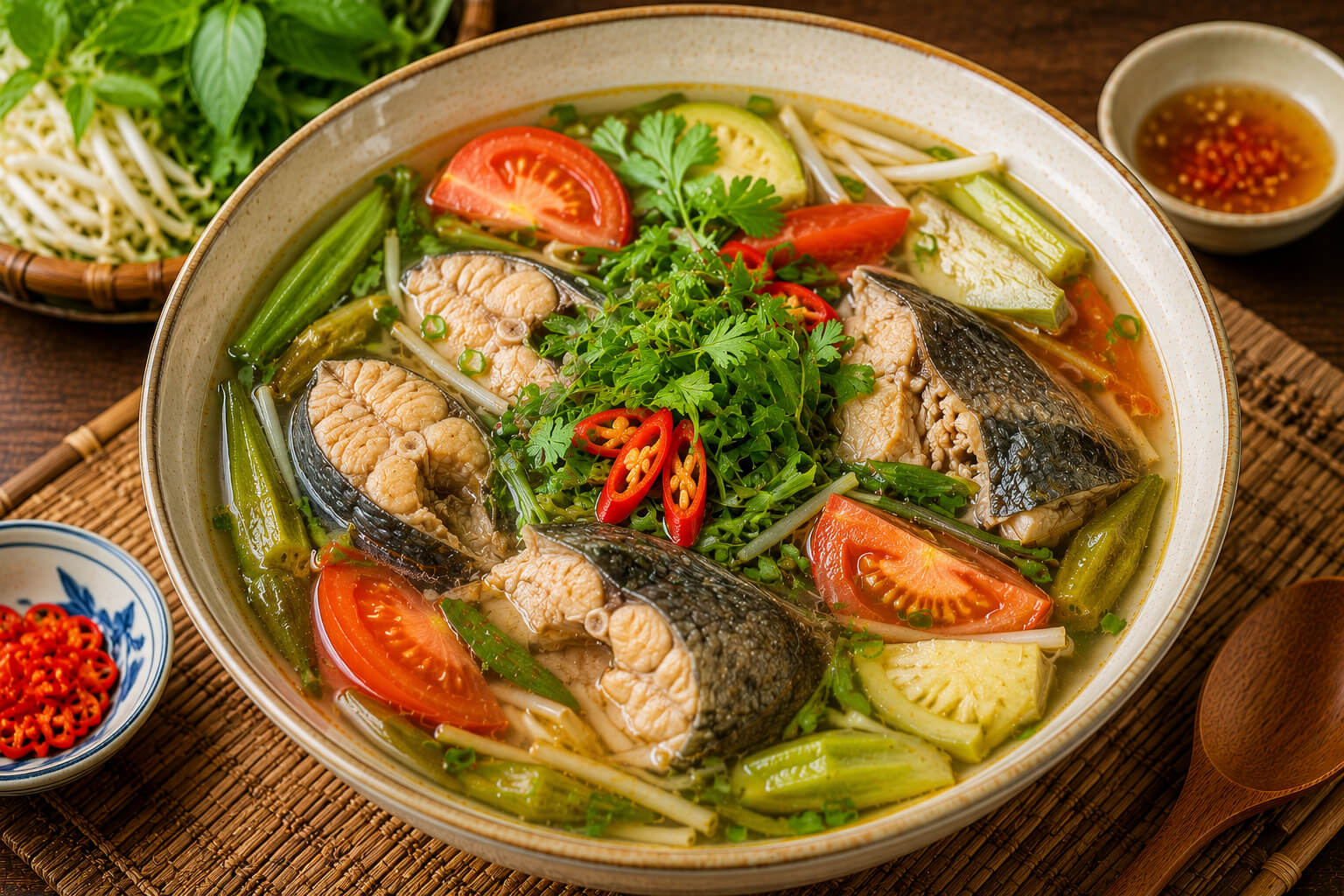
Canh Chua Cá Trê (Catfish)
The most traditional version — whole catfish pieces, taro stem, okra, pineapple, tomato, and rice paddy herb in a tamarind broth. Served in a clay pot with fresh mint and sawtooth coriander on top.
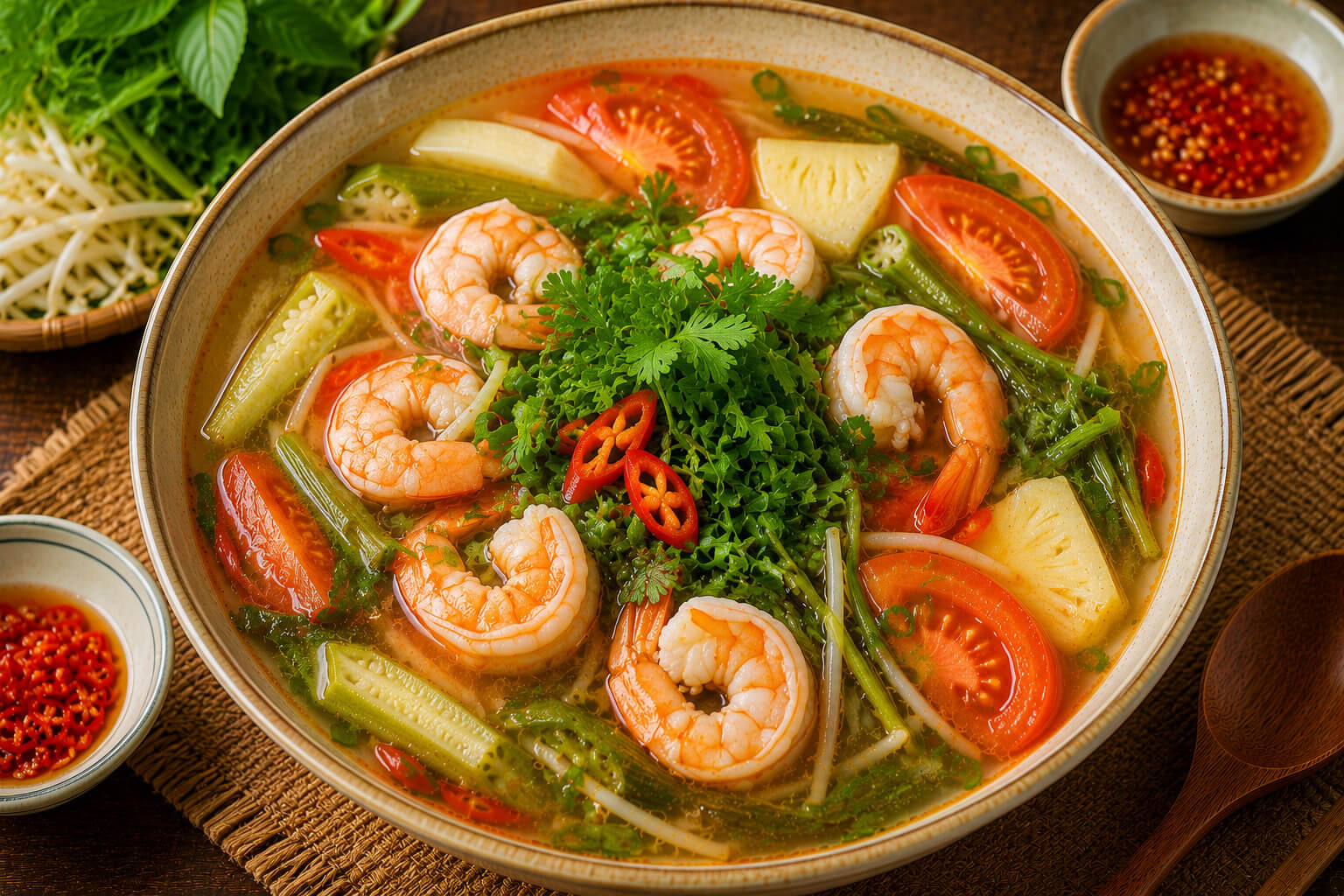
Canh Chua Tôm (Prawn)
City version uses whole prawns instead of fish for a sweeter, more delicate broth. Common at HCMC restaurants catering to tourists. A cleaner flavour and more photogenic presentation.
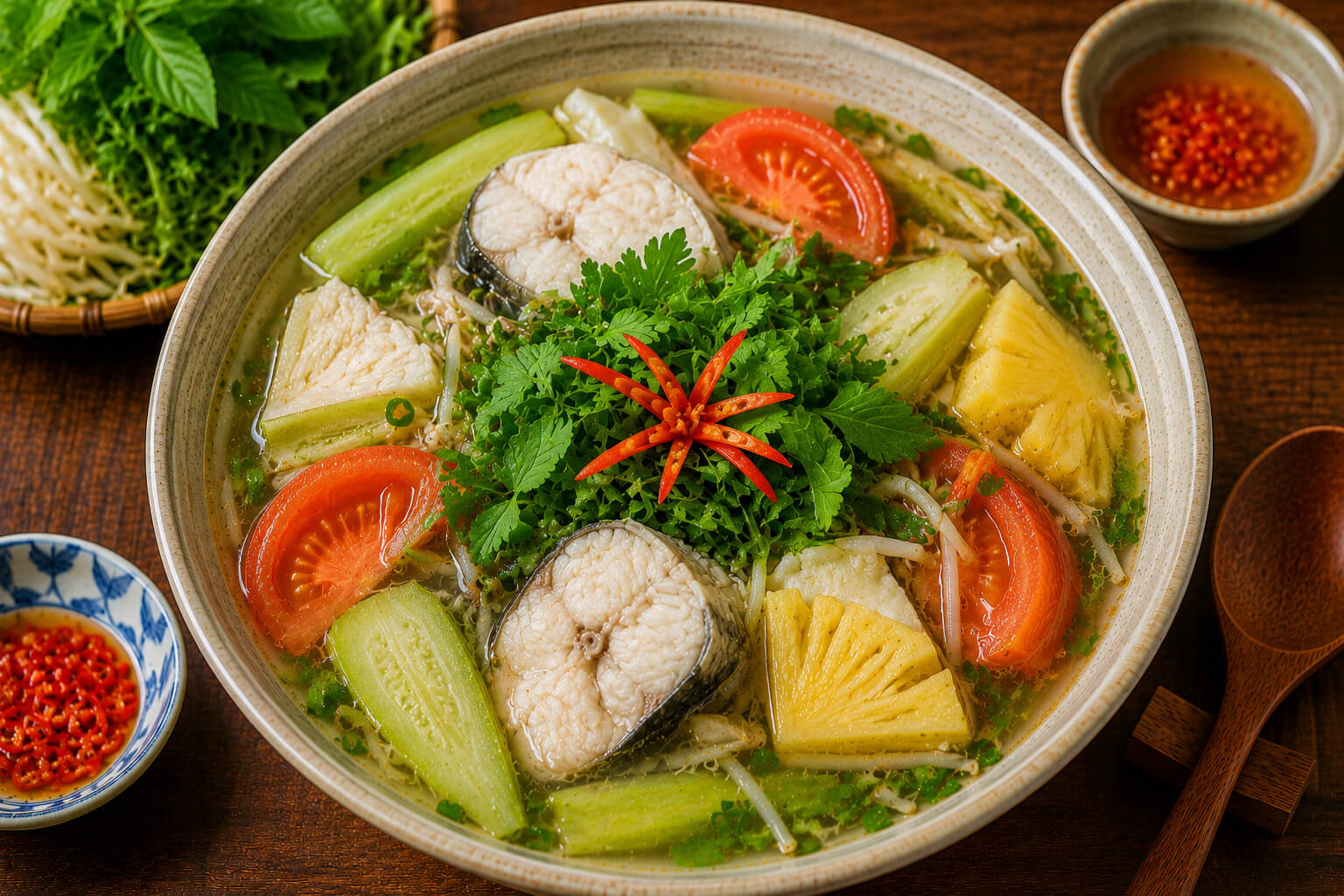
Canh Chua Kiểu Miền Bắc
Northern adaptations of canh chua are less sweet and use less pineapple. The broth is sharper and more tamarind-forward. Less okra, more traditional northern herbs. Less common but distinctive.
Catfish (cá trê) or snakehead fish — cut into large pieces, bones in
Tamarind paste (mé chín) dissolved in water — the sour backbone
Fresh pineapple chunks — provide natural sweetness that balances the tamarind
Ripe tomato wedges — add colour and mild acidity
Taro stem (bạc hà) — spongy and absorbent, soaks up the broth beautifully
Okra (đậu bắp) — adds body and a mild thickening
Bean sprouts — added at the last moment to stay crunchy
Rice paddy herb (ngổ om), sawtooth coriander (ngò gai), fresh mint
Fish sauce (nước mắm), sugar, salt, oil for sautéing
Sa tế chilli oil — served on the side, drizzled to taste
Quán Cơm Bà Thịnh
📍 52 Trần Hưng Ðạo, Hoàn Kiếm, Hà Nội
A Hanoi family-meal restaurant that includes canh chua on its daily menu. The southern-style soup is made with catfish and tamarind — slightly adapted for northern palates with less sweetness. Excellent value set meals.
Ngon Garden
📍 70 Ðinh Tiên Hoàng, Hoàn Kiếm, Hà Nội
Upscale Vietnamese restaurant serving regional dishes from all three culinary traditions. Canh chua here is well-made with fresh catfish and good tamarind balance. English menu available.
Nhà Hàng Nam Giao
📍 11 Phan Chu Trinh, Hoàn Kiếm, Hà Nội
Southern Vietnamese cuisine specialist in central Hanoi. Canh chua is listed as a signature dish — made to the Mekong style with taro stem and plenty of fresh herbs. Rare in Hanoi — worth the visit.
Quan Âu Lạc
📍 71 Ly Tu Trong, Quận 1, TP. Hồ Chí Minh
A landmark HCMC restaurant serving traditional southern Vietnamese home cooking. The canh chua here is made with the full Mekong-style selection of vegetables and consistently cited as one of the best in the city.
Cơm Nhà Lá
📍 173 Ðặng Văn Ngũ, Phú Nhuận, TP. Hồ Chí Minh
Famous for serving Vietnamese cooking in the style of a home kitchen — set meals with canh chua, grilled fish, and vegetables. The canh chua here has won awards for authenticity. Beautiful open-air setting.
Quán Cơm Bình Dân Ngũ Long
📍 22 Võ Văn Tần, Quận 3, TP. Hồ Chí Minh
A straightforward cơm bình dân (everyday rice) restaurant where canh chua is part of the daily menu. Authentic, inexpensive, and local. A real window into how Vietnamese families eat.
| Venue Type | VND | USD (approx.) | INR (approx.) |
|---|---|---|---|
| Street cart / market stall | Rarely available standalone | N/A | N/A |
| Local restaurant (set meal) | 50,000 — 80,000 | $2.00 — $3.20 | ₹167 — ₹267 |
| Mid-range restaurant | 80,000 — 120,000 | $3.20 — $4.80 | ₹267 — ₹400 |
| Hotel / tourist restaurant | 120,000 — 200,000 | $4.80 — $8.00 | ₹400 — ₹667 |
Vegetarian canh chua replaces fish with tofu (đậu hũ) or mushrooms. The tamarind-pineapple broth is naturally vegetarian and provides the same bright sweet-sour flavour. Available at vegetarian restaurants and on request at some regular restaurants.
"Canh chua đậu hũ không cá" (canh chua with tofu, no fish). At vegetarian restaurants, simply say "canh chua chà y".Vegan note: The broth base is vegan. Replace fish sauce with soy sauce — ask "Dùng nước tương thay vì nước mắm nhé" (use soy sauce instead of fish sauce).
Jain note: Canh chua vegetarian versions use tamarind, pineapple, tomato, and tofu — generally Jain-compatible. Confirm that garlic and onion are not used in the broth sauté. At dedicated Jain restaurants, request specifically: "không hành, không tỏi" (no onion, no garlic). This dish has excellent potential as a Jain-friendly Vietnamese food.
The broth is simultaneously sour (tamarind), sweet (pineapple and sugar), and savoury (fish sauce and fish). The overall effect is bright, refreshing, and appetising — a very clean flavour that is lighter than it sounds.
Very much so. The tamarind-based sourness is identical to rasam and sambhar. The pineapple-and-tomato combination mirrors Goan fish curry elements. Indian visitors from South India in particular will feel an immediate familiarity with the flavour profile.
Catfish (cá trê) is the traditional choice — firm flesh that does not fall apart during cooking, with a mild flavour that absorbs the tamarind broth well. Snakehead fish and prawns are popular alternatives.
The traditional recipe uses no wheat — it is naturally gluten-free. Confirm that the restaurant does not add soy sauce (which contains wheat) to the broth.
Not traditionally. Canh chua is a component of a shared rice meal — it is the soup course eaten alongside rice and other dishes. Ordering it standalone at a rice restaurant is unusual but possible at tourist-oriented venues.
The classic set includes: pineapple, tomato, taro stem, okra, bean sprouts, and rice paddy herb. Exact vegetables vary by region and cook, and may include elephant ear plant (khoai nước) or other aquatic greens.
No — the base soup is not spicy at all. Sa tế chilli oil is served on the side and you control the heat completely. It is one of the most accessible Vietnamese soups for those who cannot tolerate spice.
Tamarind (me) is the primary souring agent — either fresh tamarind paste or tamarind water. Some cooks also add a squeeze of lime or the juice of a starfruit (khế) for additional sourness.
It is a staple of southern Vietnamese home cooking — most iconic in the Mekong Delta provinces and Ho Chi Minh City. It is eaten nationwide but the southern version is considered definitive.
Yes — Vietnamese restaurants internationally often offer it. However, the fresh aquatic vegetables (taro stem, rice paddy herb) are difficult to source outside Vietnam, so the international version is usually simplified.
Our specialists plan food-focused itineraries around what you want to eat.
Plan My Food Trip