The tomato noodle soup that surprises everyone who tries it.
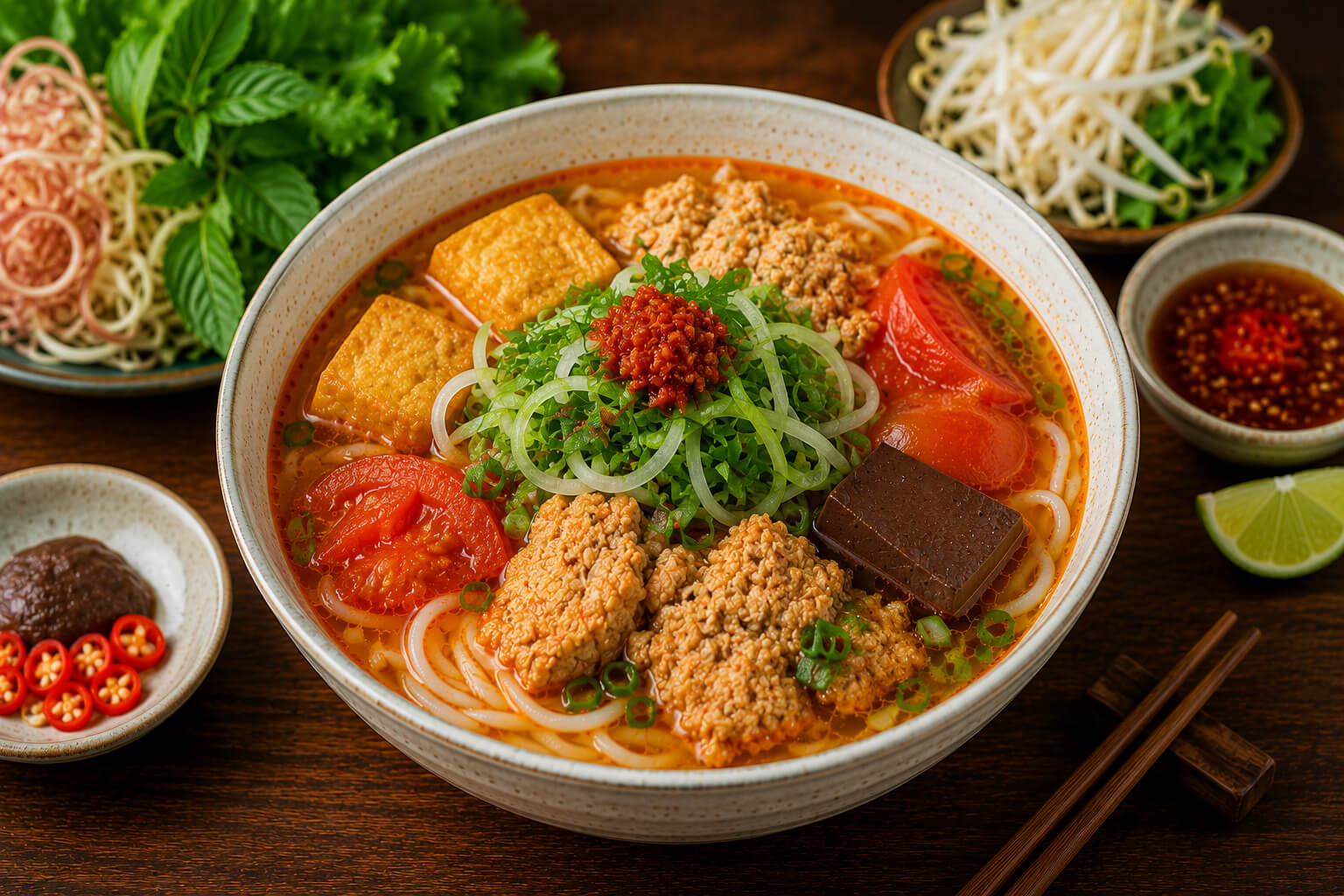
Bún Riêu Cua is a Vietnamese noodle soup built on a vivid, tangy tomato broth enriched with freshwater crab paste — one of the most distinctive and beloved soups in the Vietnamese repertoire.
The broth is its heart: tomatoes are sautéed until soft, then simmered with fermented freshwater crab paste (mắm cua) and dried shrimp to produce a deeply savoury, pleasantly sour stock. Soft round rice vermicelli (bún) sit in the broth alongside floating mounds of crab-and-egg protein that set firm during cooking, cubes of fried tofu, slices of pork, and wedges of tomato. The whole bowl is finished with shrimp paste (mắm tôm), tamarind water, and a tangle of fresh herbs — water spinach, banana blossom, and bean sprouts.
For Indian visitors, the flavour profile is surprisingly familiar: the tomato sourness echoes rasam, the layered umami of crab paste parallels certain South Indian seafood broths, and the moderate heat level makes it approachable for all palates. Chilli and chilli paste are served on the side, so you can make it as spicy as you like. It is one of the most affordable restaurant meals in Vietnam and widely available from street stalls to sit-down restaurants nationwide.
Bún Riêu is believed to have originated in the Red River Delta of northern Vietnam, where freshwater rice-paddy crabs (cua ðồng) were abundant and used by peasant families to enrich simple broths. Over centuries it spread south, picking up regional additions along the way.
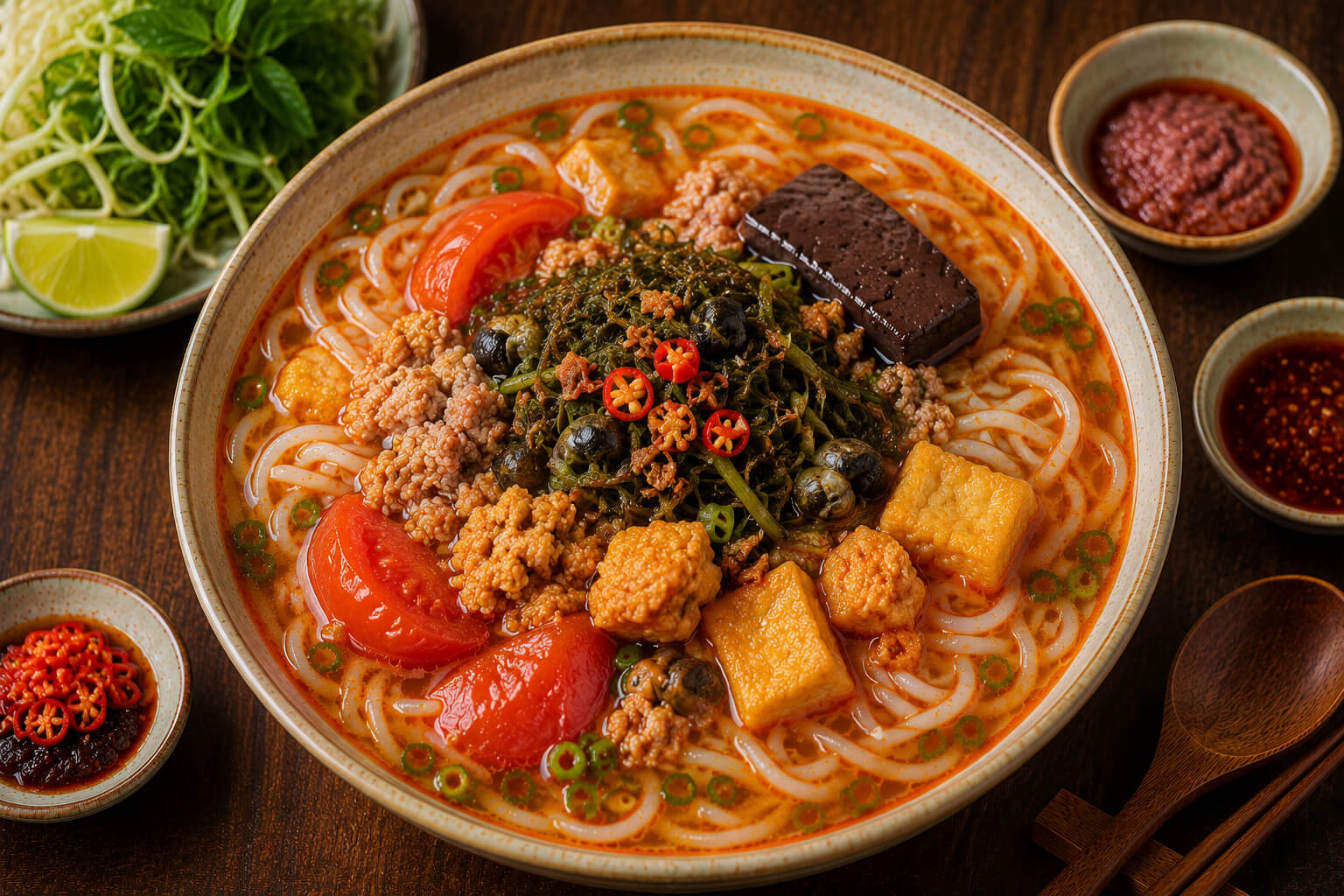
Bún Riêu Cú Ðiềc
The classic northern version uses genuine freshwater crab paste (mắm cua ðồng), a cleaner-tasting tomato broth, and minimal additions. The crab protein cake is finer and the broth less sweet.
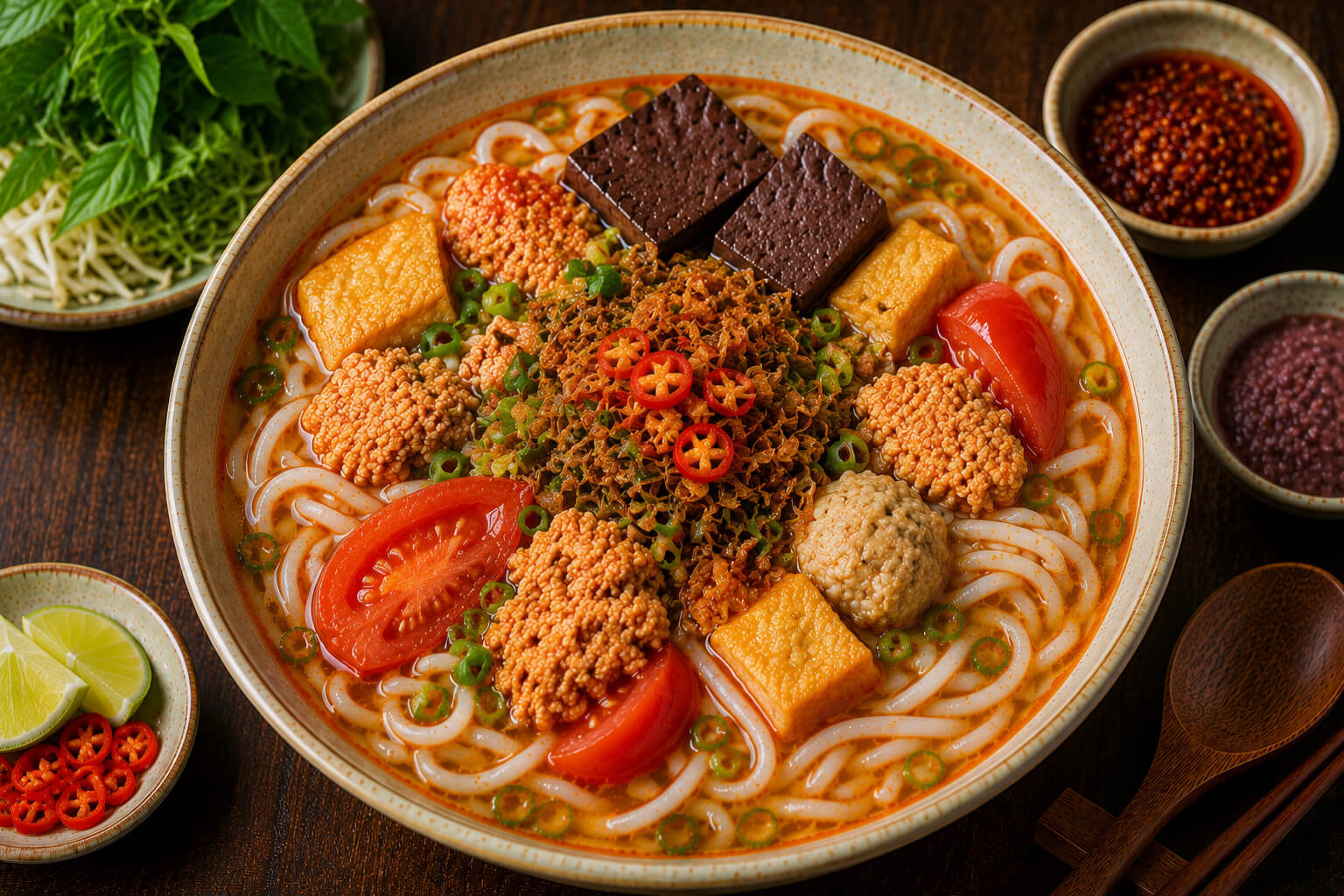
Bún Riêu Huế
Central Vietnam adds more fermented shrimp paste and dried shrimp, producing a punchier, funkier broth. Banana blossom and water spinach are standard garnishes.
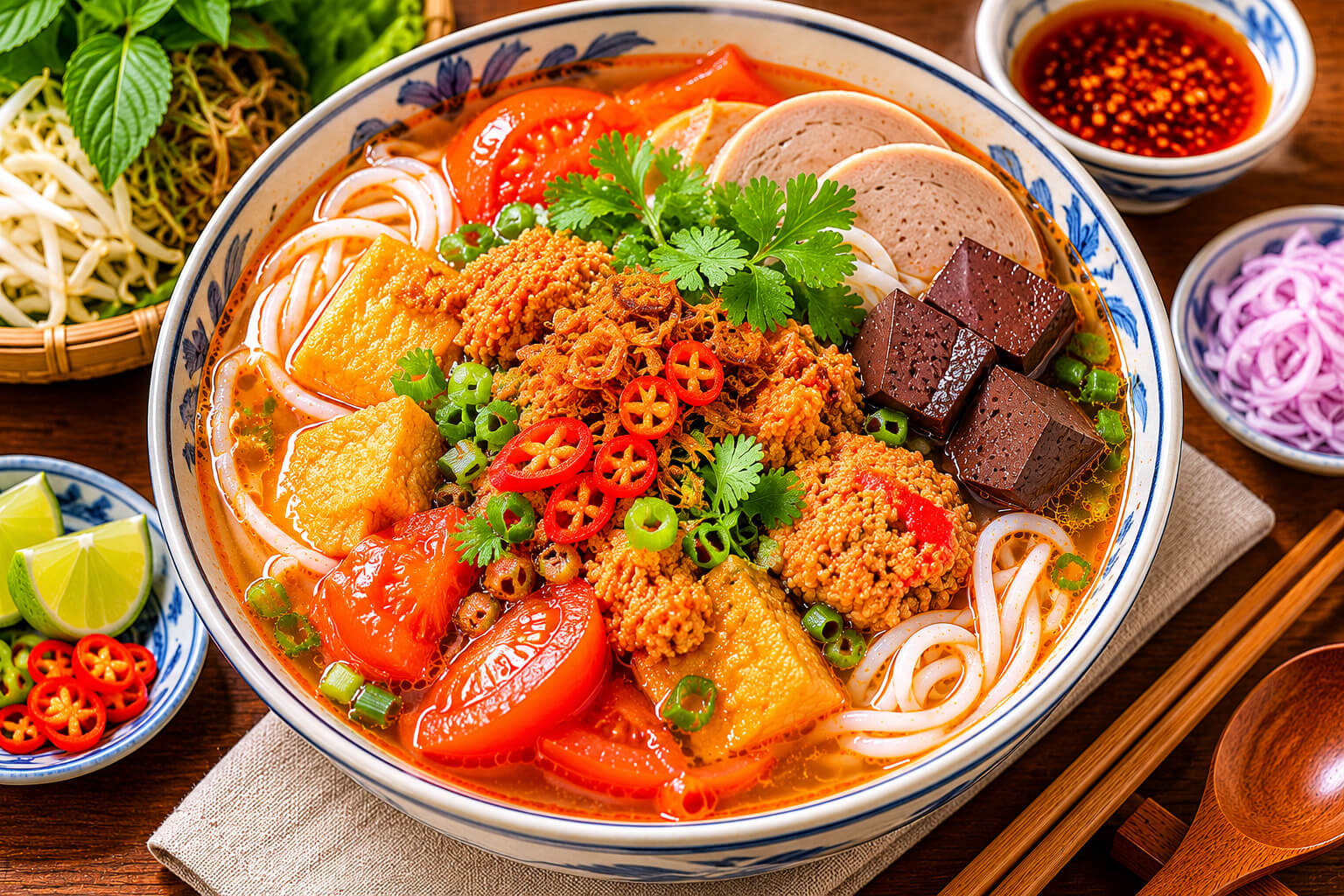
Bún Riêu Sài Gòn
The southern version is sweeter, often enriched with pork blood cubes and extra fried tofu. A larger herb plate is standard, and sweet hoisin sauce is offered alongside chilli.
Round rice vermicelli (bún) — soft, white, gluten-free
Pork or chicken stock simmered with dried shrimp
Freshwater crab paste (mắm cua) — the defining ingredient
Ripe Roma tomatoes, cut into wedges, sautéed in oil
Fried tofu puffs — absorb the broth beautifully
Crab-and-egg protein mixture set firm in the broth
Thin-sliced boiled pork or pork roll
Mắm tôm (fermented shrimp paste) — served on the side, optional
Tamarind water — adds the characteristic sourness
Water spinach, banana blossom, bean sprouts, perilla, Vietnamese coriander
Spring onion, fried shallots, fresh chilli, lime
Bún Riêu Cù Thêu
📍 35 Hàng Tre, Hoàn Kiếm, Hà Nội
A no-frills Old Quarter institution open since the 1980s. The broth is made fresh each morning with genuine crab paste and sells out by 10 am most days. Arrive early.
Quán Bún Riêu Ngõ Huế
📍 14 Ngõ Huế, Hoàn Kiếm, Hà Nội
Slightly larger sit-down spot near Hoan Kiem Lake. Friendly to tourists — English menu available. Broth is slightly sweeter than the street version but very consistent.
Bún Riêu Bà Thành
📍 29 Bàt Ðàn, Hoàn Kiếm, Hà Nội
Family-run, popular with locals and motorbike taxi drivers. Generous toppings — extra fried tofu and pork are the norm. Cash only. Plastic stools but excellent soup.
Bún Riêu Cà Chua 84
📍 84 Ðặng Văn Ngũ, Bình Thạnh, TP. Hồ Chí Minh
A well-loved HCMC spot famous for its rich, tomato-heavy broth and generous blood-cube topping. Southern style — sweeter and more herb-forward than Hanoi versions.
Quán Cô Ðào Bún Riêu
📍 108 Trần Ðình Xu, Quận 1, TP. Hồ Chí Minh
Central District 1 location, comfortable seating, popular with office workers at lunchtime. Reliable quality and decent herb plates. Vegetarian broth available on request.
Bún Riêu Ngâu
📍 176 Võ Văn Tần, Quận 3, TP. Hồ Chí Minh
District 3 favourite with a particularly complex crab broth. Slow-cooked overnight — the depth of flavour is noticeably richer than most competitors. Busy at lunch.
| Venue Type | VND | USD (approx.) | INR (approx.) |
|---|---|---|---|
| Street cart / market stall | 35,000 — 45,000 | $1.40 — $1.80 | ₹117 — ₹150 |
| Local restaurant | 45,000 — 60,000 | $1.80 — $2.40 | ₹150 — ₹200 |
| Mid-range restaurant | 60,000 — 80,000 | $2.40 — $3.20 | ₹200 — ₹267 |
| Hotel / tourist restaurant | 90,000 — 150,000 | $3.60 — $6.00 | ₹300 — ₹500 |
Vegetarian versions replace crab paste with tomato, mushroom, and fermented soybean paste for umami depth. Tofu is the main protein. Available at vegetarian restaurants and some Buddhist eateries, particularly around the 1st and 15th of the lunar month when many Vietnamese go vegetarian.
Say "Bún riêu chà y" or "Bún riêu không thịt, không hải sản" (bun rieu without meat or seafood).Vegan note: Vegan versions exist — confirm no fish sauce (nước mắm) is used in the broth. Ask: "Không nước mắm?"
Jain note: Jain travellers should note that most versions contain garlic and onion in the broth base. Purely Jain-compliant bowls are extremely rare — a dedicated Jain or pure-veg Indian restaurant is a safer choice.
No. The defining ingredient is freshwater crab paste and often dried shrimp. People with shellfish or crustacean allergies should avoid this dish entirely.
The broth is tangy, savoury, and mildly sour — the tomato gives brightness, the crab paste gives umami depth, and tamarind gives the signature sourness. It is lighter and more refreshing than phở.
The noodles are rice-based and gluten-free. However, some stalls add soy sauce or fermented sauces to the broth that may contain gluten. Confirm if you have coeliac disease.
At many sit-down restaurants, yes — ask for "không thịt heo". Street stalls are less flexible as everything is pre-mixed in the broth.
Phở has a clear, bone-based broth with a clean beefy or chicken flavour. Bún Riêu has a red tomato broth with crab paste, making it tangier, more complex, and quite different in character.
It is a mixture of freshwater crab paste, egg, and sometimes minced pork that sets firm when it hits the hot broth — similar in texture to a soft, savoury egg custard. It is called riêu.
The base broth is mild to medium. Chilli paste and fresh chilli are served on the side and you control the heat entirely. It is naturally quite mild.
It originated in the north and remains most iconic in Hà Nội, but it is eaten nationwide. The southern version in Ho Chi Minh City is sweeter and richer.
Breakfast or early lunch — ideally between 7 am and 11 am. Most specialist stalls close by noon when the broth runs out.
No. Mắm tôm (fermented shrimp paste) is served on the side and is entirely optional. Many first-time visitors skip it or use just a tiny amount. The soup is complete without it.
Our specialists plan food-focused itineraries around what you want to eat.
Plan My Food Trip