No cooking, no oil, no fuss — just fresh, clean, perfect
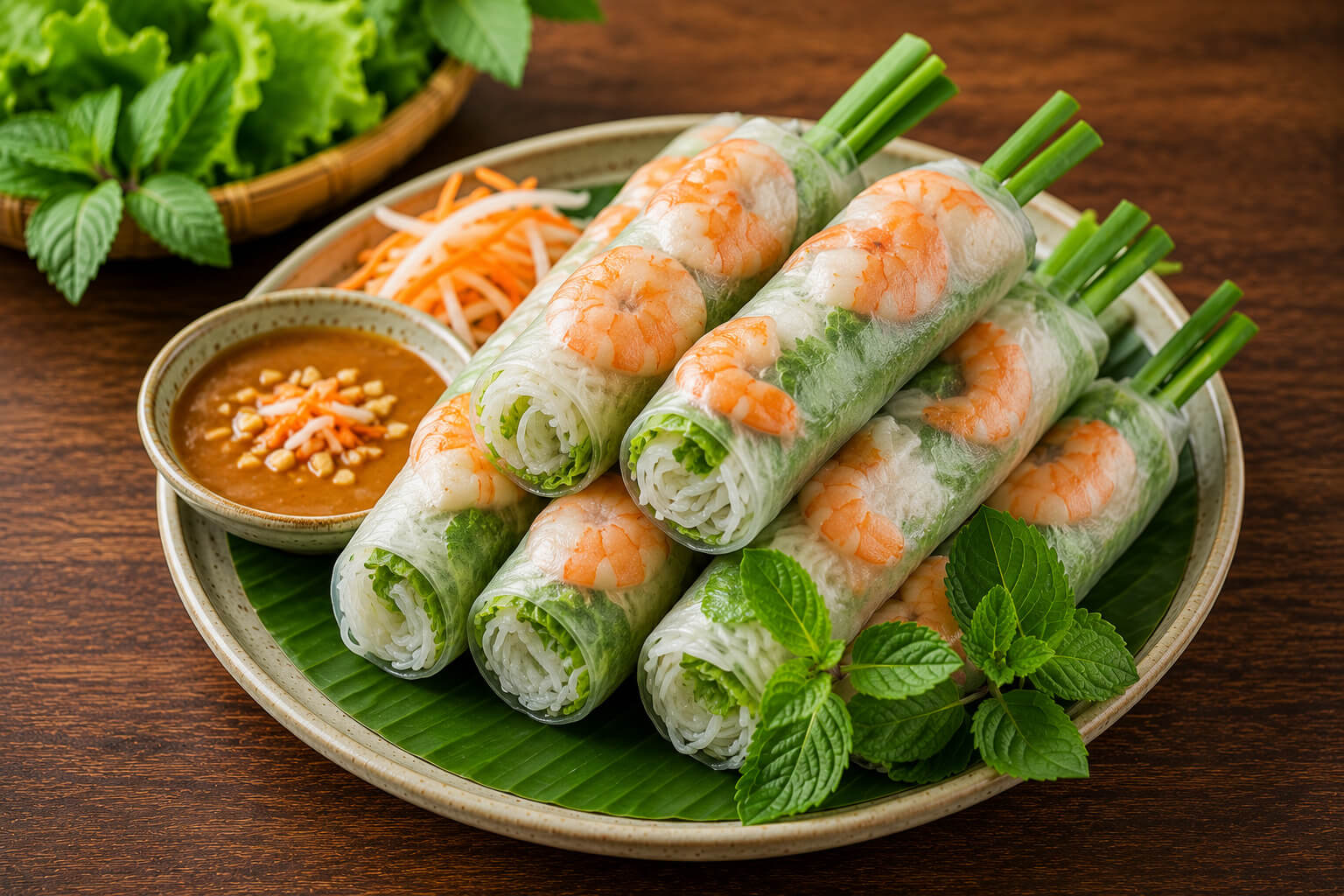
Gỏi Cuốn are Vietnamese fresh spring rolls: cold, uncooked rolls made from translucent dried rice paper (bánh tráng) filled with prawns, sliced pork, vermicelli noodles, fresh lettuce, mint, and herbs. They are served immediately after rolling — not fried, not heated. In the West they are often called “summer rolls.”
The defining characteristic of Gỏi Cuốn is the rice paper wrapper — thin, translucent, and slightly sticky after being briefly dipped in water to soften. Through it you can see the pink arc of each prawn, the green of the herbs, and the white threads of vermicelli. They are as beautiful as they are light.
Each roll is typically 10–12 cm long and served two or three per order. They arrive with a peanut-hoisin dipping sauce (the most common pairing) or with a lighter nước chấm of fish sauce, lime, sugar, and chilli. The peanut sauce is richer and sweeter; the fish sauce version is brighter and sharper — both work.
Unlike Chả Giò (fried spring rolls), there is no cooking involved after assembly. Gỏi Cuốn are one of the genuinely healthy Vietnamese street foods — no frying, no heavy sauce, nothing processed. Just rice paper, protein, noodles, and vegetables.
They are also one of the most approachable dishes for first-time visitors to Vietnam. No unfamiliar cooking smells, no unfamiliar textures from heat, no heavy flavours. Clean, fresh, and easy.
Gỏi Cuốn are cold and fresh — never fried or heated. This is the opposite of Chả Giò (fried spring rolls). If you want crispy, order Chả Giò. If you want light and fresh, Gỏi Cuốn is your dish.
Gỏi Cuốn originated in southern Vietnam and is closely associated with HCMC and the Mekong Delta region. Unlike the fried spring roll (Chả Giò) which has Chinese culinary influence, the fresh roll is considered a distinctly Vietnamese creation. The dish spread internationally through the Vietnamese diaspora, becoming one of the most recognised Vietnamese foods outside Vietnam.
Gỏi Cuốn Hương Bánh
📍 14 Châu Long, Tây Hồ, Hà Nội
A clean, well-regarded spot near the West Lake area. Good-sized rolls with a strong prawn flavour and excellent peanut sauce. Suitable for first-timers.
Quán Gỏi Cuốn Bà Lan
📍 52 Ngõ Huyền, Hoàn Kiếm, Hà Nội
Tiny family-run spot in the Old Quarter. Rolling is done to order so rolls are always fresh. Vegetarian option available on request.
Chà Quán Vietnamese Restaurant
📍 32 Lê Văn Hưu, Hai Bà Trưng, Hà Nội
Slightly more upmarket setting with English menu. Gỏi Cuốn served as a starter or light meal. Good for Indian travellers wanting to ease into Vietnamese street food in a comfortable environment.
Gỏi Cuốn Ngọc Hương
📍 108 Nguyễn Thị Minh Khai, Quận 1, TP. Hồ Chí Minh
Well-known for consistently fresh rolls with plump prawns. The peanut sauce here is house-made and slightly less sweet than most, which lets the prawn flavour come through more clearly.
Bánh Cuốn Thanh Vân
📍 38 Đinh Công Tráng, Quận 1, TP. Hồ Chí Minh
Primarily a bánh cuốn specialist but also serves excellent Gỏi Cuốn alongside. High turnover guarantees freshness. Busy at lunch.
Quán Ân Ngọn
📍 138 Lê Thị Riêng, Quận 1, TP. Hồ Chí Minh
A popular street-food destination covering many Vietnamese classics. Gỏi Cuốn is a highlight here — rolls made fresh continuously from a visible rolling station at the front of the restaurant.
| Venue Type | VND | USD (approx.) | INR (approx.) |
|---|---|---|---|
| Street stall / market (per roll) | 15,000–20,000 | $0.60–$0.80 | ₹52–₹68 |
| Local restaurant (per roll) | 20,000–28,000 | $0.80–$1.12 | ₹68–₹95 |
| Mid-range restaurant (per roll) | 28,000–35,000 | $1.12–$1.40 | ₹95–₹118 |
| Tourist-facing / air-conditioned (per roll) | 35,000–40,000 | $1.40–$1.60 | ₹118–₹140 |
Gỏi Cuốn chày substitutes fried or plain tofu for the prawns and pork. The noodles, lettuce, mint, and herbs remain unchanged. Widely available — the dish is one of the easiest Vietnamese street foods to get in a reliable vegetarian form. Most vendors and all vegetarian restaurants offer it.
Vegan note: The rice paper and batter are vegan. Ensure the dipping sauce uses hoisin sauce without added fish sauce — most commercial hoisin is vegan but confirm in smaller establishments.
Gỏi Cuốn are fresh, cold, and never fried — they are assembled and served immediately without any cooking after rolling. Chả Giò are fried spring rolls with a crispy exterior. They use the same rice paper but the cooking method is completely different. Gỏi Cuốn are lighter; Chả Giò are more indulgent.
Yes. “Summer roll” is the English name used internationally, particularly in Vietnamese restaurants in the West. The Vietnamese name is Gỏi Cuốn. In Vietnam you should order by the Vietnamese name; in international restaurants “summer roll” will be understood.
It is one of the healthiest Vietnamese street foods. The dish contains no oil (nothing is fried), uses fresh vegetables and herbs, and the protein (prawn or tofu) is simply boiled or steamed. The calorie count per roll is modest. The peanut dipping sauce adds fat and calories, but a small amount is used per roll.
Yes. Rice paper is made from rice flour only. The vermicelli noodles inside are also rice-based. The peanut-hoisin sauce may contain hoisin with a small amount of wheat — if strict gluten-free, confirm with the vendor or request a fish sauce (nước chấm) dip instead, which is gluten-free.
Yes, easily. A tofu version (chày) is widely available. The rice paper, vermicelli, and herbs are naturally vegan. For vegans, confirm the dipping sauce does not contain fish sauce — request the hoisin-peanut version and check it uses vegan-certified hoisin.
As a snack or starter, 2 rolls per person. As a light meal, 4–5 rolls. As part of a larger spread of Vietnamese dishes, 2–3 per person. Gỏi Cuốn are light and it is easy to underestimate how many you need — err on the side of ordering more.
The most common is a peanut-hoisin sauce: hoisin sauce thinned with a little water and peanut butter, topped with crushed roasted peanuts. Some places also offer nước chấm — the standard Vietnamese dipping sauce of fish sauce, lime, sugar, water, garlic, and chilli. Both are correct; personal preference applies.
At a street stall you can pay 15,000–20,000 VND per roll (₹52–68). At a local restaurant expect 20,000–35,000 VND per roll (₹68–118). Tourist-facing restaurants charge up to 40,000 VND per roll (₹140). It is one of the most affordable snacks in Vietnam even at the higher end of the price scale.
As an uncooked dish, food hygiene matters more than with cooked foods. Look for vendors who roll to order using fresh ingredients, store prawns and pork on ice or in refrigeration, and use water that looks clean for softening the rice paper. High-turnover stalls with a constant queue are a reliable indicator of freshness and food safety.
No. The roll itself contains no chilli whatsoever. The only source of heat is the optional chilli in the dipping sauce — you can ask for the sauce without chilli (không ớt). This makes Gỏi Cuốn an excellent choice for travellers who prefer mild food or for children.
Our specialists plan food-focused itineraries around what you want to eat.
Plan My Food Trip