The sizzle you’ll hear from 10 metres away
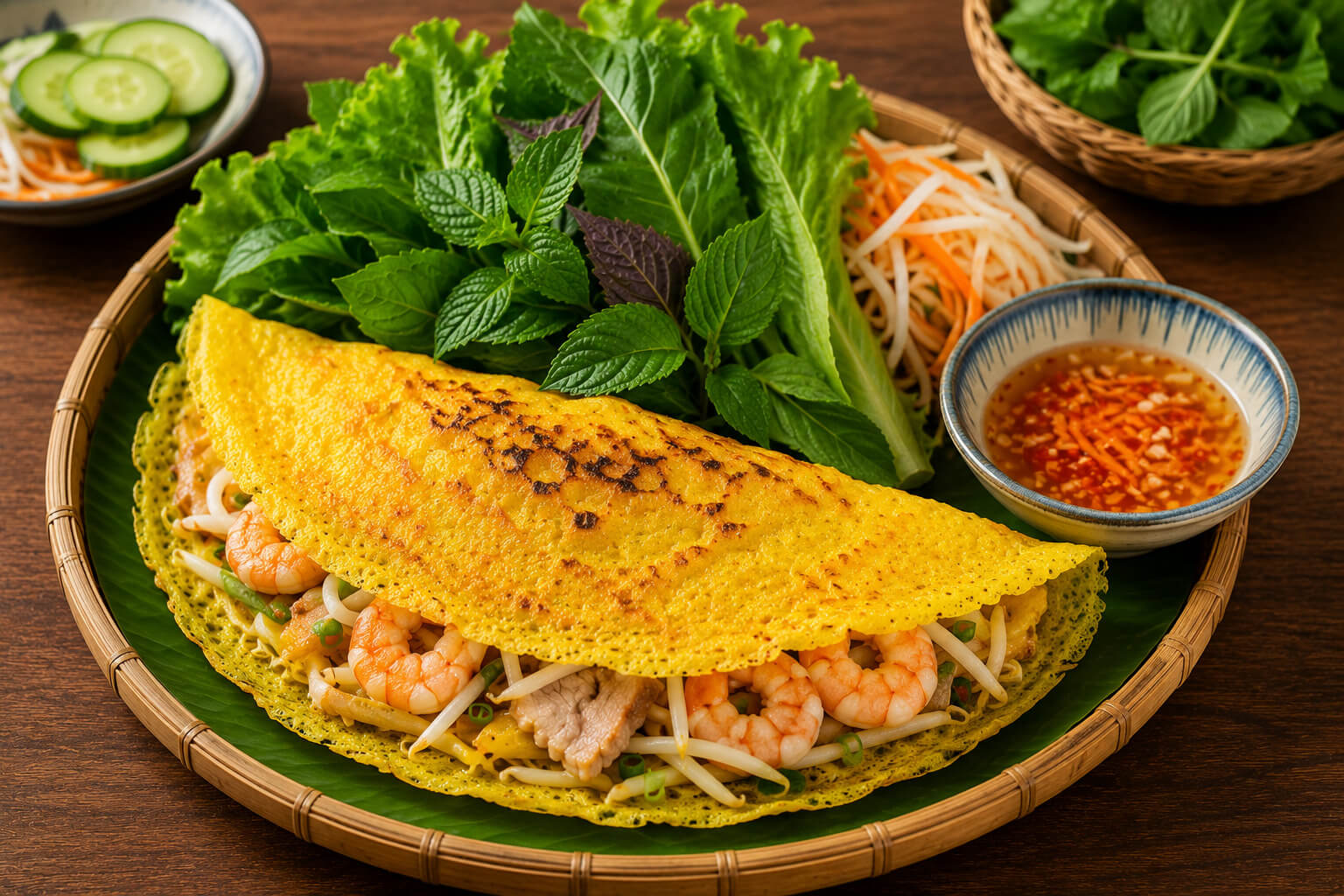
Bánh Xèo is a large, crispy Vietnamese rice flour crepe coloured yellow with turmeric and coconut milk, folded in half over a filling of prawns, pork belly, bean sprouts, and mushrooms. The name literally means “sizzling cake” — a direct reference to the explosive sound the batter makes when it hits the screaming-hot pan.
Unlike a French crêpe which is eaten whole, Bánh Xèo is meant to be torn apart at the table. You rip a piece off, place it in a rice paper sheet or a large lettuce leaf, add fresh mint and other herbs, roll it up into a parcel, and dip the whole thing into a bowl of nước chấm — the classic Vietnamese dipping sauce of fish sauce, lime, sugar, and chilli.
This wrap-and-dip method is not optional — it is the dish. The cool crunch of lettuce and fresh herbs against the hot crispy crepe, the salty-sour-sweet sauce completing each bite: this is exactly what Bánh Xèo is supposed to be.
The crepe itself achieves a crust that is simultaneously paper-thin and audibly crunchy. The coconut milk in the batter adds a faint richness; the turmeric gives the yellow colour and an earthy undertone. Inside, the bean sprouts stay crisp while the prawns and pork become fragrant and slightly caramelised from the hot pan.
Bánh Xèo is not served or eaten as a standalone crepe — the wrap-and-dip ritual is inseparable from the dish. A plate of Bánh Xèo without the rice paper, lettuce, herbs, and dipping sauce is incomplete.
Bánh Xèo has roots in both central and southern Vietnam. The technique of making a thin savoury rice flour crepe shows some similarity to French crêpes — possibly absorbed during the colonial period — but the flavour profile, ingredients, and eating method are entirely Vietnamese. The dish evolved differently in the south (large, thin, very crispy) and the centre (smaller and thicker).
Quán Bánh Xèo Miền Nam
📍 10 Nhà Thờ, Hoàn Kiếm, Hà Nội
A southern Vietnamese specialist in the heart of the Old Quarter. Serves the large HCMC-style Bánh Xèo with full herb accompaniment and good nước chấm.
Bánh Xèo Mút — Hà Nội
📍 168 Quan Hoa, Cầu Giấy, Hà Nội
Popular with local students and office workers. Slightly smaller portions than the HCMC original but good quality batter and fresh ingredients.
Không Gian Xanh
📍 32 Trích Sài, Tây Hồ, Hà Nội
Garden-style restaurant in the Tay Ho area serving both northern and central Vietnamese dishes. Their Bánh Xèo is well-regarded and served with a generous herb plate.
Bánh Xèo 46A
📍 46A Đinh Công Tráng, Quận 1, TP. Hồ Chí Minh
One of HCMC’s most celebrated Bánh Xèo addresses, operating since the 1970s. The crepes here are enormous — easily 40 cm across — and achieve a crust that stays crispy for several minutes. Very high turnover; the prawns are always fresh.
Bánh Xèo Muối Đỏ — Quận 3
📍 204 Võ Văn Tần, Quận 3, TP. Hồ Chí Minh
Excellent value with a no-fuss setup. The charcoal-heated pans give the crepe a distinctive smoky note. Very popular at lunch — queue expected.
Bánh Xèo Đố — Quận 5
📍 218 Đỗng Khởi, Quận 5, TP. Hồ Chí Minh
A local neighbourhood favourite in District 5. Smaller and less touristy than District 1 options. The central Vietnamese–style smaller version is also available on request.
| Venue Type | VND | USD (approx.) | INR (approx.) |
|---|---|---|---|
| Street stall / market | 40,000–55,000 | $1.60–$2.20 | ₹140–₹185 |
| Local restaurant (no English menu) | 55,000–70,000 | $2.20–$2.80 | ₹185–₹240 |
| Mid-range restaurant | 70,000–85,000 | $2.80–$3.40 | ₹240–₹290 |
| Tourist-facing / air-conditioned | 85,000–100,000 | $3.40–$4.00 | ₹290–₹350 |
Ask for Bánh Xèo chày. The prawns and pork are replaced with tofu, mushrooms (usually straw or oyster mushrooms), and bean sprouts. The batter remains the same turmeric-coconut milk base — it is naturally vegan. The nước chấm dipping sauce normally contains fish sauce; ask for a soy sauce or hoisin-based substitute.
Vegan note: The batter itself (rice flour, coconut milk, turmeric) is vegan. Request a soy-based dipping sauce to make the whole dish fully vegan.
“Bánh” means cake or bread in Vietnamese; “xèo” is an onomatopoeia for the sound of sizzling. So “Bánh Xèo” literally means “sizzling cake.” The name comes from the dramatic sound the rice flour batter makes when it hits the very hot pan. If you don’t hear the sizzle, the pan isn’t hot enough and the crepe won’t be properly crispy.
Yes. The batter is made from rice flour, coconut milk, water, and turmeric — no wheat. The rice paper used for wrapping is also rice-based. The dipping sauce (nước chấm) is fish sauce, lime, sugar, and chilli — no wheat. Bánh Xèo is one of the most naturally gluten-free Vietnamese dishes you will encounter.
You can eat it without wrapping, but you would be missing the core experience. The wrap-and-dip method is how the dish is meant to be eaten — the cool herbs and rice paper against the hot crispy crepe, all bound by the dipping sauce, is the intended flavour and texture combination. Think of the rice paper as the delivery mechanism, not an optional garnish.
The standard version contains prawns and pork. A vegetarian version (chày) with tofu and mushrooms is widely available. The batter itself is vegan (rice flour, coconut milk, turmeric). The standard dipping sauce contains fish sauce — request soy sauce or hoisin sauce for a vegan substitute.
The southern (HCMC) version is very large — sometimes 40–50 cm across — extremely thin, and paper-crispy. The central Vietnamese version (Da Nẵng, Huế) is smaller, served in individual portions, and the batter is slightly thicker giving a chewier interior. Both are delicious; try both if you are visiting both regions.
The crepe itself has no chilli — it is entirely mild. The heat, if any, comes from the dipping sauce which typically contains sliced fresh chilli or chilli paste. You can ask for the sauce without chilli (không ớt) and it will be served mild.
At a street stall you can pay 40,000–55,000 VND (around ₹140–185). At a sit-down restaurant expect 55,000–85,000 VND (₹185–290). Tourist-facing restaurants charge up to 100,000 VND (₹350). One large southern-style crepe is typically sufficient for one person as a main meal.
It is primarily a lunch and dinner dish. Most Bánh Xèo stalls open around 10 am at the earliest and many only operate at lunchtime and in the evening. It is a heavier, more substantial dish than the lighter rice porridge or noodle soups that Vietnam favours for breakfast.
The terms are sometimes used interchangeably in English menus but Bánh Xèo is specifically a crispy turmeric-rice flour crepe. It is different from bánh rán (fried glutinous rice balls) or other items sometimes called “Vietnamese pancakes.” If ordering in English, confirm it comes with rice paper and herbs — that confirms it is the Bánh Xèo you want.
HCMC is the best introduction — the southern version is large, dramatic, and intensely crispy. Bánh Xèo 46A in District 1 is a reliable and well-known choice. If you are visiting Da Nẵng or Hội An, try the smaller central Vietnamese version as a comparison. Both regions serve excellent versions and the experience is interactive and fun.
Our specialists plan food-focused itineraries around what you want to eat.
Plan My Food Trip