Impossibly crispy — the fried spring roll Vietnam does right
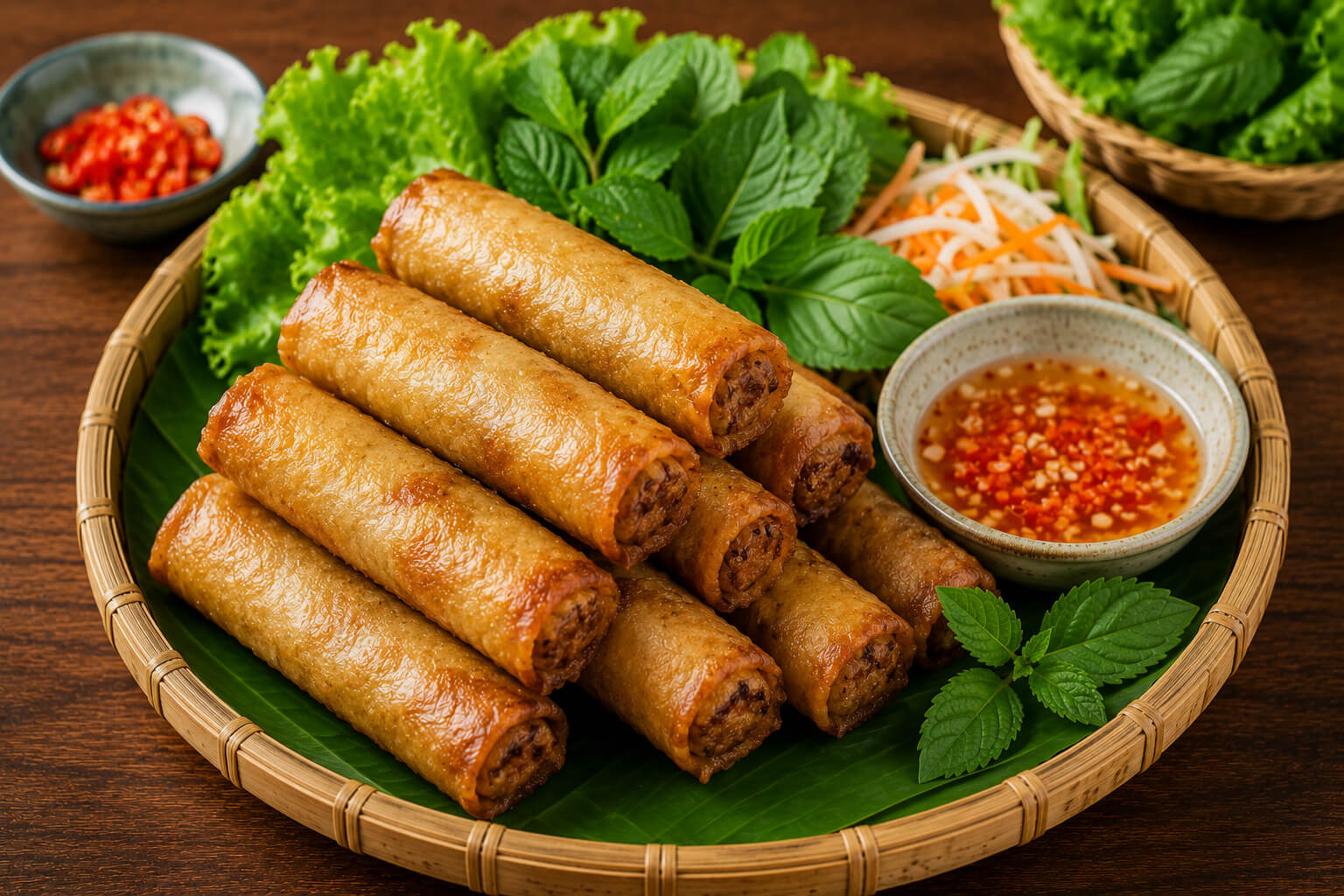
Chả Giò are Vietnamese fried spring rolls — small cylinders of minced pork, glass noodles, mushrooms, carrot, and egg, rolled tightly in dried rice paper and deep-fried until the wrapper becomes a crackling, translucent-golden crust. In the North they are called nem rán; in the South, chả giò. Same dish, different name.
The Vietnamese fried spring roll is distinguished from its Chinese and other Asian counterparts by the wrapper. Traditional chả giò uses dried rice paper (bánh tráng) rather than a wheat-based egg roll wrapper. When fried, rice paper creates a uniquely thin, crackly, almost lacquered crust — lighter and more delicate than the thicker crunch of a Chinese spring roll or Indian samosa pastry. You can hear it before you pick it up.
Inside, the filling is compact and savoury: minced pork, softened glass noodles (miến), rehydrated wood ear mushrooms, shredded carrot, and beaten egg as a binder. The filling is seasoned with fish sauce, pepper, and a little sugar — the same balance of salty-sweet-savoury that characterises Vietnamese cuisine throughout.
Chả Giò is eaten in two ways: as a standalone snack with nước chấm dipping sauce, or wrapped in lettuce leaves with fresh herbs before dipping. The wrap method mirrors how Bánh Xèo is eaten and is equally valid here. It is also commonly served as a side dish alongside bún chả (grilled pork with vermicelli) or as a starter in a larger Vietnamese meal.
The rice paper wrapper is what separates Vietnamese Chả Giò from other fried spring rolls. It creates a thinner, more fragile, more crackling crust than wheat wrappers. The roll must be eaten immediately — left to cool, the crust loses its crunch within minutes.
The fried spring roll has roots in Chinese cuisine — the concept of wrapping a savoury filling and frying it travelled to Vietnam through centuries of Chinese cultural influence, particularly in the north of the country. Over time the Vietnamese version evolved its own character through the use of rice paper, local herbs, and the fish sauce dipping sauce, diverging significantly from the Chinese original.
Bún Chả Hương Liên — The Obama Restaurant
📍 24 Lê Văn Hưu, Hai Bà Trưng, Hà Nội
Famous as the restaurant where President Obama ate bún chả. The nem rán served alongside is excellent — small, tightly rolled, properly crispy. Order bún chả and nem rán together as intended.
Nem Rán Bà Thanh — Hàng Gai
📍 12 Hàng Gai, Hoàn Kiếm, Hà Nội
A small Old Quarter specialist fried roll stall. The rolls here are fried continuously in small batches ensuring maximum freshness. The pork and glass noodle filling is classic.
Quán Ăn Ngôn — Hà Nội
📍 18 Phan Bội Châu, Hoàn Kiếm, Hà Nội
A popular restaurant covering the full range of Vietnamese street food classics. Their nem rán is reliably good — thin, crispy, and properly seasoned. English menu available.
Chả Giò Ngô Đức Kế — Quận 1
📍 48 Ngô Đức Kế, Bến Nghé, Quận 1, TP. Hồ Chí Minh
A dedicated fried roll stall in District 1. High turnover means the rolls are always fresh from the fryer. They fry in batches visible from the street — a good sign. The peanut oil used gives a cleaner flavour.
Quán Ăn Ngôn — Hồ Chí Minh
📍 138 Nam Kỳ Khởi Nghĩa, Quận 3, TP. Hồ Chí Minh
The HCMC sister restaurant to the Hanoi branch. Street food hall format with multiple live cooking stations. The chả giò station produces excellent rolls; watch the cook fry them and order freshly made.
Nhà Hàng Ngọc Suờng
📍 29 Đờng 3 Tháng 2, Quận 10, TP. Hồ Chí Minh
A more formal Vietnamese restaurant known for traditional dishes executed well. Their chả giò is a reliable starter before other dishes. English menu available and suitable for groups.
| Venue Type | VND | USD (approx.) | INR (approx.) |
|---|---|---|---|
| Street stall / market (per roll) | 5,000–10,000 | $0.20–$0.40 | ₹17–₹34 |
| Local restaurant (plate of 4–6 rolls) | 30,000–45,000 | $1.20–$1.80 | ₹105–₹150 |
| Mid-range restaurant (plate) | 45,000–55,000 | $1.80–$2.20 | ₹150–₹185 |
| Tourist-facing / air-conditioned (plate) | 55,000–60,000 | $2.20–$2.40 | ₹185–₹210 |
Ask for nem rán chày (North) or chả giò chày (South). The pork filling is replaced with finely chopped mushrooms (wood ear and shiitake), tofu, glass noodles, carrot, and taro. The flavour is earthier and slightly less rich than the pork version but the crunch of the wrapper is identical. Widely available in Hanoi and HCMC at vegetarian restaurants and many street stalls.
Vegan note: The standard filling contains egg as a binder. Request an egg-free version (không trứng) for a vegan roll — the filling can be bound with a cornstarch paste instead. The dipping sauce (nước chấm) contains fish sauce; request soy sauce or salt-lime sauce for a vegan alternative.
They are the same dish with different regional names. “Nem rán” is the northern Vietnamese name (used in Hanoi); “chả giò” is the southern name (used in HCMC and the south). Minor variations exist in size, filling, and seasoning but the concept is identical: minced pork filling in rice paper, deep-fried until crispy. When ordering in the North, say nem rán; in the South, say chả giò.
Both use rice paper as a wrapper but are completely different dishes. Chả Giò are fried — the filling is cooked and the wrapper is deep-fried into a crispy crust. Gỏi Cuốn (fresh spring rolls) are cold and uncooked — the rice paper is softened in water and the filling is raw (herbs, boiled prawns) with no frying involved. Chả Giò is hot and crispy; Gỏi Cuốn is cool and fresh.
Traditional Chả Giò made with rice paper wrappers are gluten-free. However, some southern versions (and Vietnamese restaurants outside Vietnam) use egg roll wrappers made from wheat flour, which are not gluten-free. If you have a gluten intolerance, confirm with the vendor that they are using rice paper (bánh tráng) and not wheat-based wrappers.
Yes. Ask for nem rán chày (North) or chả giò chày (South). The filling is replaced with mushrooms, tofu, glass noodles, and carrot. Widely available at vegetarian restaurants and many mainstream stalls. For vegans, also confirm the egg in the filling can be omitted.
No — wrapping in lettuce with fresh herbs is optional but recommended. Many people eat them directly with just the dipping sauce. The wrap adds freshness and cuts through the richness of the fried roll. It is entirely a matter of preference and neither method is wrong.
The standard filling is minced pork, glass noodles (mìn), wood ear mushrooms, shredded carrot, and egg — all seasoned with fish sauce, sugar, and pepper. Some versions include crab or prawn alongside the pork. The filling is compact and dense; you get a solid cylinder of savoury stuffing in every bite.
Chinese spring rolls use a wheat-flour wrapper that fries into a thicker, chewier crust. Vietnamese Chả Giò traditionally uses rice paper, which fries into a much thinner, more fragile, crackling crust that is almost translucent. It is lighter and more delicate. Some people describe it as shattering rather than crunching.
The roll itself contains no chilli. The heat comes from the dipping sauce, which usually contains sliced fresh chilli or chilli paste. You can ask for no chilli in the sauce (không ớt) and the dish will be completely mild. This makes it very approachable for travellers who prefer mild food.
At a street stall you can buy individual rolls for 5,000–10,000 VND each (₹17–34). A plate of 4–6 rolls at a local restaurant costs 30,000–45,000 VND (₹105–150). Tourist-facing restaurants charge up to 60,000 VND for a plate (₹210). It is one of the cheapest foods you can eat in Vietnam — a full portion at a street stall may cost under ₹100.
As a standalone snack or starter: with nước chấm dipping sauce, fresh lettuce, and herbs. As a side dish: alongside bún chả (grilled pork with cold vermicelli) in Hanoi — this is one of the most classic pairings in Vietnamese cuisine. Also served as a starter in larger Vietnamese meals, or as part of a rice plate (cơm phần) in some restaurants.
Our specialists plan food-focused itineraries around what you want to eat.
Plan My Food Trip