The HCMC noodle bowl that rivals bún chả — and never gets its due.
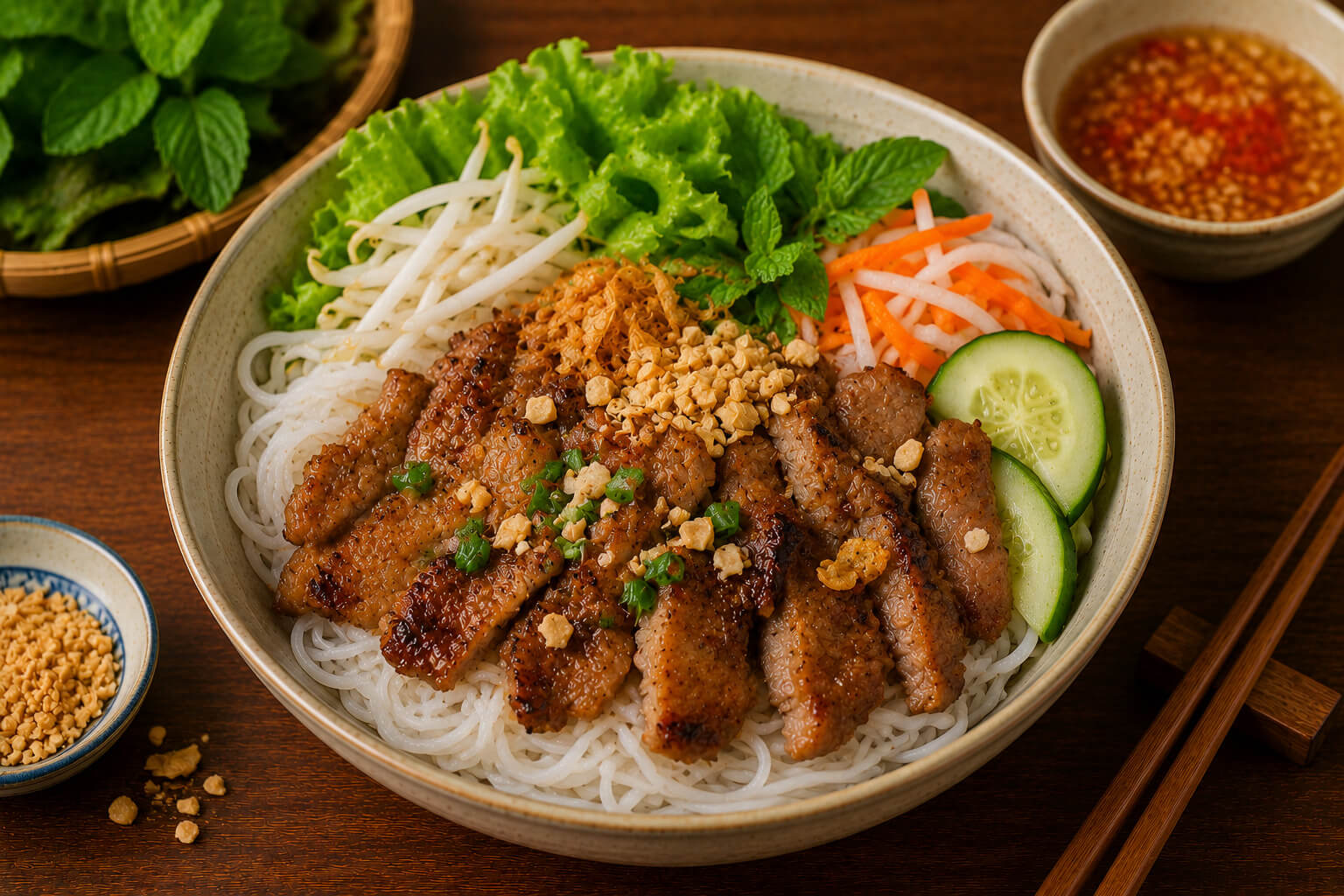
Bún Thịt Nướng is Ho Chi Minh City's quintessential no-broth noodle bowl — a composed, room-temperature assembly of cold rice vermicelli, chargrilled lemongrass-marinated pork, crispy fried spring rolls, fresh herbs, pickled vegetables, and crushed peanuts, all unified by nước chấm dipping sauce poured over the top.
Unlike most Vietnamese noodle dishes that arrive in a hot broth, bún thịt nướng is served at room temperature — the noodles are cold, the pork is chargrilled and warm, and the spring rolls are freshly fried and crispy. The contrast of textures is the point: cool, slippery noodles against crunchy peanuts and shattered spring roll skin, yielding pork against crisp pickled daikon. Nước chấm — the sweet-sour-salty dipping sauce made from fish sauce, lime, sugar, garlic, and chilli — is poured generously over everything and ties the bowl together.
This is the southern cousin of Hanoi's bún chả, but with important differences: the noodles are cold (not room temperature like in the north), chả giò (fried spring rolls) are standard components (not in bún chả), and the bowl is assembled dry rather than served with broth on the side. For Indian visitors, the closest parallel is a composed rice or noodle salad — everything in the bowl is pre-seasoned and the dressing is the sauce, poured over rather than dipped into. The pork is intensely charred and fragrant from lemongrass — one of the most appealing grilled meat preparations in Vietnamese cuisine.
Bún thịt nướng developed as a southern Vietnamese street food, rooted in the region's tradition of grilling meats over charcoal and serving them with rice or noodles at room temperature — a style shaped by the tropical climate, where cold noodles are more refreshing than hot broth in 35-degree heat.

Bún Thịt Nướng Chả Giò
The standard HCMC version — chargrilled lemongrass pork (thịt nướng), fried spring rolls (chả giò), pickled carrot and daikon, cucumber, fresh herbs, and crushed peanuts over cold bún noodles with nước chấm.

Bún Thịt Nướng Thêm Nem Nướng
Upscale versions add nem nướng (grilled pork paste rolls) alongside the sliced pork and spring rolls. Richer, more complex flavour. Available at restaurant-grade versions of the dish.

Bún Chả (Northern Cousin)
Hanoi's bún chả uses warm noodles, pork patties and fatty char siu, and a sweet-sour dipping broth on the side. No spring rolls, no pickled vegetables, and the pork marinade is different. Related but distinct.
Bún — thin round rice vermicelli, served cold and unseasoned
Pork shoulder or neck, thinly sliced — marinated in lemongrass, garlic, fish sauce, sugar, shallots, and dark caramel sauce
Chả giò — fried pork and vegetable spring rolls in rice paper
Roasted peanuts, roughly crushed
Dưa cài (pickled daikon and carrot) — sweet-sour, crunchy
Sliced cucumber, shredded green lettuce, bean sprouts
Fresh mint, Vietnamese perilla (tía tô), Vietnamese balm (kinh giới)
Nước chấm: fish sauce, lime juice, sugar, water, minced garlic, sliced chilli — the essential dressing
Crispy fried shallots and shallot oil — drizzled over the top
Bún Thịt Nướng Nâu
📍 3 Hàng Mã, Hoàn Kiếm, Hà Nội
One of the few Hanoi establishments serving a proper southern-style bún thịt nướng with chả giò. Lemongrass pork is well-charred. Not as ubiquitous as in HCMC but a good option when in the north.
Cơm Tấm Nam Giao
📍 18 Tông Ðản, Hoàn Kiếm, Hà Nội
A southern Vietnamese restaurant in Hanoi that serves bún thịt nướng as part of a broader southern menu. Good quality, slightly adapted to northern palates. English menu.
Quán Nam Bộ Hà Nội
📍 6 Hàng Bát Ðàn, Hoàn Kiếm, Hà Nội
Southern Vietnamese food in the Old Quarter. The bún thịt nướng here is a fair representation — good lemongrass pork, proper spring rolls, and generous herb plate. A reasonable northern proxy for the real thing.
Bún Thịt Nướng Bà Ba
📍 284 Ngô Gia Tự, Quận 10, TP. Hồ Chí Minh
District 10's most celebrated bún thịt nướng stall — charcoal-grilled pork with the right amount of char and lemongrass fragrance. Enormous portions, extremely affordable. Long queue but moves fast.
Quán Bún Thịt Nướng Chả Giò Tân Ðịnh
📍 46 Hai Bà Trưng, Quận 1, TP. Hồ Chí Minh
District 1 spot popular with lunch crowds. Both bún thịt nướng and bún chả giò (just spring rolls) available. Great for comparing the dish with and without grilled pork. Fast and friendly.
Bún Thịt Nướng Nha Trang
📍 74A Lê Thánh Tôn, Bên Nghé, Quận 1, TP. Hồ Chí Minh
A well-known District 1 restaurant with both bún thịt nướng and a full menu of Vietnamese classics. Comfortable seating, English-speaking staff, and reliable food quality. Good for first-timers.
| Venue Type | VND | USD (approx.) | INR (approx.) |
|---|---|---|---|
| Street cart / market stall | 40,000 — 55,000 | $1.60 — $2.20 | ₹133 — ₹183 |
| Local restaurant | 50,000 — 65,000 | $2.00 — $2.60 | ₹167 — ₹217 |
| Mid-range restaurant | 65,000 — 90,000 | $2.60 — $3.60 | ₹217 — ₹300 |
| Hotel / tourist restaurant | 90,000 — 150,000 | $3.60 — $6.00 | ₹300 — ₹500 |
The dish is defined by its grilled pork and pork spring rolls. There is no widely available vegetarian version under this name. Some vegetarian restaurants substitute tofu for the pork components, but this is not a traditional adaptation.
Not applicable in traditional form. Indian vegetarian travellers should try chè, xôi, or other vegetarian-friendly Vietnamese dishes instead.Vegan note: Not available in authentic form.
Jain note: Not suitable for vegetarian, vegan, or Jain diners. The dish contains pork, pork spring rolls, fish sauce, and shrimp paste components.
Both are rice noodle dishes with grilled pork, but they are quite different. Bún chả (Hanoi) is served with warm noodles, pork patties, and a sweet-sour broth on the side. Bún thịt nướng (HCMC) uses cold noodles, sliced lemongrass pork, fried spring rolls, and nước chấm poured directly over the bowl.
No — this is a dry noodle bowl. Nước chấm (dipping sauce) acts as the dressing but there is no broth. This distinguishes it from most other Vietnamese noodle dishes.
Nước chấm is Vietnam's universal dipping sauce and dressing: a balanced mixture of fish sauce, fresh lime juice, sugar, water, minced garlic, and sliced chilli. It is simultaneously sweet, sour, salty, and fragrant. Mastering this sauce is the key to understanding Vietnamese flavour.
Fried — chả giò are deep-fried pork-and-vegetable spring rolls in wheat or rice wrappers. They arrive crispy and should be broken into the bowl while still hot. These are different from gỏi cuốn (fresh spring rolls), which are not fried.
Yes — at most stalls you can order bún thịt nướng without spring rolls for slightly less money. The pork-only version is equally good, just less substantial.
The base dish is mild. The nước chấm dressing contains a small amount of chilli but the heat is gentle. You can ask for no chilli in the dressing ("không ót") if you are sensitive to spice.
Difficult — pork is the central ingredient. Some restaurants may offer a chicken version (thịt gà nướng) on request, but this is not standard. Ask at the restaurant.
The rice noodles are gluten-free, but the fried spring rolls are wrapped in wheat-flour wrappers and therefore contain gluten. Request no spring rolls if you need to avoid gluten.
It is eaten primarily at lunch and dinner. Many stalls open from around 10 am to 2 pm and again from 5 pm to 9 pm. Unlike phở or xôi, it is not specifically a breakfast dish.
Think of it as a rice bowl where rice has been replaced by cold rice noodles. The flavour assembly is similar to a composed salad — everything is mixed and dressed before eating, rather than built around a hot broth or gravy.
Our specialists plan food-focused itineraries around what you want to eat.
Plan My Food Trip