The breakfast that keeps Vietnam moving.
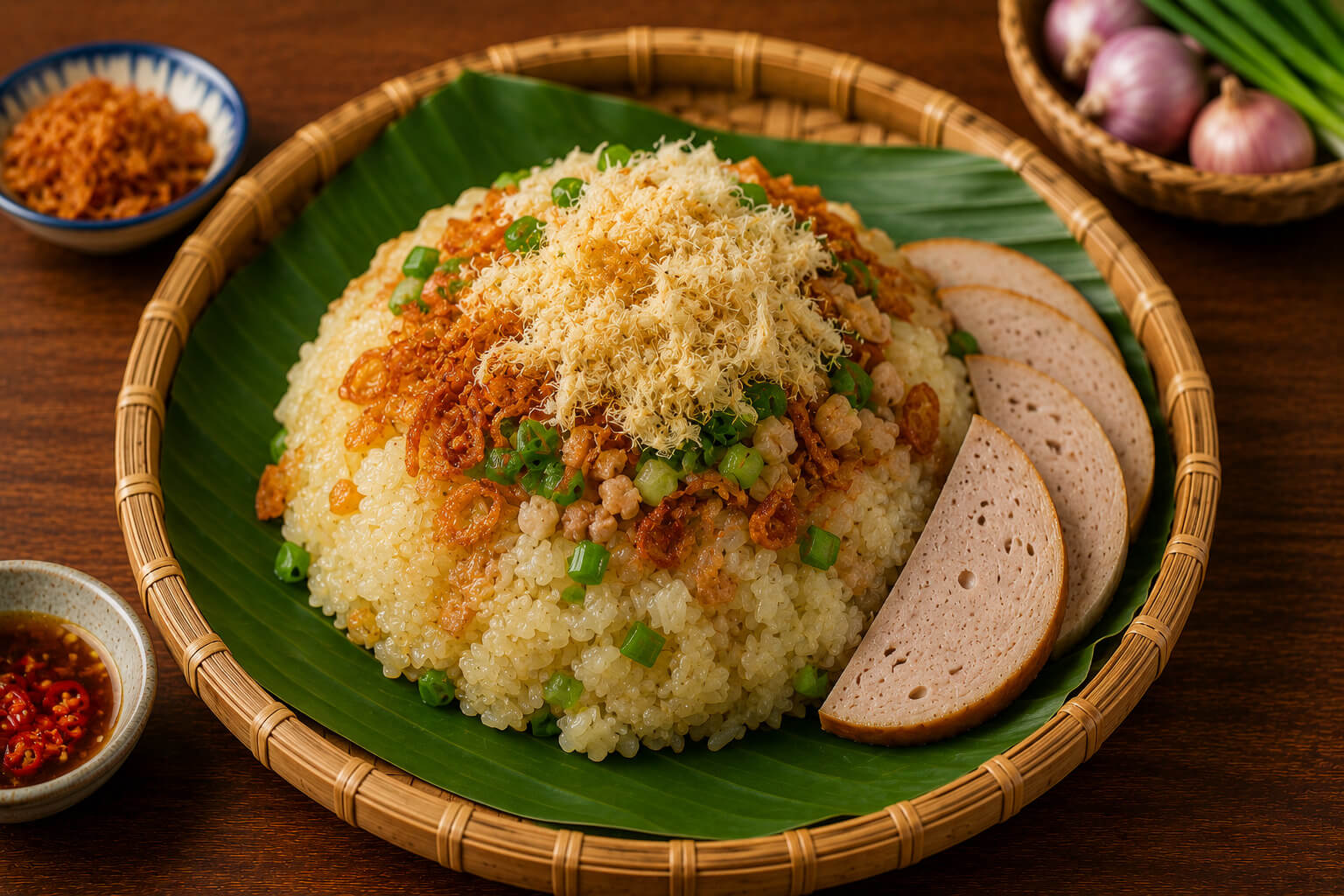
Xôi is Vietnam's most democratic street food — glutinous sticky rice steamed or cooked with a huge range of toppings and mix-ins, eaten for breakfast or as a snack at any time of day, by every social class, in every city and village across the country.
The base is always glutinous rice (nếp), which turns soft, chewy, and slightly translucent when steamed. From there, the variations are almost infinite: savoury xôi gà is topped with shredded poached chicken and fried shallots; xôi xéo gets a blanket of mung bean paste and crispy fried shallots; xôi lạp xưởng adds Chinese sausage and fried egg. Sweet varieties include xôi dừa (coconut milk), xôi é (pandan-green rice), xôi ngô (corn), and the visually dramatic xôi gấc (sticky rice turned deep red from gấc fruit). Each variety is sold wrapped in banana leaf or lotus leaf by street vendors, making it the ultimate eat-and-walk breakfast.
For Indian visitors, xôi is surprisingly familiar. The concept of a steamed rice-based breakfast is universal across South and Southeast Asia, and the mung bean topping (xôi xéo) mirrors the use of dal in Indian cooking. The coconut-milk sweet version (xôi dừa) will resonate immediately with anyone from Kerala or coastal South India. The key difference is the glutinous rice texture — much stickier and chewier than basmati — which takes one or two bites to get used to but quickly becomes addictive.
Glutinous rice has been cultivated in the Red River Delta for over three thousand years. Xôi — specifically steamed glutinous rice offered as both food and ritual offering — appears in Vietnamese legend and history from the earliest recorded texts. It has been a constant presence at festivals, weddings, and everyday breakfast tables ever since.
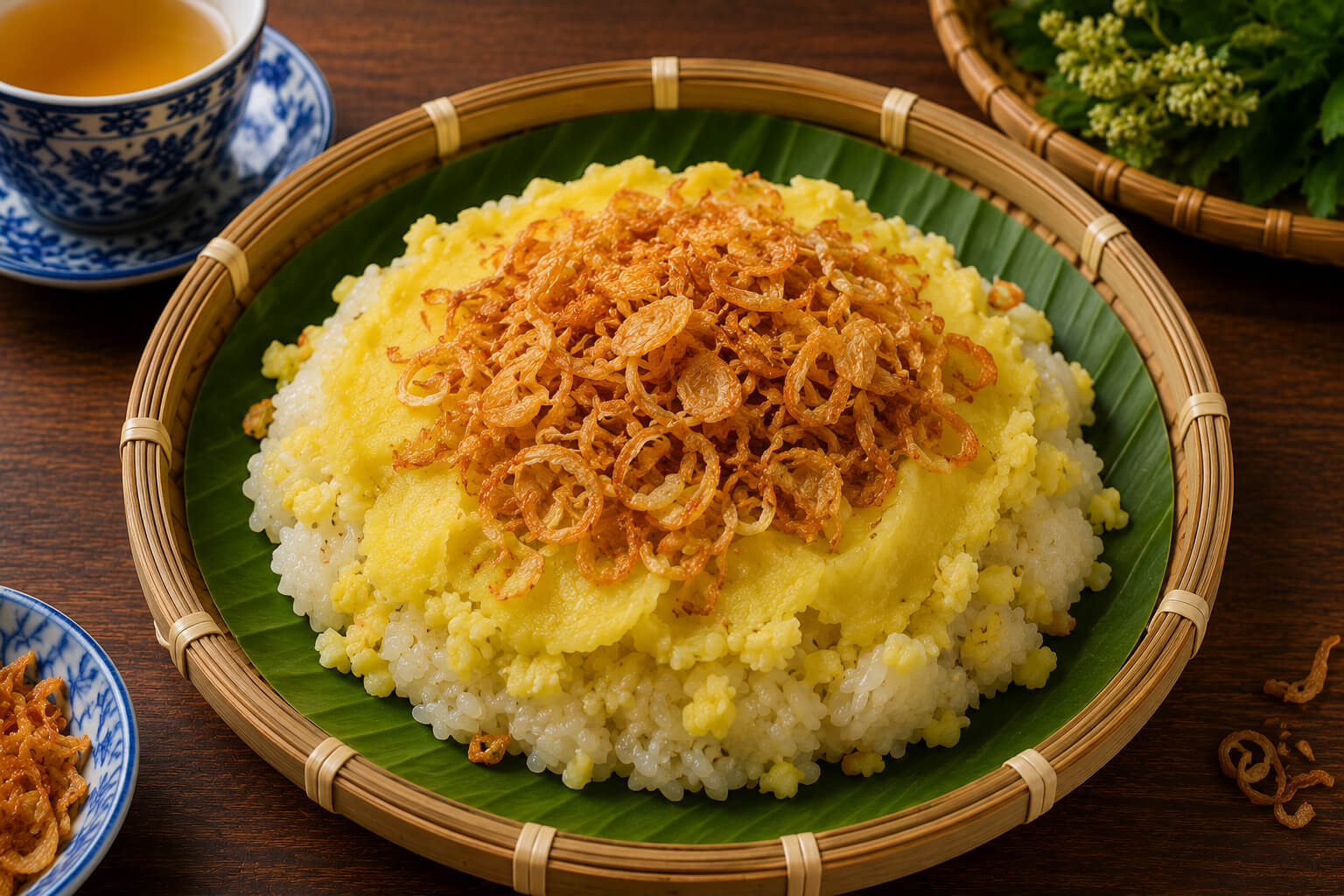
Xôi Xéo
The Hanoi classic — sticky rice topped with smooth yellow mung bean paste and a generous pile of golden crispy fried shallots. The shallot oil soaks into the rice and the result is extraordinary. Possibly the best version of xôi.
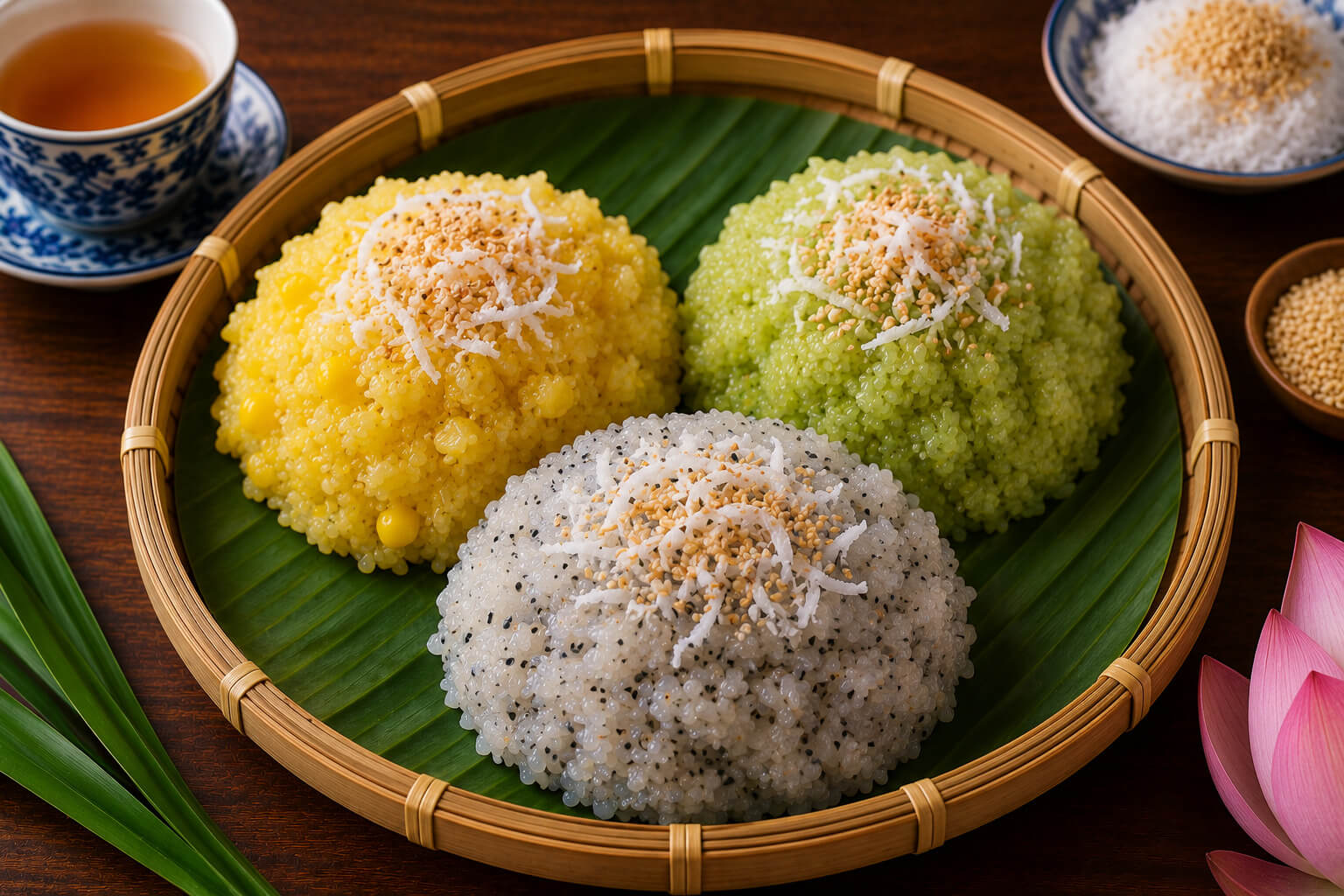
Xôi Hề — Huế Sweet Varieties
Huế is renowned for elaborate sweet xôi: xôi bắp (corn), xôi lá dứa (pandan), and xôi é (sweet basil seed). Often coloured with natural plant dyes to create multicolour portions.
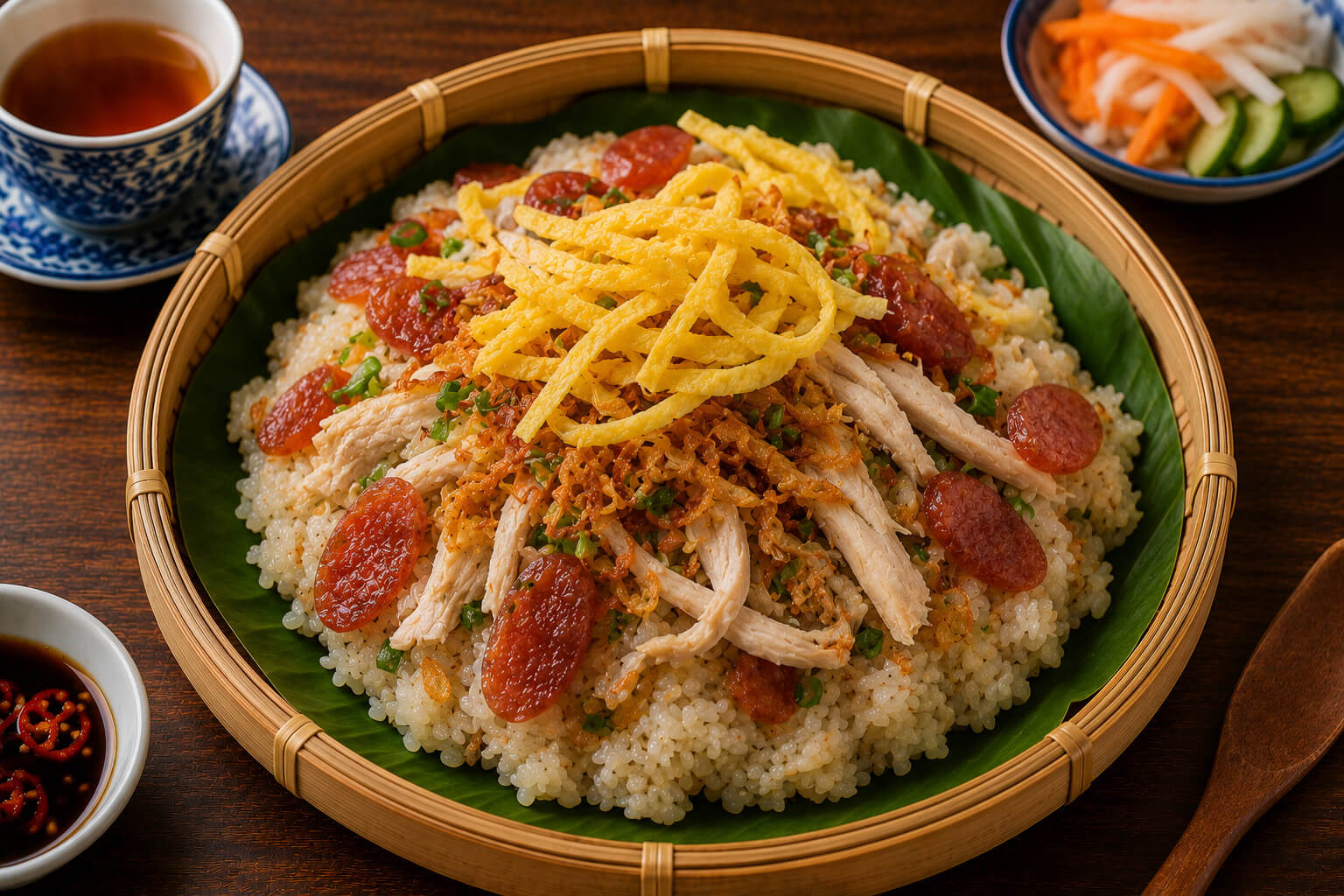
Xôi Gà / Xôi Mặn
Southern xôi is larger, more filling, and frequently topped with chicken, Chinese sausage (lạp xưởng), and fried egg. It doubles as a full meal rather than just a snack. Sweeter rice, more oil.
Glutinous rice (gạo nếp) — soaked overnight, steamed
Mung bean paste (đậu xanh) — cooked, sweetened, shaped (for xôi xéo)
Crispy fried shallots in shallot oil — essential finishing element
Shredded poached chicken, lightly seasoned (for xôi gà)
Chinese-style pork sausage, sliced (for xôi lạp xưởng)
Coconut milk cooked into the rice (for xôi dừa)
Pandan leaf juice for colour and fragrance (for xôi lá dứa)
Fresh corn kernels cooked with the rice (for xôi ngô)
Toasted sesame seeds and sugar (for sweet xôi mè)
Xôi Yén
📍 35B Nguyễn Hữu Huân, Hoàn Kiếm, Hà Nội
Hanoi's most famous xôi restaurant — always packed from 6 am. The xôi xéo here is legendary, and the xôi gà with chicken and mushroom is excellent. Queue is long but fast-moving.
Xôi Chà Bà Lưu
📍 28 Hàng Cân, Hoàn Kiếm, Hà Nội
Old Quarter institution — the same grandmother has been making xôi from this spot for decades. Small operation, extraordinary quality. Only open until 9 am — do not be late.
Xôi Lúa
📍 Ngo Thi Nham, Ha Dong, Hà Nội (and multiple branches)
A Hanoi chain with a reputation for consistently excellent xôi xéo. Multiple locations across the city — easier to find than some single-location stalls. Clean seating.
Xôi Gà Bà Tư Quạn 1
📍 73 Ðịnh Tiên Hoàng, Bình Thạnh, TP. Hồ Chí Minh
Renowned for its xôi gà — generous shredded chicken, sticky coconut-scented rice, crispy shallots. A breakfast institution for local workers in Binh Thanh district.
Xôi Chất Lượng Thường
📍 12 Phan Ðình Phùng, Phú Nhuận, TP. Hồ Chí Minh
Excellent sweet xôi varieties alongside the savoury options. Coconut sticky rice and pandan versions are particularly good. Clean setup, fast service, tourist-friendly.
Xôi Lá Sen Bèn Thành
📍 Ben Thanh Market area, Quận 1, TP. Hồ Chí Minh
Inside Ben Thanh Market — multiple vendors sell xôi varieties. Look for the lotus-leaf-wrapped versions for the most fragrant experience. Easy to combine with market browsing.
| Venue Type | VND | USD (approx.) | INR (approx.) |
|---|---|---|---|
| Street cart / market stall | 15,000 — 25,000 | $0.60 — $1.00 | ₹50 — ₹83 |
| Local restaurant | 25,000 — 35,000 | $1.00 — $1.40 | ₹83 — ₹117 |
| Mid-range restaurant | 35,000 — 55,000 | $1.40 — $2.20 | ₹117 — ₹183 |
| Hotel / tourist restaurant | 60,000 — 100,000 | $2.40 — $4.00 | ₹200 — ₹333 |
Many xôi varieties are naturally vegetarian or vegan. Xôi xéo (mung bean and shallots) is vegetarian. Xôi dừa (coconut), xôi lá dứa (pandan), xôi bắp (corn), and xôi mè (sesame-sugar) are usually vegan.
Say "Xôi không thịt" (sticky rice without meat) or simply point to a sweet variety and say "cái này" (this one).Vegan note: Sweet varieties (coconut, pandan, sesame, corn) are almost always vegan. Confirm no animal fat is used in the cooking: "Không dùng mỡ hợc bơ nhé".
Jain note: Xôi xéo contains fried shallots (onion family). Sweet varieties like coconut or pandan xôi are likely Jain-compliant — confirm no onion or garlic is used. An excellent safe choice for Jain travellers.
No. Xôi uses glutinous rice (gạo nếp), which is a different variety from regular steamed rice (gạo tẻ). Glutinous rice becomes sticky and chewy when cooked — it does not fluff up like jasmine rice. The texture is closer to Japanese mochi rice.
Yes — glutinous rice contains no gluten despite the name. "Glutinous" refers to its sticky texture, not gluten content. Xôi is safe for people with coeliac disease unless cross-contamination occurs at mixed-use stalls.
Savoury xôi is topped with protein (chicken, pork, egg, sausage) and fried shallots — it is a meal. Sweet xôi uses coconut milk, sugar, pandan, or sesame and is a dessert or snack. Both are eaten at any time of day.
Absolutely. While primarily a breakfast food, xôi is eaten throughout the day. Many stalls also operate in the evening as a late-night snack option.
Xôi xéo (mung bean paste with fried shallots) is the most recommended — the combination of textures and the nutty shallot oil is uniquely delicious. Xôi gà (chicken) is a safe and filling choice for meat-eaters.
Most varieties are nut-free, but some sweet versions include roasted peanuts or sesame. Confirm with the vendor before ordering. Peanut allergy: "Tôi dị úng với lạc — không cho lạc nhé."
Banana leaf is a traditional biodegradable wrapper that adds a subtle grassy fragrance to the rice. It keeps the xôi warm and is completely food-safe. The tradition predates plastic packaging by centuries.
The glutinous texture is the main difference — stickier than any Indian rice preparation. The savoury versions are less spiced than Indian rice dishes; the sweet versions are less sweet than Indian mithai. Think of it as a gentler, subtler rice experience.
Yes — it is one of the most universally available street foods. You will find xôi vendors in every city, town, and village market. The northern varieties tend to be more refined; southern versions are larger and richer.
Cold xôi becomes very hard and less palatable. It is best eaten immediately while warm. If you buy a portion and cannot finish it, keep it warm or reheat in a microwave for 30–45 seconds.
Our specialists plan food-focused itineraries around what you want to eat.
Plan My Food Trip