A hundred colours, a thousand variations — Vietnam's dessert universe.
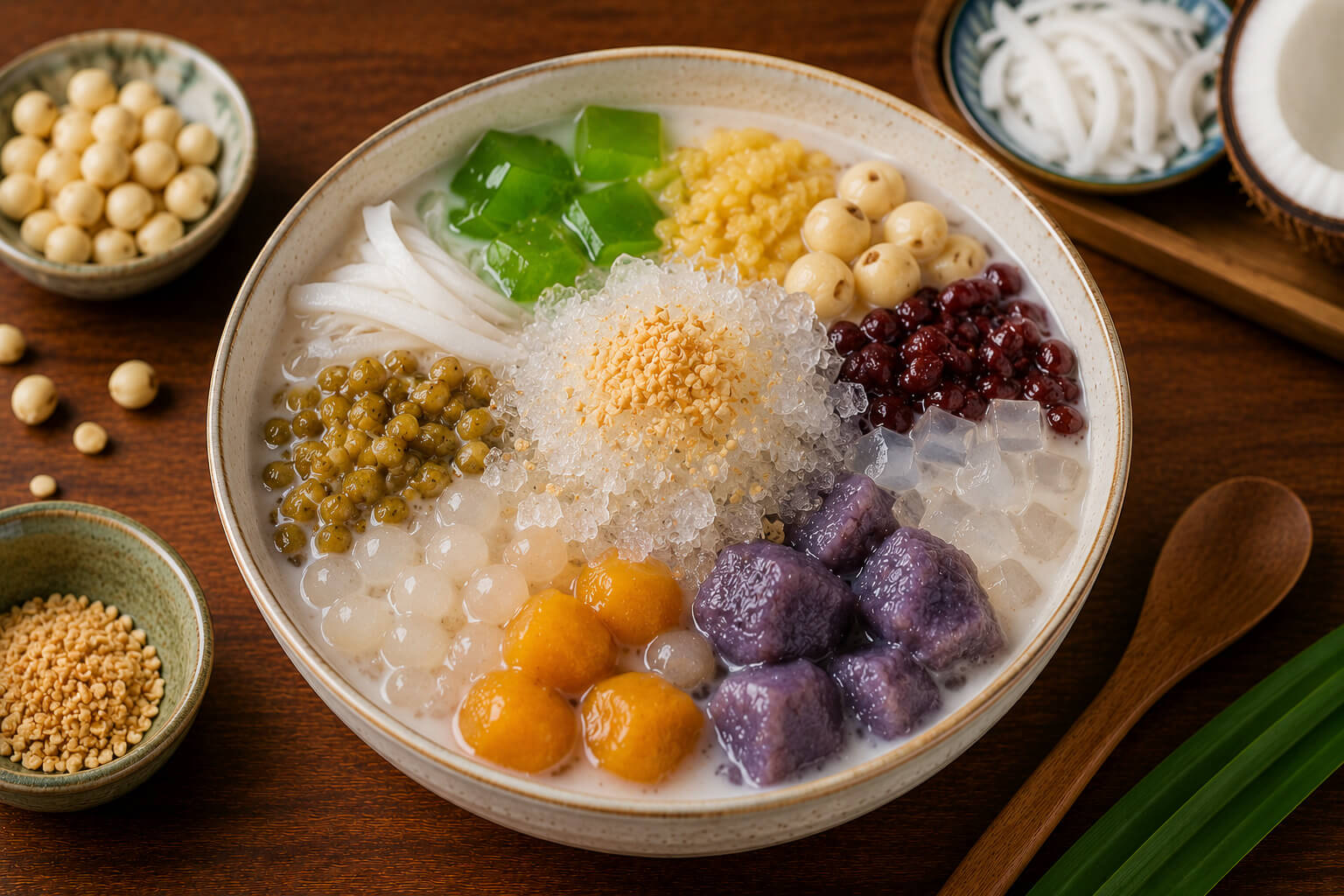
Chè is the Vietnamese word for an entire category of sweet dessert preparations — hot or cold, liquid or thick, served in bowls or glasses — that encompasses hundreds of distinct varieties across the country. It is Vietnam's answer to both ice cream and dessert soup, and it is one of the most joyful parts of Vietnamese food culture.
The defining characteristic of chè is its flexibility: the same word covers steaming hot mung bean soup eaten in Hanoi in December and a tall glass of layered iced jellies with coconut milk eaten in Ho Chi Minh City in the summer. Common ingredients across varieties include mung beans (đậu xanh), red beans (đậu đỏ), black-eyed peas, lotus seeds, taro, tapioca pearls, pandan jelly (thạch lá dứa), grass jelly (sương são), water chestnuts, young coconut, and coconut milk — ingredients that recur in different combinations to produce wildly different results.
For Indian visitors, chè deserves special attention because many varieties are naturally suited to Indian palates and dietary requirements. The chè đậu xanh (mung bean sweet soup) is almost identical in flavour profile to moong dal halwa or moong dal payasam. The chè bút (lotus seed dessert) mirrors kheer in texture. The abundance of coconut milk will be instantly familiar to South Indian and West Indian visitors. Chè is one of the safest dessert options for vegetarian and vegan Indian travellers — most varieties contain no meat, eggs, or dairy.
Sweet bean soups have been part of Vietnamese cuisine for over a thousand years, with roots in Chinese tang shui (sweet soup) traditions introduced during periods of Chinese cultural influence. Southern Vietnam's tropical abundance of fruits, coconuts, and exotic ingredients created the most elaborate chè culture, while northern varieties remained simpler and warmer.
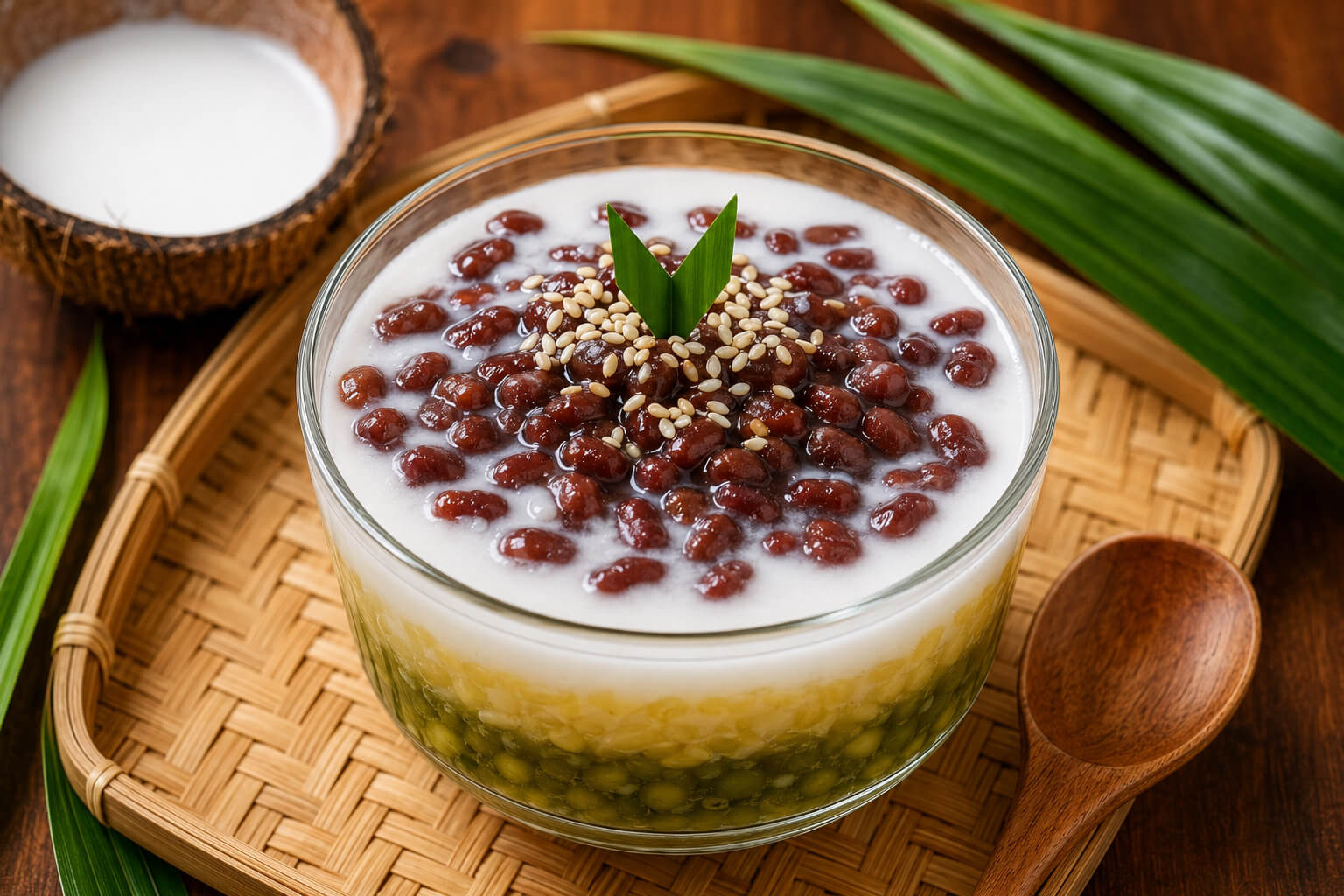
Chè Ba Màu (Three-Colour Dessert)
The most visually iconic chè — layers of red mung bean, yellow mung bean paste, and green pandan jelly in a glass, topped with shaved ice and coconut milk. A must-try in HCMC.
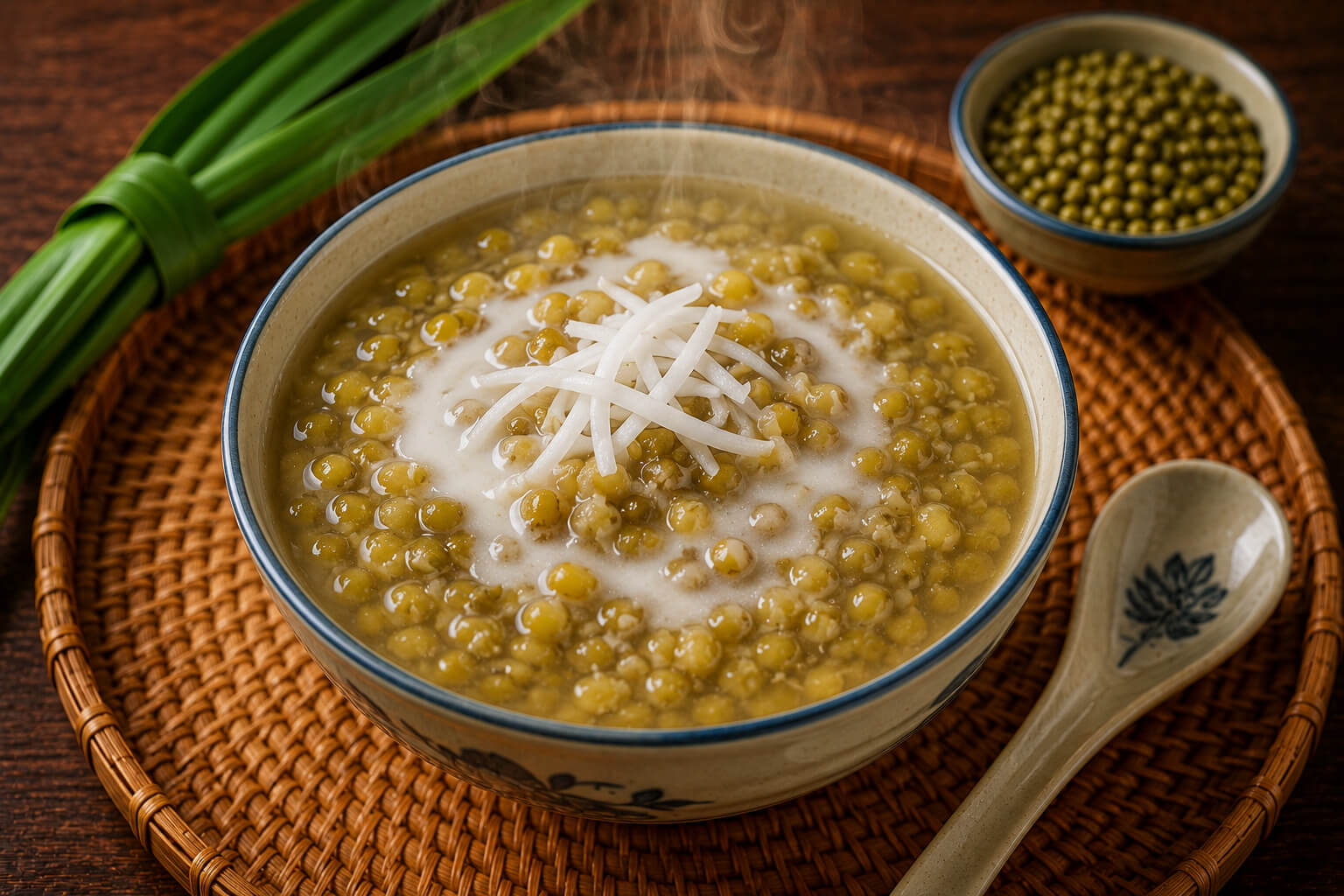
Chè Ðậu Xanh Nóng (Hot Mung Bean Soup)
Northern chè is often served hot, particularly in cooler months. Mung bean cooked with sugar and ginger root — simple, warming, and deeply comforting. Eaten in small bowls from street vendors.
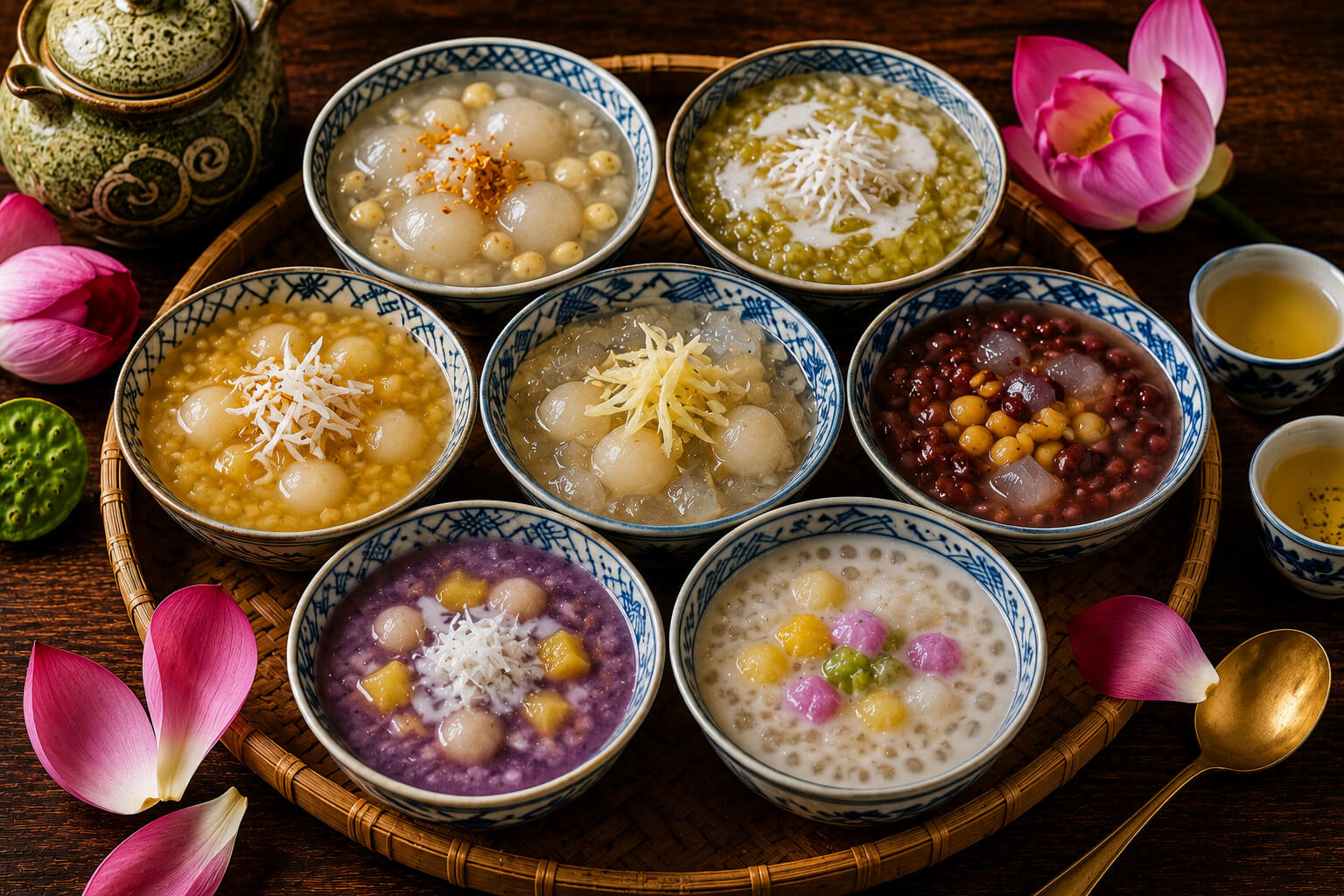
Chè Huế — Royal Desserts
Hue's chè tradition is the most refined — a legacy of royal court cuisine. Chè hạt sen (lotus seed), chè nhãn (longan), and miniature portion sets of twelve varieties are hallmarks of Hue dessert culture.
Mung beans (đậu xanh) — yellow (split) or whole green; cooked in sugar syrup
Red beans (đậu đỏ) — sweet-cooked, used in ba màu and many other varieties
Fresh coconut milk (nước cốt dừa) — the essential finishing sauce for most southern chè
Pandan jelly (thạch lá dứa) — green, fragrant, springy — a defining southern ingredient
Grass jelly (sương são) — black, slightly bitter, cooling properties
Tapioca pearls (bôt báng) — chewy, transparent — similar to bubble tea pearls
Lotus seeds (hạt sen) — soft, starchy, mildly sweet
Taro (khoai môn) — cooked until soft, adds a creamy purple note
Rock sugar (đường phèn) cooked into a light syrup — the sweetening base
Fresh ginger (for hot northern varieties) — adds warmth and digestive benefit
Crushed ice — the finishing element for all cold southern chè
Chè Bà Nãm
📍 49 Hàng Ðiểu, Hoàn Kiếm, Hà Nội
A Hanoi institution — the same family has served chè from this tiny Old Quarter shop for generations. The chè đậu xanh and chè hoa quả (mixed fruit) are outstanding. Plastic stools, paper bowls, perfect dessert.
Chè Lãng Quên
📍 6 Hàng Gió, Hoàn Kiếm, Hà Nội
Modern Hanoi chè shop with a menu of both classic and creative varieties. Well-lit, Instagram-friendly, and with written explanations in English for each variety. Good for first-timers.
Chè Khúc Bạch Hàng Gài
📍 41 Hàng Gài, Hoàn Kiếm, Hà Nội
Specialist in chè khúc bạch — almond tofu jelly with longan and coconut milk, one of Hanoi's most refined desserts. A beautiful, delicate experience quite unlike any other chè.
Chè Hilên
📍 2 Lê Thánh Tôn, Bên Nghé, Quận 1, TP. Hồ Chí Minh
HCMC's most celebrated chè shop — often cited as the definitive destination for chè ba màu and chè thái. Queue extends to the pavement on weekends. Worth every minute.
Chè Khúc Bạch Cô Giang
📍 144 Cô Giang, Quận 1, TP. Hồ Chí Minh
Famous for chè khúc bạch and coconut-based desserts. Large menu with over 20 varieties clearly displayed with photos. Tourist-friendly, cash only, very fast service.
Chè Thái 239
📍 239 Lý Tự Trọng, Bên Thành, Quận 1, TP. Hồ Chí Minh
Specialises in chè thái — the Thai-style fruit-and-coconut milk version popular in southern Vietnam. Generous fruit, properly thick coconut milk, and well-balanced sweetness.
| Venue Type | VND | USD (approx.) | INR (approx.) |
|---|---|---|---|
| Street cart / market stall | 15,000 — 20,000 | $0.60 — $0.80 | ₹50 — ₹67 |
| Local restaurant | 20,000 — 30,000 | $0.80 — $1.20 | ₹67 — ₹100 |
| Mid-range restaurant | 30,000 — 50,000 | $1.20 — $2.00 | ₹100 — ₹167 |
| Hotel / tourist restaurant | 60,000 — 120,000 | $2.40 — $4.80 | ₹200 — ₹400 |
The vast majority of chè varieties are naturally vegetarian and most are vegan. Mung bean, red bean, lotus seed, taro, coconut milk, grass jelly, pandan jelly — all plant-based. Chè is one of the safest and most delicious dessert options for vegetarian and vegan travellers in Vietnam.
Most chè is already vegetarian — just avoid varieties with egg (chè trứng) or dairy cream (chè kem). Ask "Không trứng, không sữa bò" to exclude egg and dairy.Vegan note: Most chè is vegan. Coconut milk is the standard cream substitute. Some upscale versions use dairy cream — confirm "Kem này là kem dừa không?" (is this coconut cream?)
Jain note: Chè is an excellent choice for Jain travellers. Bean, jelly, and coconut-milk varieties contain no root vegetables, no onion, no garlic, and no meat. Confirm no beet or carrot is used in red colouring. Generally very safe.
It depends on the variety — but generally: lightly sweet, mildly fragrant (pandan or coconut), with a mix of soft, chewy, and sometimes jelly-like textures. It is never as intensely sweet as Indian mithai. Refreshing rather than heavy.
Both, depending on the variety. Some chè are liquid enough to drink from a glass. Others are thick enough to eat with a spoon. Most sit somewhere between soup and pudding.
Chè ba màu means "three-colour dessert." The three layers are: green (pandan jelly), yellow (mung bean paste), and red (sweetened red beans), representing the three regions of Vietnam in some interpretations. Topped with coconut milk and ice.
Yes. Chè đậu xanh (mung bean soup) resembles moong dal payasam. Lotus seed chè resembles kheer. Coconut milk versions feel similar to Kerala payasam. The flavour profiles are milder and less sweet than most Indian equivalents.
Chè đậu xanh (mung bean) and chè hoa quả (mixed fruit) are the least sweet. Grass jelly (sương são) on its own is barely sweet and slightly bitter — excellent for those who prefer subtle flavours.
Yes — traditional Vietnamese chè uses coconut milk rather than dairy. It is inherently dairy-free. Some modern versions at tourist restaurants use condensed milk or cream — confirm if this concerns you.
Yes — both use tapioca starch. The pearls in chè are typically smaller and may be coloured differently, but the base ingredient and chewy texture are the same.
Ho Chi Minh City is the undisputed capital of chè variety — the tropical south provides more ingredients (coconut, tropical fruits, pandan) and the southern food culture emphasises sweetness and abundance. Hanoi's chè tradition is smaller and simpler but deeply flavourful.
A refined dessert of silky almond-infused tofu jelly (the khúc bạch) served in a light syrup with longan fruit and coconut milk. One of Vietnam's most elegant sweet preparations — the name means "piece of white jade."
Yes — hot versions in cooler northern winters and iced versions in the south year-round. Dedicated chè shops operate daily. In the north, some seasonal varieties use winter-specific ingredients like dried longan.
Our specialists plan food-focused itineraries around what you want to eat.
Plan My Food Trip