Fluffy, soft, and stuffed — Vietnam's answer to the dumpling.
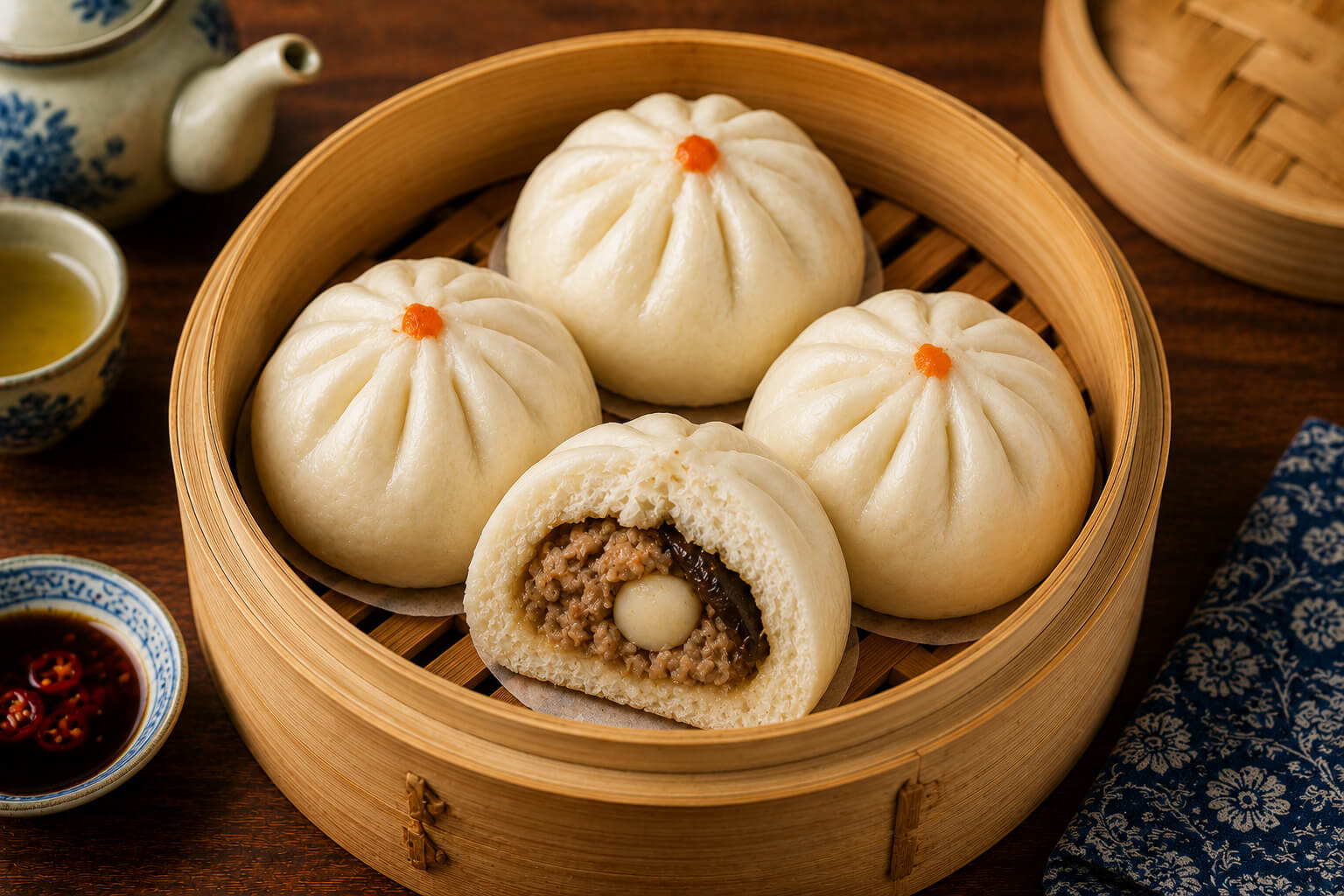
Bánh Bao is Vietnam's beloved steamed bun — a large, pillowy white bun made from leavened wheat dough, filled generously with minced pork, wood-ear mushrooms, glass noodles, and a whole boiled egg (sometimes a quail egg), then steamed until the dough puffs up into a perfectly smooth, snow-white dome.
The bun descends directly from the Chinese baozi tradition — specifically the Cantonese char siu bao — brought to Vietnam by Teochew and Cantonese immigrant communities centuries ago. The Vietnamese version is noticeably larger than its Chinese ancestor, the dough is sweeter and fluffier, and the filling is adapted to Vietnamese tastes — less BBQ pork, more seasoned minced meat with egg. Today it is one of the most ubiquitous street foods in Ho Chi Minh City, sold from tall aluminium steamers on footpaths at all hours.
For Indian visitors, bánh bao is an immediately approachable food: soft, mild, filling, and hand-held. There is no spice, no unfamiliar technique required, and no complex ordering process. It is sold ready-to-eat from steamers — simply point, pay, and eat. The closest Indian parallel is perhaps a stuffed modak or a naan filled with keema, though the steamed bun texture is unique. Vegetarian versions filled with mushrooms, glass noodles, and tofu are widely available, making it one of the better street-food options for vegetarian Indian tourists.
Bánh Bao arrived in Vietnam with Cantonese and Teochew Chinese immigrants, primarily in the 17th and 18th centuries. The dish was adopted and adapted by Vietnamese cooks who made the bun larger, sweeter, and more filling. It became a fixture of southern Vietnamese street food during the 20th century.
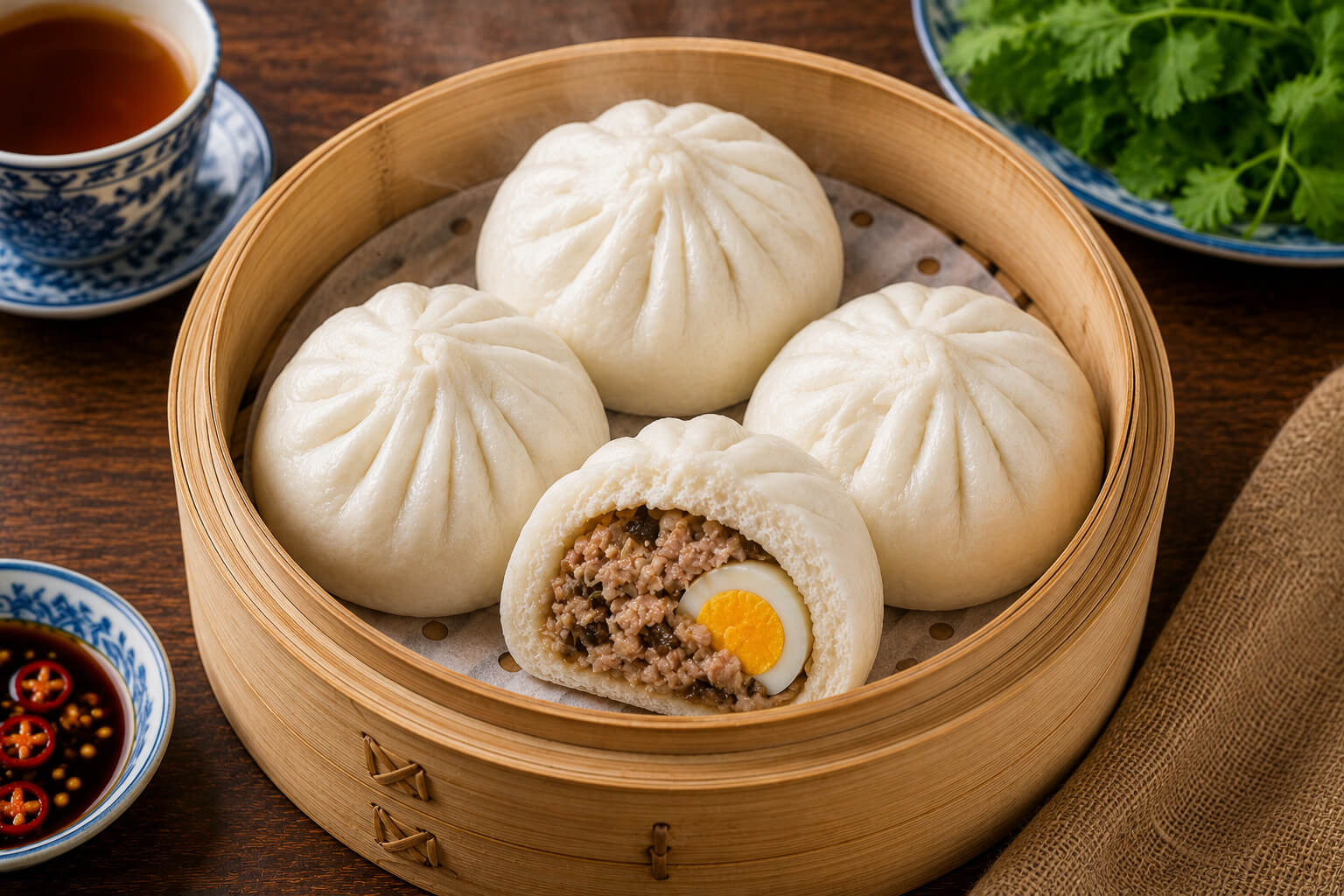
Bánh Bao Nhân Thịt (Pork & Egg)
The original — minced pork with wood-ear mushrooms, glass noodles, and a whole boiled egg in a large, sweet, fluffy white bun. The egg inside the filling is the distinctive Vietnamese touch.
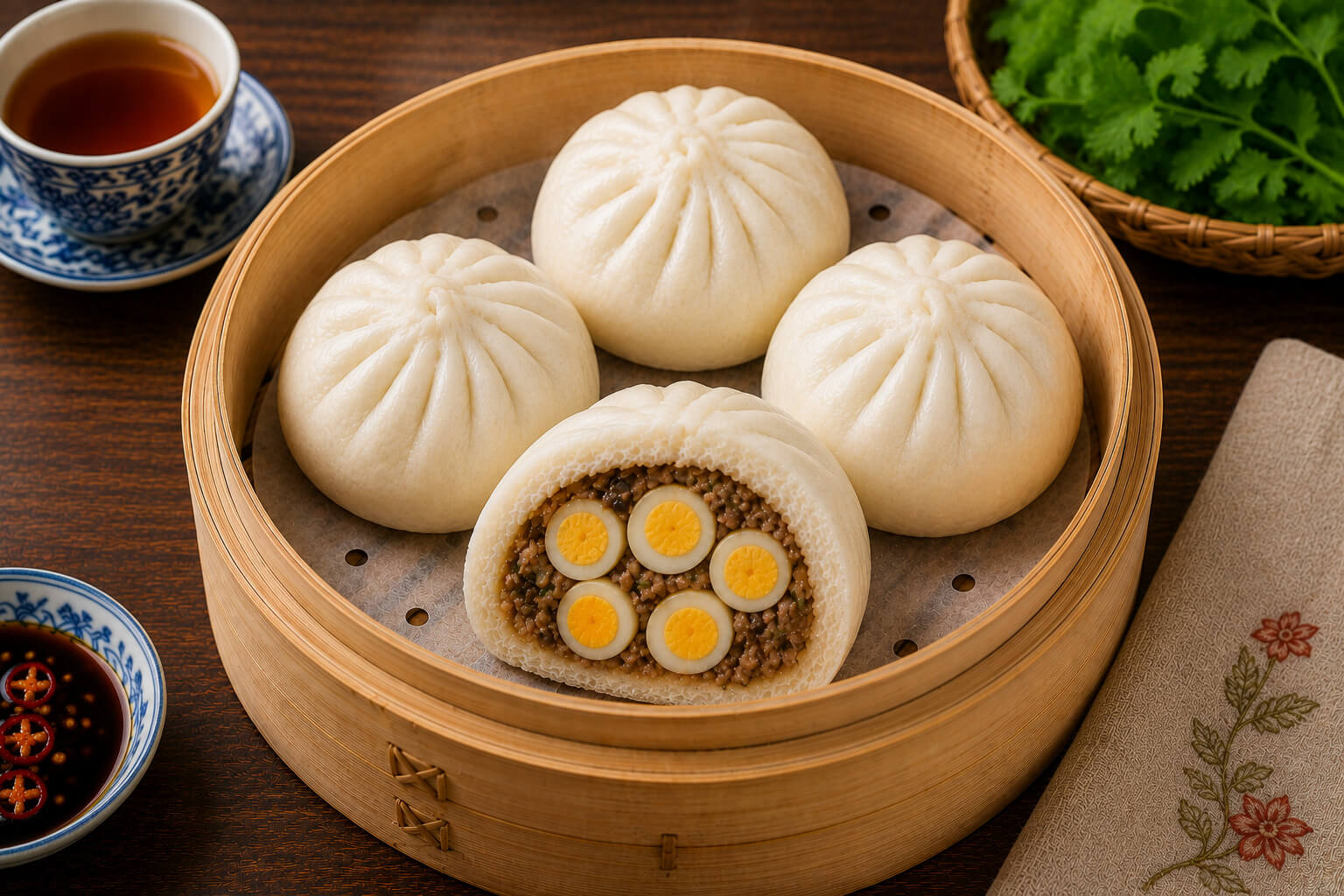
Bánh Bao Nhân Trứng Cút (Quail Egg)
A variant using multiple quail eggs instead of one chicken egg. Popular at upscale bakeries and premium street vendors. Slightly smaller bun, more premium presentation.
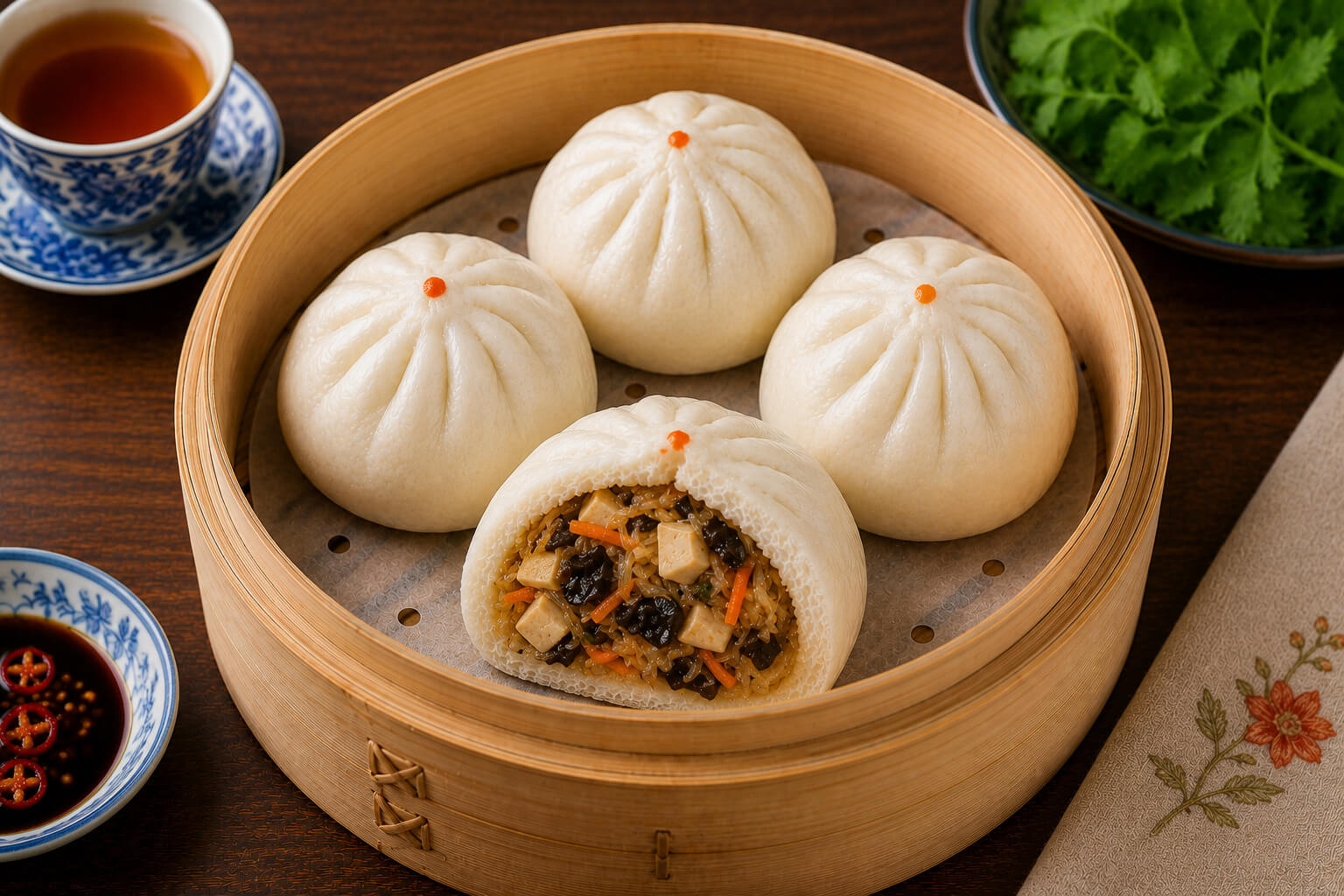
Bánh Bao Chà y
Vegetarian version filled with tofu, mushrooms (shiitake and wood-ear), glass noodles, and carrot. Sold at vegetarian restaurants and on the 1st and 15th of the lunar calendar when many Vietnamese eat vegetarian.
Wheat flour, sugar, instant yeast, baking powder, oil, milk — enriched dough for extra softness
Minced pork, seasoned with fish sauce, oyster sauce, pepper, and sugar
Dried wood-ear mushrooms, rehydrated and finely chopped
Glass noodles (mển) — transparent noodles cut short and mixed into filling
One whole boiled chicken egg or 3–4 quail eggs — placed in the centre of the filling
Oyster sauce, soy sauce, sesame oil, sugar, white pepper
Chinese sausage (lạp xưởng) occasionally added to premium versions
Bánh Bao Chàng Trai
📍 48 Hàng Ch¡i, Hoàn Kiếm, Hà Nội
Old Quarter stall with consistently fluffy buns and generous filling. The pork-and-egg version is particularly good. Opens from 7 am. Cash only, very fast service.
Tiêm Bánh Bao Phúc Long
📍 12 Ðinh Liêt, Hoàn Kiếm, Hà Nội
A reliable Old Quarter bakery that steams both standard and vegetarian bánh bao. The vegetarian option with mushroom and glass noodle filling is excellent — ask for "bánh bao chà y".
Chơ Ðồng Xuân Food Court
📍 Ðồng Xuân Market, Hoàn Kiếm, Hà Nội
Dong Xuan Market has multiple bánh bao vendors on the ground floor. Easy to find, multiple variety comparison possible, good for Indian travellers who want to sample multiple pieces.
Bánh Bao Thịnh Phát
📍 55 Ngô Quyền, Quận 5, TP. Hồ Chí Minh
A District 5 (Chinatown) institution — the buns here are authentically large, properly sweet, and stuffed generously. One of the best bánh bao in HCMC by local consensus. Queue daily from 6 am.
Bánh Bao Ðức Phát
📍 26 Hùng Vương, Quận 5, TP. Hồ Chí Minh
Another Chợ Lớn (Chinatown) standout. Particularly known for its quail egg version and the quality of the dough — extremely light and pillowy. Both pork and vegetarian options available.
Steamer carts on Pham Ngu Lao
📍 Phạm Ngũ Lão Street, Quận 1, TP. Hồ Chí Minh
Multiple roaming steamer cart vendors operate throughout the backpacker district from 7 am onwards. Convenient, affordable, and easy to navigate. Quality varies — buy from vendors with the longest queue.
| Venue Type | VND | USD (approx.) | INR (approx.) |
|---|---|---|---|
| Street cart / market stall | 15,000 — 20,000 | $0.60 — $0.80 | ₹50 — ₹67 |
| Local restaurant | 20,000 — 28,000 | $0.80 — $1.12 | ₹67 — ₹93 |
| Mid-range restaurant | 28,000 — 45,000 | $1.12 — $1.80 | ₹93 — ₹150 |
| Hotel / tourist restaurant | 50,000 — 80,000 | $2.00 — $3.20 | ₹167 — ₹267 |
Vegetarian bánh bao replaces pork with tofu, shiitake mushrooms, wood-ear mushrooms, glass noodles, and carrot. Available at dedicated vegetarian restaurants, Buddhist eateries, and some street stalls — particularly on the 1st and 15th of each lunar month.
Ask for "Bánh bao chà y" or "Bánh bao không thịt" (steamed bun without meat).Vegan note: Most vegetarian bánh bao are vegan. The dough sometimes contains milk — confirm with the vendor: "Bôt có sữa không?" (does the dough contain milk?)
Jain note: Bánh bao dough contains yeast. Vegetarian fillings may contain garlic and ginger — confirm with the vendor if strictly Jain. Pure-veg versions without onion and garlic are possible at Jain-friendly restaurants but are rare at street stalls.
It originates from Chinese baozi (steamed buns) but has become distinct. Vietnamese bánh bao is larger, the dough is sweeter, and the filling includes a whole boiled egg — a Vietnamese innovation. It is now a distinctly Vietnamese food despite its Chinese roots.
Minced pork seasoned with soy and oyster sauce, wood-ear mushrooms, glass noodles, and a whole boiled chicken egg in the centre. Some versions include Chinese sausage.
Yes — the bun is made from wheat flour. It is not suitable for people with coeliac disease or gluten intolerance. The filling itself (pork, mushroom, egg) is gluten-free.
Yes — bánh bao is sold throughout the country, though it is most ubiquitous in Ho Chi Minh City and southern Vietnam. In the north it is common at markets and bus stations.
Both. One large bun is a substantial snack; two are a filling breakfast or light lunch. It is most commonly eaten as a grab-and-go breakfast on the way to work or school.
Bánh bao uses steamed wheat dough — soft, white, and fluffy. Bánh mì uses a baked French baguette — crusty on the outside, soft inside. Both are filled, but the delivery method and texture are completely different.
About 15–20 minutes for a fresh batch. Street vendors keep pre-steamed buns warm in the steamer — these are ready instantly. Buns lose their optimal fluffiness after 30–40 minutes out of active steam.
You can, but the texture suffers significantly — the dough becomes dense and chewy rather than pillowy. Reheat in a microwave for 30 seconds with a damp paper towel over it, or re-steam for 5 minutes if possible.
Sweet-filled versions do exist — mung bean paste (nhân đậu xanh) or red bean paste filling. These are more common in Vietnamese bakeries than street stalls and are popular as a dessert or afternoon snack.
Yes — it is mild, soft, filling, and easy to eat. The lack of any spice makes it one of the best street foods for children visiting Vietnam. Sweet-filled versions are especially popular with kids.
Our specialists plan food-focused itineraries around what you want to eat.
Plan My Food Trip